• Fri frakt över 249 kr
  • •
  • Snabba leveranser
  • •
  • Billiga böcker
Kundservice

Du är på sajten för privatpersoner.

Företag, bibliotek eller offentlig verksamhet?

Du handlar på classic.bokus.com, där alla dina funktioner finns intakta.
Till classic.bokus.com
Bokus logotyp. Gå till startsidan.
  • Erbjudanden
  • Nyheter
  • Student
  • Topplistor
  • Barn & ungdom
  • Bokus Play
  • E-böcker
  • Pocketböcker
  • Spel & pussel

10% rabatt på allt med kod: NYSTART10 →

Sidfot

Mina sidor

    Hjälp

    • Kundservice
    • Vanliga frågor och svar
    • Frakt och leverans
    • Retur vid ångerrätt
    • Reklamera vara
    • Betalning
    • Köpvillkor
    • Allmänna villkor
    • Information om webbplatsens tillgänglighet

    Om Bokus

    • Om oss
    • Pressrum
    • För studenter
    • För företag
    • För bibliotek och offentlig verksamhet
    • För leverantörer
    • Hållbarhet

    Populärt

    • Aktuella erbjudanden
    • Presentkort
    • Studentlitteratur
    • Nya böcker
    • Topplistor
    • Signerade böcker
    • Engelska böcker

    Inspiration

    • Boktips
    • BookTok
    • Populära bokserier
    • Barnbokskaraktärer
    • Populära författare
    Logotyp för Bokus
    Följ oss på Facebook (extern länk)Följ oss på Instagram (extern länk)Följ oss på YouTube (extern länk)Följ oss på TikTok (extern länk)
    bokus @ CookiesAnpassa cookiesIntegritetspolicyKöpvillkor
    Till Citymail hemsida (extern länk)Till Budbee hemsida (extern länk)Till Postnord hemsida (extern länk)Till Schenker hemsida (extern länk)Till Early Bird hemsida (extern länk)Till Walleys hemsida (extern länk)
    1. Historia och arkeologi
    2. Historia
    3. Amerikas historia

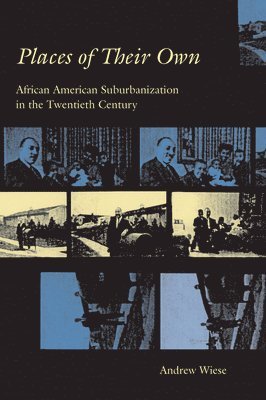
    Places of Their Own

    African American Suburbanization in the Twentieth Century

    AvAndrew Wiese

    Häftad, Engelska, 2005

    Del i serien Historical Studies of Urban America

    343 kr

    Beställningsvara. Skickas inom 5-8 vardagar. Fri frakt över 249 kr.

    Fler format och utgåvor

    E-bok

    756 kr

    Beskrivning

    For most people, the idea of suburbia conjures up images of expansive lawns, backyard barbecues, swingsets, and SUVs - but not African Americans. As this pioneering work demonstrates, the suburbs have provided a home to black residents in increasing numbers for the past hundred years; in the past two decades alone, the numbers have nearly doubled, to just under twelve million. "Places of Their Own" begins a hundred years ago, painting an austere portrait of the conditions that early black residents found in isolated, poor suburbs. Andrew Wiese insists, however, that they moved there by choice, withstanding racism and poverty through efforts to shape the landscape to their own needs. Wiese continues to examine this phenomenon throughout the twentieth century, including, for example, differences between black suburbanization in the North and South. Ultimately, Wiese explores how the civil rights movement emboldened more black families to purchase suburban homes and how the passage of civil rights legislation helped pave the way for today's black middle class.Tracing the precise contours of black migration to the suburbs over the past century, "Places of Their Own" will be a foundational book for anyone interested in the African American experience or the role of race and class in the making of America's suburbs.

    Produktinformation

    • Utgivningsdatum:2005-12-15
    • Mått:17 x 23 x 2 mm
    • Vikt:680 g
    • Format:Häftad
    • Språk:Engelska
    • Serie:Historical Studies of Urban America
    • Antal sidor:422
    • Förlag:The University of Chicago Press
    • ISBN:9780226896250

    Utforska kategorier

    • Amerikas historia inom Historia och arkeologi
    • Sociala grupper och identitet inom Samhälle och politik

    Mer om författaren

    Andrew Wiese is associate professor of history at San Diego State University.

    Recensioner i media

    "A work of exceptionally broad research, Places of Their Own does much more than simply document the presence of African Americans in suburbs. It also illustrates how black suburbanization changed over the course of the twentieth century." - Amanda Seligman, Journal of Planning History"