• Fri frakt över 249 kr
  • •
  • Snabba leveranser
  • •
  • Billiga böcker
Kundservice

Du är på sajten för privatpersoner.

Företag, bibliotek eller offentlig verksamhet?

Du handlar på classic.bokus.com, där alla dina funktioner finns intakta.
Till classic.bokus.com
Bokus logotyp. Gå till startsidan.
  • Erbjudanden
  • Nyheter
  • Student
  • Topplistor
  • Barn & ungdom
  • Bokus Play
  • E-böcker
  • Pocketböcker
  • Spel & pussel

10% rabatt på allt med kod NYSTART10 →

Sidfot

Mina sidor

    Hjälp

    • Kundservice
    • Vanliga frågor och svar
    • Frakt och leverans
    • Retur vid ångerrätt
    • Reklamera vara
    • Betalning
    • Köpvillkor
    • Allmänna villkor
    • Information om webbplatsens tillgänglighet

    Om Bokus

    • Om oss
    • Pressrum
    • För studenter
    • För företag
    • För bibliotek och offentlig verksamhet
    • För leverantörer
    • Hållbarhet

    Populärt

    • Aktuella erbjudanden
    • Presentkort
    • Studentlitteratur
    • Nya böcker
    • Topplistor
    • Signerade böcker
    • Engelska böcker

    Inspiration

    • Boktips
    • BookTok
    • Populära bokserier
    • Barnbokskaraktärer
    • Populära författare
    Logotyp för Bokus
    Följ oss på Facebook (extern länk)Följ oss på Instagram (extern länk)Följ oss på YouTube (extern länk)Följ oss på TikTok (extern länk)
    bokus @ CookiesAnpassa cookiesIntegritetspolicyKöpvillkor
    Till Citymail hemsida (extern länk)Till Budbee hemsida (extern länk)Till Postnord hemsida (extern länk)Till Schenker hemsida (extern länk)Till Early Bird hemsida (extern länk)Till Walleys hemsida (extern länk)
    1. Filosofi och religion
    2. Filosofi
    3. Filosofiska discipliner

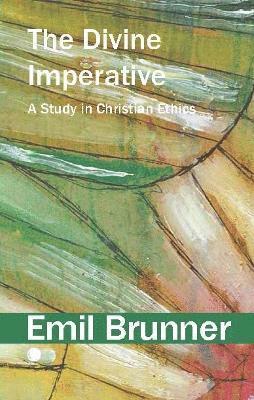
    The Divine Imperative

    A Study in Christian Ethics

    AvEmil Brunner

    Häftad, Engelska, 2026

    Del i serien James Clarke

    286 kr

    Beställningsvara. Skickas inom 5-8 vardagar. Fri frakt över 249 kr.

    Beskrivning

    Engages with a wide range of theoretical and practical issues to lay the groundwork for a Christian conception of the moral life."What ought we to do?" is the guiding question of Emil Brunner's The Divine Imperative. Here this age-old question is taken up by Brunner and is answered in light of his Reformed Christian theology. Dubbed a "Protestant Ethic", The Divine Imperative is a systematic ethical treatise, and for Brunner the first to be centred around the Reformed faith.Here Brunner lays the groundwork for a Christian conception of the moral life in a world where morality itself is often doubted or denied. Animated by the need to respond to an encroaching moral relativism, where many believe that there is no true Right nor Wrong, no true Good nor Evil, Brunner provides an answer to the problem of ethics and morality in the modern age. In doing so, Brunner engages with a wide range of theoretical and practical issues: from philosophy's rationalisation of morality, to the crisis of marriage, to the task of the Christian living under capitalism.

    Produktinformation

    • Utgivningsdatum:2026-03-26
    • Mått:138 x 216 x 40 mm
    • Vikt:899 g
    • Format:Häftad
    • Språk:Engelska
    • Serie:James Clarke
    • Antal sidor:200
    • Förlag:Boydell & Brewer Ltd
    • ISBN:9780227180877

    Utforska kategorier

    • Filosofiska discipliner inom Filosofi och religion
    • Kristendom inom Filosofi och religion
    • Religion: allmänt inom Filosofi och religion

    Mer om författaren

    EMIL BRUNNER (1889-1966) was one of the leading theologians of the twentieth century, and helped pave the course of modern Protestant theology.He was Professor of Systematic and Practical Theology at the University of Zürich and lectured around the world. His extensive writings published by James Clarke & Co. include The Letter to the Romans and Dogmatics.

    Innehållsförteckning

    • Author's Preface (to the German edition)Translator's NoteBOOK 1: THE PROBLEMSection 1: Natural Morality1. The Problem of the Good: an Imperative Challenge2. The Phases of the Immanent Moral Understanding of the Self3. Morality and the Religions of the World4. The Rationalization of the Moral in Philosophical Ethics5. The Deepening of the Problem by the Deepening of the ContradictionSection 2: The Christian Message and Natural Morality and Ethics6. The Christian Message as the Revelation of the Good7. The Christian Interpretation of the Contradiction as Sin8. Justification by Grace alone as the Removal of the Contradiction and the Foundation of the Good9. The Definition of the Christian Ethic10. The Christian Ethic: Past and PresentBOOK 2: THE DIVINE COMMANDSection 1: The Will of God as the Basis and the Norm of the Good11. The Divine Command as Gift and Demand12. The Command of the Creator and Redeemer13. The Unity and the Variety of the Divine Command14. The Threefold Meaning of the LawSection 2: The New Man15. The New Man, as Created and Claimed by God16. Goodness and the "Virtues"17. Self- Affirmation and Self- Denial18. The Better Righ teousnessSection 3: The Neighbour19. Service20. The Calling21. The Natural Orders and the Kingdom of God22. Service as an "Office" and as a Personal RelationSection 4: The Works of Love23. The Active Life as a Gift and a Demand24. The Hallowing of the Means by the End25. Autonomy, Natural Law, and Love26. Success and ProgressBOOK 3: THE ORDERSIntroductionSection 1: The Individual, the Community, and the Orders of Society27. The Individual and the Community28. Religious and Moral Practice as Limiting Cases of the Morala. Our Relation to God in the ethical sense: Religious Practiceb. The Relation to the Self: Moral Practice29. Life in Love30. The Natural Forms of CommunitySection 2: The Community of Life: Marriage and the Family31. The Fundamental Problem of Marriage1. The Crisis of Marriage2. The Argument for Monogamy: the Creation3. Marriage as it is in Reality32. Individual Problems Connected with Marriage1. Marriage, Love, and Law2. Divorce and Celibacy3. Marriage and Children4. Marriage and the Economic Question5. The Emancipation of Woman, and the Relation between the Sexes apart from MarriageSection 3: The Community of Labour33. Labour and Civilization34. The Nature and the Task of the Economic Order1. The Economic Order as a Prob lem of Ethics2. Economic Life as an Infringement of the original Order of Creation3. The Norm of the Economic Order4. The Evil in the Economic Order5. The Individual Economic Factors from the Ethical Point of View35. The Christian in the Pre sent Economic Order1. The Christian and the Capitalist System2. The Search for a Better Order3. The Task of the Christian within the Present Economic System4. The Task of the Church in the Economic Struggle of the Present DaySection 4: The Community of the People and of Law36. The Nature of the State1. The Riddle of the State2. The State as a God- given Order of Sinful Reality3. The Power of the State4. The Law5. Law and Force6. The Nation and the State7. The State in its Relation to the other Forms of Community37. The Acting Christian in the Acting State1. The Attitude of the Christian towards the State2. The Christian and "Reasons of State"3. The Christian and the Form of the State4. The Christian and Force: the Prob lem of War5. The Christian and the Penal LawSection 5: The Community of Culture38. The Christian in the Community of Culture39. Science40. Art41. Education42. The Free Forms of CommunitySection 6: The Community of Faith43. The Nature of the Church1. The Church of Faith2. The Church as both Divine and Human44. The Church in Action1. The Church and the Churches2. Church Order and Church Law3. State Church, National Church, Free Church4. Church and State45. The Action of the Church1. The Functions of the Church and the Offices of the Church2. False and True EcclesiasticismNotes and AppendicesIndex