Inbunden, Engelska, 2010
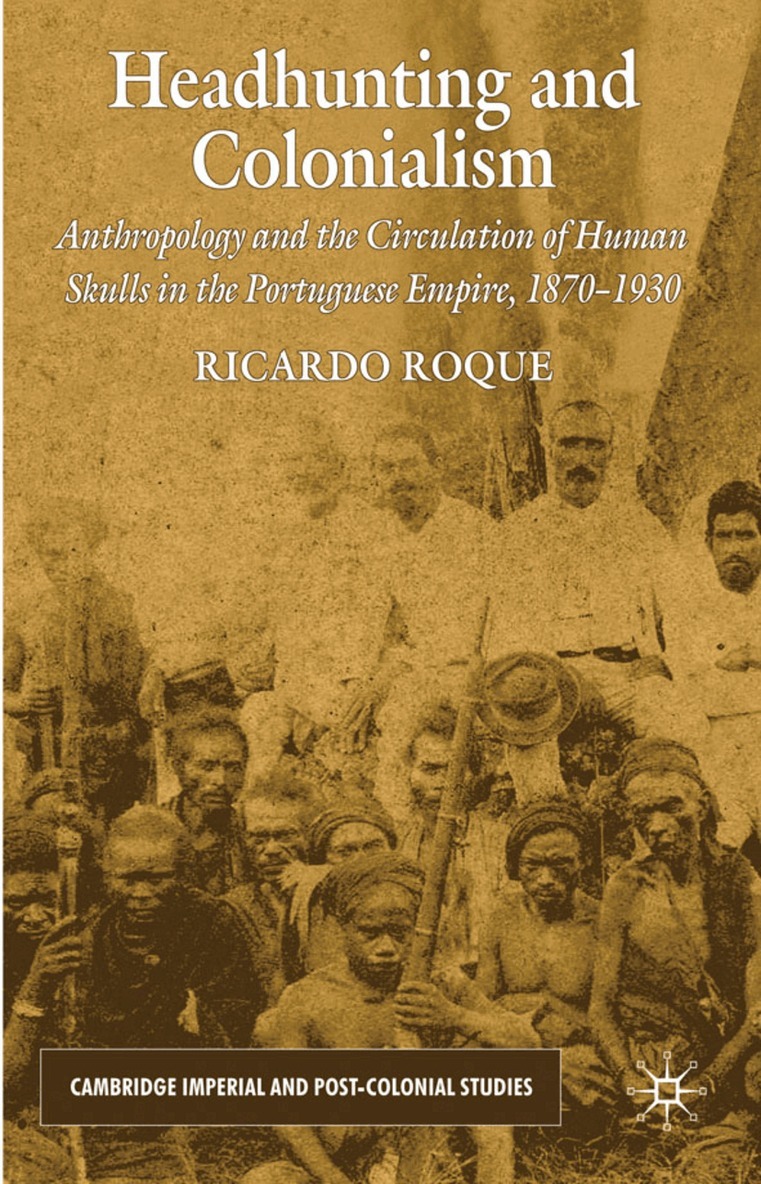
Headhunting and Colonialism
Anthropology and the Circulation of Human Skulls in the Portuguese Empire, 1870-1930
Av R. Roque
Del i serien Cambridge Imperial and Post-Colonial Studies
1508 kr
Beställningsvara. Skickas inom 10-15 vardagar. Fri frakt över 249 kr.
Beskrivning
Produktinformation
- Utgivningsdatum: 2010-01-22
- Mått: 140 x 216 x 24 mm
- Vikt: 525 g
- Format: Inbunden
- Språk: Engelska
- Serie: Cambridge Imperial and Post-Colonial Studies
- Antal sidor: 342
- Upplaga: 2010
- Förlag: Palgrave Macmillan
- ISBN: 9780230222052
Utforska kategorier
Mer om författaren
RICARDO ROQUE is Research Fellow at the Institute of Social Sciences, University of Lisbon, Portugal, and Postdoctoral Research Fellow at the University of Sydney, Australia. He works on the history and anthropology of colonialism, human sciences, and cross-cultural contact in the Portuguese-speaking world. He has published extensively on crime and rebellion in British India, including Thuggee: Banditry and the British in Early Nineteenth-Century India (2007) and The Great Fear of 1857: Rumours, Conspiracies and the Making of the Indian Uprising (2010).
Recensioner i media
'The scanty information about the skulls was not a limitation but a challenge for the Portuguese historian Ricardo Roque, who performs detective work of the skulls' trajectory to explore Portuguese colonialism, violence, collecting practices and anthropology.' - Fenneke Sisling, Bijdragen tot de Taal-, Land- en Volkenkunde 'Roque's Headhunting and Colonialism provides a stimulating and well-conceptualized read. His integration of primary research with theoretical outlooks throws light on historical topics that have generally been neglected in Pacific research. Portugal and Portuguese colonialism in East Timor have received only marginal consideration in historical research. His book thus figures as an important contribution to the fields of colonialism and ethno-geography in the Pacific.' - Rainer F. Buschmann, The Bulletin of the Pacific Circle 'The book is particularly timely in that it provides an excellent case study of the historical processes that may confuse efforts to determine the provenance of human remains, reminding us of the need for close investigation of provenance before any research or repatriation activities are commenced. [ ] It should be recommended reading for anyone involved in the museum management of human remains and, in particular, for those involved in repatriation.' - Michael Pickering, The Journal of Pacific History
Betyg & recensioner
0 recensioner
Inga recensioner tillgängliga.