• Fri frakt över 249 kr
  • •
  • Snabba leveranser
  • •
  • Billiga böcker
Kundservice

Du är på sajten för privatpersoner.

Företag, bibliotek eller offentlig verksamhet?

Du handlar på classic.bokus.com, där alla dina funktioner finns intakta.
Till classic.bokus.com
Bokus logotyp. Gå till startsidan.
  • Erbjudanden
  • Nyheter
  • Student
  • Topplistor
  • Barn & ungdom
  • Bokus Play
  • E-böcker
  • Pocketböcker
  • Spel & pussel

10% studentrabatt med kod TERM26

Sidfot

Mina sidor

    Hjälp

    • Kundservice
    • Vanliga frågor och svar
    • Frakt och leverans
    • Retur vid ångerrätt
    • Reklamera vara
    • Betalning
    • Köpvillkor
    • Allmänna villkor
    • Information om webbplatsens tillgänglighet

    Om Bokus

    • Om oss
    • Pressrum
    • För studenter
    • För företag
    • För bibliotek och offentlig verksamhet
    • För leverantörer
    • Hållbarhet

    Populärt

    • Aktuella erbjudanden
    • Presentkort
    • Studentlitteratur
    • Nya böcker
    • Topplistor
    • Signerade böcker
    • Engelska böcker

    Inspiration

    • Boktips
    • BookTok
    • Populära bokserier
    • Barnbokskaraktärer
    • Populära författare
    Logotyp för Bokus
    Följ oss på Facebook (extern länk)Följ oss på Instagram (extern länk)Följ oss på YouTube (extern länk)Följ oss på TikTok (extern länk)
    bokus @ CookiesAnpassa cookiesIntegritetspolicyKöpvillkor
    Till Citymail hemsida (extern länk)Till Budbee hemsida (extern länk)Till Postnord hemsida (extern länk)Till Schenker hemsida (extern länk)Till Early Bird hemsida (extern länk)Till Walleys hemsida (extern länk)
    1. Historia och arkeologi
    2. Historia
    3. Historia: särskilda händelser och ämnen

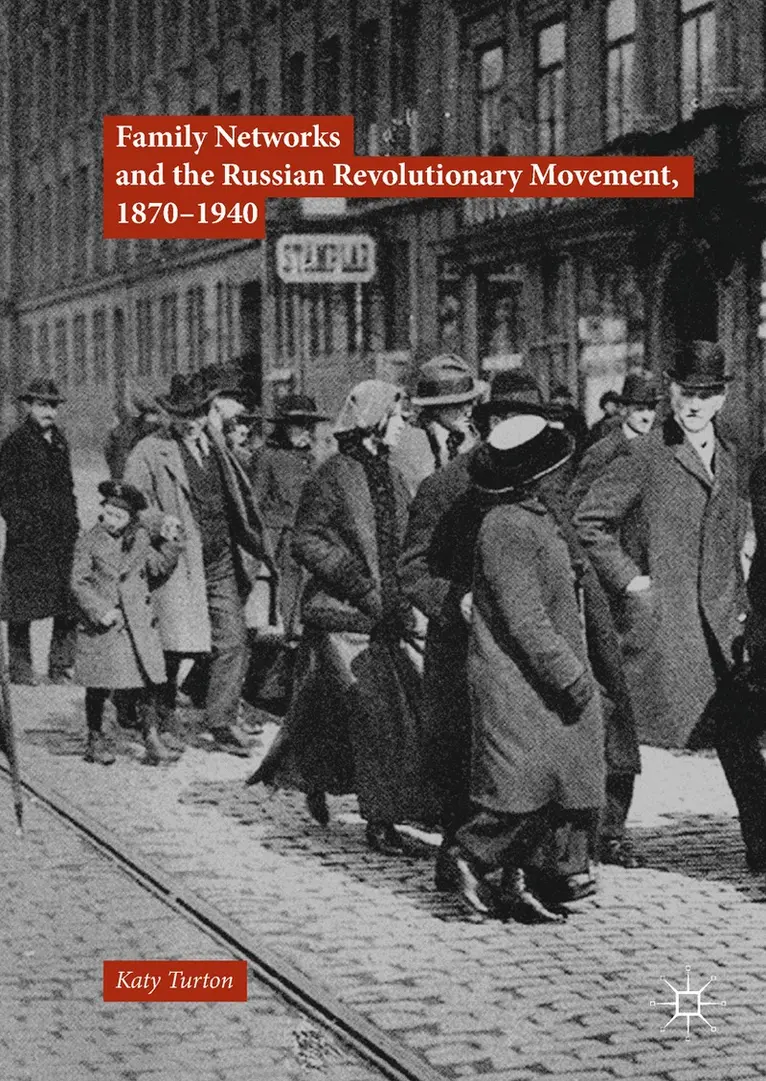
    Family Networks and the Russian Revolutionary Movement, 1870–1940

    AvKaty Turton

    Inbunden, Engelska, 2017

    1 124 kr

    Beställningsvara. Skickas inom 10-15 vardagar. Fri frakt över 249 kr.

    Fler format och utgåvor

    E-bok

    1 546 kr

    Beskrivning

    This book explores the role played by families in the Russian revolutionary movement and the first decades of the Soviet regime. While revolutionaries were expected to sever all family ties or at the very least put political concerns before personal ones, in practice this was rarely achieved. In the underground, revolutionaries of all stripes, from populists to social-democrats, relied on siblings, spouses, children and parents to help them conduct party tasks, with the appearance of domesticity regularly thwarting police interference. Family networks were also vital when the worst happened and revolutionaries were imprisoned or exiled. After the revolution, these family networks continued to function in the building of the new Soviet regime and amongst the socialist opponents who tried to resist the Bolsheviks. As the Party persecuted its socialist enemies and eventually turned on threats perceived within its ranks, it deliberately included the spouses and relatives of its opponents in an attempt to destroy family networks for good.

    Produktinformation

    • Utgivningsdatum:2017-12-14
    • Mått:148 x 210 x 20 mm
    • Vikt:483 g
    • Format:Inbunden
    • Språk:Engelska
    • Antal sidor:261
    • Upplaga:17001
    • Förlag:Palgrave Macmillan
    • ISBN:9780230393073

    Utforska kategorier

    • Historia: särskilda händelser och ämnen inom Historia och arkeologi
    • Socialhistoria och kulturhistoria inom Historia och arkeologi
    • Övriga länders och regioners historia inom Historia och arkeologi

    Mer om författaren

    Katy Turton is a historian of the Russian revolutionary movement, with a particular interest in the role of women. She has worked as a lecturer at the University of York, UK, and Queen’s University, Belfast, Ireland, and is the author of Forgotten Lives: The Role of Lenin’s Sisters in the Russian Revolutionary Movement.

    Innehållsförteckning

    • Chapter 1 Introduction.- Chapter 2 Joining the Movement.- Chapter 3 The Underground.- Chapter 4 Prison.- Chapter 5 Exile.- Chapter 6 Families after 1917.- Chapter 7 Opposition after 1917.- Chapter 8 Conclusion.