• Fri frakt över 249 kr
  • •
  • Snabba leveranser
  • •
  • Billiga böcker
Kundservice

Du är på sajten för privatpersoner.

Företag, bibliotek eller offentlig verksamhet?

Du handlar på classic.bokus.com, där alla dina funktioner finns intakta.
Till classic.bokus.com
Bokus logotyp. Gå till startsidan.
  • Erbjudanden
  • Nyheter
  • Student
  • Topplistor
  • Barn & ungdom
  • Bokus Play
  • E-böcker
  • Pocketböcker
  • Spel & pussel

Må bättre, för mindre! Upp till 50% rabatt på hälsoböcker

Sidfot

Mina sidor

    Hjälp

    • Kundservice
    • Vanliga frågor och svar
    • Frakt och leverans
    • Retur vid ångerrätt
    • Reklamera vara
    • Betalning
    • Köpvillkor
    • Allmänna villkor
    • Information om webbplatsens tillgänglighet

    Om Bokus

    • Om oss
    • Pressrum
    • För studenter
    • För företag
    • För bibliotek och offentlig verksamhet
    • För leverantörer
    • Hållbarhet

    Populärt

    • Aktuella erbjudanden
    • Presentkort
    • Studentlitteratur
    • Nya böcker
    • Topplistor
    • Signerade böcker
    • Engelska böcker

    Inspiration

    • Boktips
    • BookTok
    • Populära bokserier
    • Barnbokskaraktärer
    • Populära författare
    Logotyp för Bokus
    Följ oss på Facebook (extern länk)Följ oss på Instagram (extern länk)Följ oss på YouTube (extern länk)Följ oss på TikTok (extern länk)
    bokus @ CookiesAnpassa cookiesIntegritetspolicyKöpvillkor
    Till Citymail hemsida (extern länk)Till Budbee hemsida (extern länk)Till Postnord hemsida (extern länk)Till Schenker hemsida (extern länk)Till Early Bird hemsida (extern länk)Till Walleys hemsida (extern länk)
    1. Filosofi och religion
    2. Filosofi
    3. Filosofiska discipliner

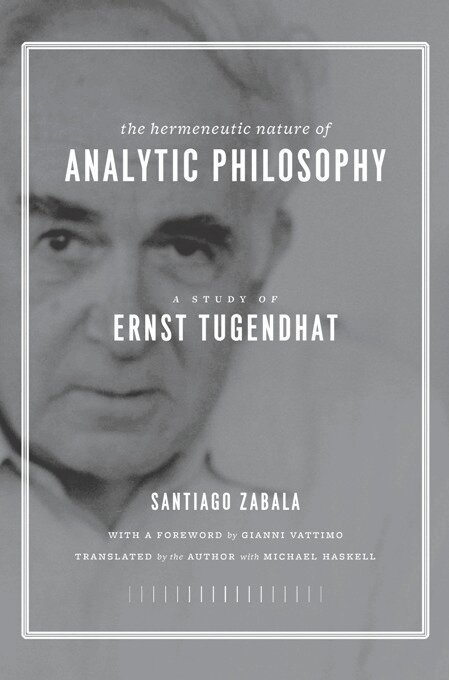
    Hermeneutic Nature of Analytic Philosophy

    A Study of Ernst Tugendhat

    AvSantiago Zabala

    Inbunden, Engelska, 2008

    538 kr

    Beställningsvara. Skickas inom 5-8 vardagar. Fri frakt över 249 kr.

    Fler format och utgåvor

    E-bok

    834 kr

    Beskrivning

    Contemporary philosopher-analytic as well as continental--tend to feel uneasy about Ernst Tugendhat, who, though he positions himself in the analytic field, poses questions in the Heideggerian style. Tugendhat was one of Martin Heidegger's last pupils and his least obedient, pursuing a new and controversial critical technique. Tugendhat took Heidegger's destruction of Being as presence and developed it in analytic philosophy, more specifically in semantics. Only formal semantics, according to Tugendhat, could answer the questions left open by Heidegger. Yet in doing this, Tugendhat discovered the latent "hermeneutic nature of analytic philosophy"--its post-metaphysical dimension-in which "there are no facts, but only true propositions." What Tugendhat seeks to answer is this: What is the meaning of thought following the linguistic turn? Because of the rift between analytic and continental philosophers, very few studies have been written on Tugendhat, and he has been omitted altogether from several histories of philosophy.Now that these two schools have begun to reconcile, Tugendhat has become an example of a philosopher who, in the words of Richard Rorty, "built bridges between continents and between centuries." Tugendhat is known more for his philosophical turn than for his phenomenological studies or for his position within analytic philosophy, and this creates some confusion regarding his philosophical propensities. Is Tugendhat analytic or continental? Is he a follower of Wittgenstein or Heidegger? Does he belong in the culture of analysis or in that of tradition? Santiago Zabala presents Tugendhat as an example of merged horizons, promoting a philosophical historiography that is concerned more with dialogue and less with classification. In doing so, he places us squarely within a dialogic culture of the future and proves that any such labels impoverish philosophical research.

    Produktinformation

    • Utgivningsdatum:2008-05-14
    • Mått:140 x 210 x undefined mm
    • Format:Inbunden
    • Språk:Engelska
    • Antal sidor:264
    • Förlag:Columbia University Press
    • Medarbetare:Gianni Vattimo
    • ISBN:9780231143882
    • Översättare:Michael Haskell, Michael (Publishing Systems Manager) Haskell

    Utforska kategorier

    • Filosofiska discipliner inom Filosofi och religion

    Mer om författaren

    Gianni Vattimo is emeritus professor of philosophy at the University of Turin and a member of the European Parliament. His books with Columbia University Press include A Farewell to Truth; The Responsibility of the Philosopher; Christianity, Truth, and Weakening Faith: A Dialogue (with Rene Girard); Not Being God: A Collaborative Autobiography (with Piergiorgio Paterlini); Art's Claim to Truth; After the Death of God (with John D. Caputo); Dialogue with Nietzsche; The Future of Religion (with Richard Rorty); Nihilism and Emancipation: Ethics, Politics, and Law; and After Christianity. Santiago Zabala is ICREA Research Professor of Philosophy at the University of Barcelona. His books include The Remains of Being: Hermeneutic Ontology After Metaphysics and The Hermeneutic Nature of Analytic Philosophy: A Study of Ernst Tugendhat.

    Recensioner i media

    Zabala's wonderful epilogue--alone worth the price of the book. -- Bruce Krajewski Common Knowledge Manifestos are the tools through which we fashion new moral identities. They conjure and interpellate a more expansive "we." Hermeneutic Communism teaches us that we not only have to interpret the inheritance of communism in ever more generative and creativeways, but also fashion a more ecumenical and humane "we," through the new stories we tell about how we got where we are today and where we should be going in the near future. -- Eduardo Mendieta Los Angeles Review of Books

    Innehållsförteckning

    • Translators' Preface Foreword by Gianni Vattimo Introduction 1. Overcoming Husserl: The Metaphysics of Phenomenology 2. Correcting Heidegger: Verifying Heidegger's Philosophy from Within 3. Semantizing Ontology: After the Metaphysics of Logical Positivism 4. Philosophizing Analytically: The Semantic Foundation of Philosophy Epilogue. The Linguistic Turn as the End of Metaphysics Notes Bibliography Index