• Fri frakt över 249 kr
  • •
  • Snabba leveranser
  • •
  • Billiga böcker
Kundservice

Du är på sajten för privatpersoner.

Företag, bibliotek eller offentlig verksamhet?

Du handlar på classic.bokus.com, där alla dina funktioner finns intakta.
Till classic.bokus.com
Bokus logotyp. Gå till startsidan.
  • Erbjudanden
  • Nyheter
  • Student
  • Topplistor
  • Barn & ungdom
  • Bokus Play
  • E-böcker
  • Pocketböcker
  • Spel & pussel

10% rabatt på allt med kod NYSTART10 →

Sidfot

Mina sidor

    Hjälp

    • Kundservice
    • Vanliga frågor och svar
    • Frakt och leverans
    • Retur vid ångerrätt
    • Reklamera vara
    • Betalning
    • Köpvillkor
    • Allmänna villkor
    • Information om webbplatsens tillgänglighet

    Om Bokus

    • Om oss
    • Pressrum
    • För studenter
    • För företag
    • För bibliotek och offentlig verksamhet
    • För leverantörer
    • Hållbarhet

    Populärt

    • Aktuella erbjudanden
    • Presentkort
    • Studentlitteratur
    • Nya böcker
    • Topplistor
    • Signerade böcker
    • Engelska böcker

    Inspiration

    • Boktips
    • BookTok
    • Populära bokserier
    • Barnbokskaraktärer
    • Populära författare
    Logotyp för Bokus
    Följ oss på Facebook (extern länk)Följ oss på Instagram (extern länk)Följ oss på YouTube (extern länk)Följ oss på TikTok (extern länk)
    bokus @ CookiesAnpassa cookiesIntegritetspolicyKöpvillkor
    Till Citymail hemsida (extern länk)Till Budbee hemsida (extern länk)Till Postnord hemsida (extern länk)Till Schenker hemsida (extern länk)Till Early Bird hemsida (extern länk)Till Walleys hemsida (extern länk)
    1. Samhälle och politik
    2. Sociologi och antropologi
    3. Antropologi

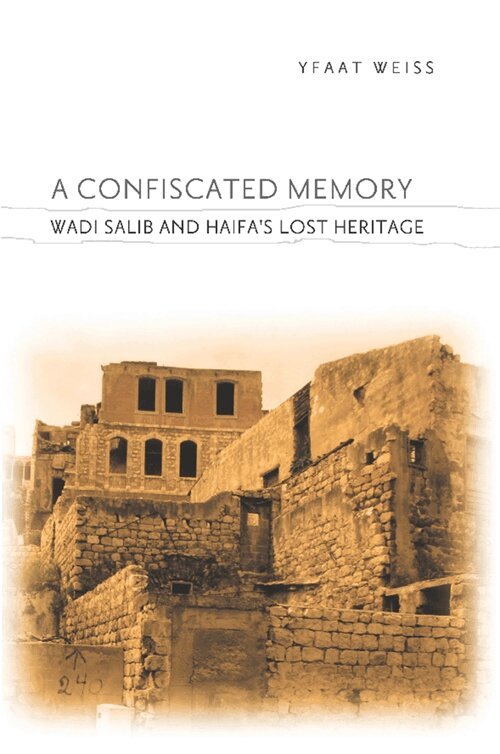
    Confiscated Memory

    Wadi Salib and Haifa's Lost Heritage

    AvYfaat Weiss

    Inbunden, Engelska, 2011

    678 kr

    Beställningsvara. Skickas inom 5-8 vardagar. Fri frakt över 249 kr.

    Fler format och utgåvor

    E-bok

    1 056 kr

    Beskrivning

    Yfaat Weiss tells the story of an Arab neighborhood in Haifa that later acquired iconic status in Israeli memory. In the summer of 1959, Jewish immigrants from Morocco rioted against local and national Israeli authorities of European origin. The protests of Wadi Salib generated for the first time a kind of political awareness of an existing ethnic discrimination among Israeli Jews. However, before that, Wadi Salib existed as an impoverished Arab neighborhood. The war of 1948 displaced its residents, even though the presence of the absentees and the Arab name still linger. Weiss investigates the erasure of Wadi Salib's Arab heritage and its emergence as an Israeli site of memory. At the core of her quest lies the concept of property, as she merges the constraints of former Arab ownership with requirements and restrictions pertaining to urban development and the emergence of its entangled memory. Establishing an association between Wadi Salib's Arab refugees and subsequent Moroccan evacuees, Weiss allegorizes the Israeli amnesia about both eventual stories--that of the former Arab inhabitants and that of the riots of 1959, occurring at different times but in one place.Describing each in detail, Weiss uncovers a complex, multilayered, and hidden history. Through her sensitive reading of events, she offers uncommon perspective on the personal and political making of Israeli belonging.

    Produktinformation

    • Utgivningsdatum:2011-12-27
    • Mått:152 x 229 x 22 mm
    • Vikt:494 g
    • Format:Inbunden
    • Språk:Engelska
    • Antal sidor:272
    • Förlag:Columbia University Press
    • ISBN:9780231152266

    Utforska kategorier

    • Antropologi inom Samhälle och politik
    • Mellanösterns historia inom Historia och arkeologi

    Mer om författaren

    Yfaat Weiss is professor in the Department of the History of the Jewish People and head of the Franz Rosenzweig Minerva Research Center for German-Jewish Literature and Cultural History at the Hebrew University of Jerusalem. She is the author of various studies on German and Central European history, as well as on Jewish and Israeli history. Together with Daniel Levy, she is coeditor of Challenging Ethnic Citizenship: German and Israeli Perspectives on Immigration.

    Recensioner i media

    This beautifully written book tells the story of refugees and immigrants who lived during the twentieth century in a single neighborhood in Haifa (Wadi Salib), enduring victimization as a result of war and long ethnic, national, and social discrimination and transformation. Yfaat Weiss focuses on a pre-1948 Palestinian neighborhood in a predominantly Jewish City, laying out the way the displacement of Palestinians gave way to Jewish migrants, who were themselves refugees enduring social discrimination in Israel and were evicted as a result of Israel's most famous social upheaval (1959), a watershed moment in Israeli ethnic relations between Ashkenazy and Sephardic Jews. This captivating history of a mosaic of exclusion and inclusion of national and immigrant minorities-in addition to its other merits, it is an outstanding urban study--reveals the parallel and separate experiences of repeated displacement. This community of 'diachronic neighbors' illuminates the memory of a place and a sequence of displacements. Weiss brings to life and revives the memory of disappeared cultures displaced by war and the drive to modernization. -- Elazar Barkan, professor of international and public affairs and director of the Institute for the Study of Human Rights, Columbia University, and coauthor of No Return, No Refuge: Rites and Rights in Minority Repatriation [T]his study adds to the broader discourse on identity and conflict in Israel. Choice [An] important contribution to the growing literature on collective memory and forgetting. -- Michael Feige, Ben-Gurion University American Historical Review

    Innehållsförteckning

    • Preface Acknowledgments Prologue: The Neighbors Who Get Rich on Our Account 1. War: Diachronic Neighbors 2. Commotion: "And I Wanted to Do Something Nice, Like They Have Up in Haddar" 3. Evacuation: City Lights 4. Khirbeh: Altneuland Epilogue: Iphrat Goshen and His Wife Miriam Move Into Said's House in Hallisa Notes Bibliography Index