• Fri frakt över 249 kr
  • •
  • Snabba leveranser
  • •
  • Billiga böcker
Kundservice

Du är på sajten för privatpersoner.

Företag, bibliotek eller offentlig verksamhet?

Du handlar på classic.bokus.com, där alla dina funktioner finns intakta.
Till classic.bokus.com
Bokus logotyp. Gå till startsidan.
  • Erbjudanden
  • Nyheter
  • Student
  • Topplistor
  • Barn & ungdom
  • Bokus Play
  • E-böcker
  • Pocketböcker
  • Spel & pussel

10% rabatt på allt med kod: NYSTART10 →

Sidfot

Mina sidor

    Hjälp

    • Kundservice
    • Vanliga frågor och svar
    • Frakt och leverans
    • Retur vid ångerrätt
    • Reklamera vara
    • Betalning
    • Köpvillkor
    • Allmänna villkor
    • Information om webbplatsens tillgänglighet

    Om Bokus

    • Om oss
    • Pressrum
    • För studenter
    • För företag
    • För bibliotek och offentlig verksamhet
    • För leverantörer
    • Hållbarhet

    Populärt

    • Aktuella erbjudanden
    • Presentkort
    • Studentlitteratur
    • Nya böcker
    • Topplistor
    • Signerade böcker
    • Engelska böcker

    Inspiration

    • Boktips
    • BookTok
    • Populära bokserier
    • Barnbokskaraktärer
    • Populära författare
    Logotyp för Bokus
    Följ oss på Facebook (extern länk)Följ oss på Instagram (extern länk)Följ oss på YouTube (extern länk)Följ oss på TikTok (extern länk)
    bokus @ CookiesAnpassa cookiesIntegritetspolicyKöpvillkor
    Till Citymail hemsida (extern länk)Till Budbee hemsida (extern länk)Till Postnord hemsida (extern länk)Till Schenker hemsida (extern länk)Till Early Bird hemsida (extern länk)Till Walleys hemsida (extern länk)
    1. Skönlitteratur
    2. Litteraturvetenskap
    3. Litteraturvetenskap

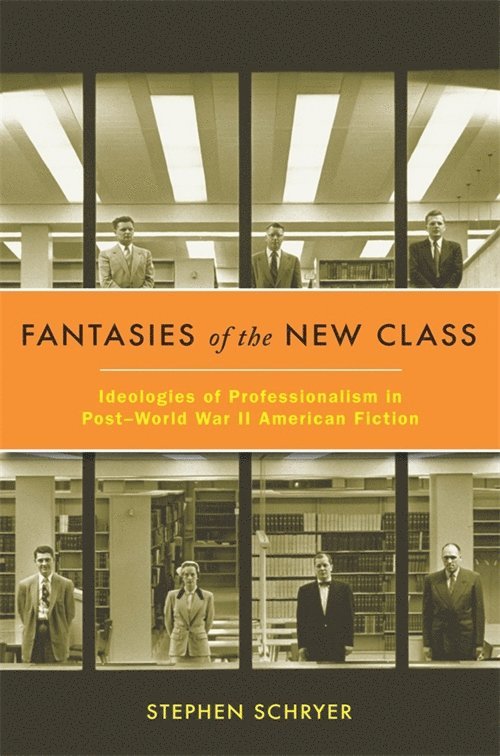
    Fantasies of the New Class

    Ideologies of Professionalism in Post–World War II American Fiction

    AvStephen Schryer

    Inbunden, Engelska, 2011

    1 228 kr

    Beställningsvara. Skickas inom 5-8 vardagar. Fri frakt över 249 kr.

    Fler format och utgåvor

    Häftad

    308 kr

    E-bok

    472 kr

    Beskrivning

    America's post-World War II prosperity created a boom in higher education, expanding the number of university-educated readers and making a new literary politics possible. Writers began to direct their work toward the growing professional class, and the American public in turn became more open to literary culture. This relationship imbued fiction with a new social and cultural import, allowing authors to envision themselves as unique cultural educators. It also changed the nature of literary representation: writers came to depict social reality as a tissue of ideas produced by knowledge elites. Linking literary and historical trends, Stephen Schryer underscores the exalted fantasies that arose from postwar American writers' new sense of their cultural mission. Hoping to transform capitalism from within, writers and critics tried to cultivate aesthetically attuned professionals who could disrupt the narrow materialism of the bourgeoisie. Reading Don DeLillo, Marge Piercy, Mary McCarthy, Saul Bellow, Ursula K.Le Guin, Ralph Ellison, and Lionel Trilling, among others, Schryer unravels the postwar idea of American literature as a vehicle for instruction, while highlighting both the promise and flaws inherent in this vision.

    Produktinformation

    • Utgivningsdatum:2011-03-15
    • Mått:140 x 210 x undefined mm
    • Format:Inbunden
    • Språk:Engelska
    • Antal sidor:288
    • Förlag:Columbia University Press
    • ISBN:9780231157568
    • Utmärkelser:Winner of Robert K. Martin Prize for Best Book 2015

    Utforska kategorier

    • Litteraturvetenskap inom Skönlitteratur

    Mer om författaren

    Stephen Schryer is assistant professor of English at the University of New Brunswick. He has published in PMLA, Modern Fiction Studies, and Arizona Quarterly.

    Recensioner i media

    Fantasies of the New Class is highly original and keenly argued. Stephen Schryer does a superb job of reconstructing concepts central to the intellectual and political debate of the era, and he shows, often with striking critical insight, how major writers worked out the subtleties and contradictions in these ideas. As Schryer convincingly demonstrates, these artists' ideas about literary vocation accompanied much more sweeping and consequential changes in the ways in which expertise and authority were conceived in the United States. His elegant analysis gives a compelling new map of postwar American cultural history. -- Sean McCann, Wesleyan University, author of A Pinnacle of Feeling: American Literature and Presidential Government Fantasies of the New Class is a major contribution to our understanding of the relationship between history and literary form in the postwar United States. Through sophisticated readings of fiction and sociology, Schryer ably shows how American writing from the 1940s through the 1980s resonates with (and helps to create) a transformed vision of the professional. Whether demonstrating the importance of understudied writers like Mary McCarthy or breathing new life into such critical favorites as Ralph Ellison and Don DeLillo, Schryer offers a fascinating new way to read the fiction of the second half of the twentieth century. With Fantasies of the New Class, he enters the first rank of scholarship on this period. -- Andrew Hoberek, University of Missouri-Columbia, author of The Twilight of the Middle Class: Post-World War II American Fiction and White-Collar Work Interesting, insightful synthesis. Choice

    Innehållsförteckning

    • Acknowledgments Introduction: Fantasies of the New Class 1. The Republic of Letters: The New Criticism, by Harvard Sociology 2. "Life Upon the Horns of the White Man's Dilemma": Ralph Ellison, by Gunnar Myrdal 3. Mary McCarthy's Field Guide to U.S. Intellectuals: Tradition and Modernization Theory in Birds of America 4. Saul Bellow's Class of Explaining Creatures: Mr. Sammler's Planet and the Rise of Neoconservatism 5. Experts Without Institutions: New Left Professionalism in Marge Piercy and Ursula K. Le Guin 6. Don DeLillo's Academia: Revisiting the New Class in White Noise Afterword Bibliography Index