• Fri frakt över 249 kr
  • •
  • Snabba leveranser
  • •
  • Billiga böcker
Kundservice

Du är på sajten för privatpersoner.

Företag, bibliotek eller offentlig verksamhet?

Du handlar på classic.bokus.com, där alla dina funktioner finns intakta.
Till classic.bokus.com
Bokus logotyp. Gå till startsidan.
  • Erbjudanden
  • Nyheter
  • Student
  • Topplistor
  • Barn & ungdom
  • Bokus Play
  • E-böcker
  • Pocketböcker
  • Spel & pussel

10% rabatt på allt med kod NYSTART10 →

Sidfot

Mina sidor

    Hjälp

    • Kundservice
    • Vanliga frågor och svar
    • Frakt och leverans
    • Retur vid ångerrätt
    • Reklamera vara
    • Betalning
    • Köpvillkor
    • Allmänna villkor
    • Information om webbplatsens tillgänglighet

    Om Bokus

    • Om oss
    • Pressrum
    • För studenter
    • För företag
    • För bibliotek och offentlig verksamhet
    • För leverantörer
    • Hållbarhet

    Populärt

    • Aktuella erbjudanden
    • Presentkort
    • Studentlitteratur
    • Nya böcker
    • Topplistor
    • Signerade böcker
    • Engelska böcker

    Inspiration

    • Boktips
    • BookTok
    • Populära bokserier
    • Barnbokskaraktärer
    • Populära författare
    Logotyp för Bokus
    Följ oss på Facebook (extern länk)Följ oss på Instagram (extern länk)Följ oss på YouTube (extern länk)Följ oss på TikTok (extern länk)
    bokus @ CookiesAnpassa cookiesIntegritetspolicyKöpvillkor
    Till Citymail hemsida (extern länk)Till Budbee hemsida (extern länk)Till Postnord hemsida (extern länk)Till Schenker hemsida (extern länk)Till Early Bird hemsida (extern länk)Till Walleys hemsida (extern länk)
    1. Kultur
    2. Scenkonst och film
    3. Film

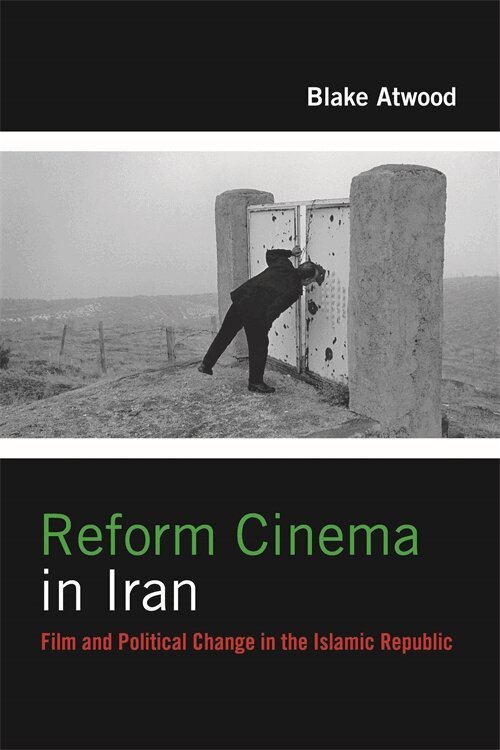
    Reform Cinema in Iran

    Film and Political Change in the Islamic Republic

    AvBlake Atwood

    Häftad, Engelska, 2016

    Del i serien Film and Culture Series

    310 kr

    Beställningsvara. Skickas inom 5-8 vardagar. Fri frakt över 249 kr.

    Fler format och utgåvor

    Inbunden

    Tillf. slut

    Beskrivning

    It is nearly impossible to separate contemporary Iranian cinema from the Islamic revolution that transformed film production in the country in the late 1970s. As the aims of the revolution shifted and hardened once Khomeini took power and as an eight-year war with Iraq dragged on, Iranian filmmakers confronted new restrictions. In the 1990s, however, the Reformist Movement, led by Mohammad Khatami, and the film industry, developed an unlikely partnership that moved audiences away from revolutionary ideas and toward a discourse of reform. In Reform Cinema in Iran, Blake Atwood examines how new industrial and aesthetic practices created a distinct cultural and political style in Iranian film between 1989 and 2007. Atwood analyzes a range of popular, art, and documentary films. He provides new readings of internationally recognized films such as Abbas Kiarostami's Taste of Cherry (1997) and Mohsen Makhmalbaf's Time for Love (1990), as well as those by Rakhshan Bani, Masud Kiami, and other key Iranian directors.At the same time, he also considers how filmmakers and the film industry were affected by larger political and religious trends that took shape during Mohammad Khatami's presidency (1997-2005). Atwood analyzes political speeches, religious sermons, and newspaper editorials and pays close attention to technological developments, particularly the rise of video, to determine their role in democratizing filmmaking and realizing the goals of political reform. He concludes with a look at the legacy of reform cinema, including films produced under Mahmoud Ahmadinejad, whose neoconservative discourse rejected the policies of reform that preceded him.

    Produktinformation

    • Utgivningsdatum:2016-11-08
    • Mått:152 x 229 x 15 mm
    • Vikt:370 g
    • Format:Häftad
    • Språk:Engelska
    • Serie:Film and Culture Series
    • Antal sidor:280
    • Förlag:Columbia University Press
    • ISBN:9780231178174

    Utforska kategorier

    • Film inom Kultur

    Mer om författaren

    Blake Atwood is an assistant professor in the Department of Middle Eastern Studies at the University of Texas at Austin. He is the coeditor, with Peter Decherney, of Iranian Cinema in a Global Context: Policy, Politics, and Form (2014).

    Recensioner i media

    Keenly aware of the collaboration between postcolonial cinemas and political movements, Atwood explores the Iranian film industry of the 1980s and 90s. Reform Cinema in Iran vividly reveals how Iranian films of that era and new digital technologies that captured them, participated in the definition of democracy, human rights, and civil society in Iran, thereby supplanting the revolutionary rhetoric of resistance and imperialism that had swept the nation a decade earlier. -- Negar Mottahedeh, Duke University From mysticism to music videos Blake Atwood's Reform Cinema in Iran gives us a comprehensive and alternative lens to understand recent Iranian film. It is an important book for students and lovers of Iranian cinema. -- Roxanne Varzi, University of California, Irvine In Reform Cinema in Iran, Atwood masterfully captures the complex and paradoxical relations between filmmaking and the desire for reconfigurations of the revolution's objectives. Particularly significant is his analysis of how film as a medium and new technologies of representation were instrumental in setting the terms of the reform movement. An important contribution to the study of Iranian cinema and contemporary Iran's cultural production. -- Nasrin Rahimieh, University of California, Irvine Reform Cinema is not only an essential book for institutions that teach Iranian cinema, but also a very valuable source for those studying the reform movement's place in Iranian history. Film International

    Innehållsförteckning

    • A Note on Transliteration Acknowledgments Introduction: Revolutionary Cinema and the Logic of Reform 1. When Love Entered Cinema: Mysticism and the Emerging Poetics of Reform 2. Screening Reform: Campaign Movies, Documentaries, and Urban Tehran 3. Video Democracies: Or, The Death of the Filmmaker 4. Who Killed the Tough Guy? Continuity and Rupture in the Filmfarsi Tradition 5. Film Archives and Online Videos: The Search for Reform in Post-Khatami Iran Conclusion: Iran's Cinema Museum and Political Unrest Notes Bibliography Filmography Index