• Fri frakt över 249 kr
  • •
  • Snabba leveranser
  • •
  • Billiga böcker
Kundservice

Du är på sajten för privatpersoner.

Företag, bibliotek eller offentlig verksamhet?

Du handlar på classic.bokus.com, där alla dina funktioner finns intakta.
Till classic.bokus.com
Bokus logotyp. Gå till startsidan.
  • Erbjudanden
  • Student
  • Topplistor
  • Barn & ungdom
  • Bokus Play
  • E-böcker
  • Ljudböcker
  • Pocketböcker
  • Spel och pussel

Pocketfynda! Hundratals böcker för 49 kr/st →

Sidfot

Mina sidor

    Hjälp

    • Kundservice
    • Vanliga frågor och svar
    • Frakt och leverans
    • Retur vid ångerrätt
    • Reklamera vara
    • Betalning
    • Köpvillkor
    • Allmänna villkor
    • Information om webbplatsens tillgänglighet

    Om Bokus

    • Om oss
    • Pressrum
    • För studenter
    • För företag
    • För bibliotek och offentlig verksamhet
    • För leverantörer
    • Hållbarhet

    Populärt

    • Aktuella erbjudanden
    • Presentkort
    • Studentlitteratur
    • Nya böcker
    • Topplistor
    • Signerade böcker
    • Engelska böcker

    Inspiration

    • Boktips
    • BookTok
    • Barnbokskaraktärer
    • Populära författare
    Logotyp för Bokus
    Följ oss på Facebook (extern länk)Följ oss på Instagram (extern länk)Följ oss på YouTube (extern länk)Följ oss på TikTok (extern länk)
    bokus @ CookiesAnpassa cookiesIntegritetspolicyKöpvillkor
    Till Citymail hemsida (extern länk)Till Budbee hemsida (extern länk)Till Postnord hemsida (extern länk)Till Schenker hemsida (extern länk)Till Early Bird hemsida (extern länk)Till Walleys hemsida (extern länk)
    1. Ekonomi och Ledarskap
    2. Nationalekonomi
    3. Mikroekonomi

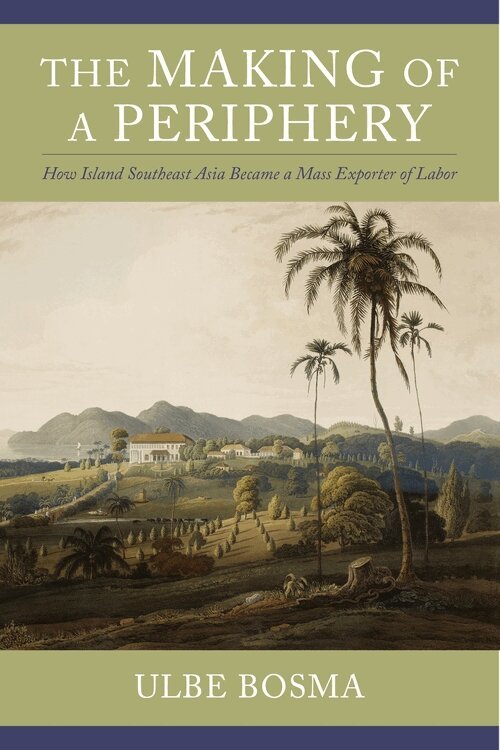
    Making of a Periphery

    How Island Southeast Asia Became a Mass Exporter of Labor

    AvUlbe Bosma

    Inbunden, Engelska, 2019

    Del i serien Columbia Studies in International and Global History

    553 kr

    Beställningsvara. Skickas inom 5-8 vardagar. Fri frakt över 249 kr.

    Beskrivning

    Island Southeast Asia was once a thriving region, and its products found eager consumers from China to Europe. Today, the Philippines, Indonesia, and Malaysia are primarily exporters of their surplus of cheap labor, with more than ten million emigrants from the region working all over the world. How did a prosperous region become a peripheral one?In The Making of a Periphery, Ulbe Bosma draws on new archival sources from the colonial period to the present to demonstrate how high demographic growth and a long history of bonded labor relegated Southeast Asia to the margins of the global economy. Bosma finds that the region’s contact with colonial trading powers during the early nineteenth century led to improved health care and longer life spans as the Spanish and Dutch colonial governments began to vaccinate their subjects against smallpox. The resulting abundance of workers ushered in extensive migration toward emerging labor-intensive plantation and mining belts. European powers exploited existing patron-client labor systems with the intermediation of indigenous elites and non-European agents to develop extractive industries and plantation agriculture. Bosma shows that these trends shaped the postcolonial era as these migration networks expanded far beyond the region. A wide-ranging comparative study of colonial commodity production and labor regimes, The Making of a Periphery is of major significance to international economic history, colonial and postcolonial history, and Southeast Asian history.

    Produktinformation

    • Utgivningsdatum:2019-07-30
    • Mått:152 x 229 x 26 mm
    • Vikt:590 g
    • Format:Inbunden
    • Språk:Engelska
    • Serie:Columbia Studies in International and Global History
    • Antal sidor:320
    • Förlag:Columbia University Press
    • ISBN:9780231188524

    Utforska kategorier

    • Mikroekonomi inom Ekonomi och Ledarskap
    • Ekonomisk historia inom Ekonomi och Ledarskap

    Mer om författaren

    Ulbe Bosma is senior researcher at the International Institute of Social History and professor of international comparative social history at the Free University of Amsterdam. His publications include Being “Dutch” in the Indies: A History of Creolisation and Empire, 1500–1920 (2008) and The Sugar Plantation in India and Indonesia: Industrial Production, 1770–2010 (2013).

    Recensioner i media

    The incorporation of island Southeast Asia into the global capitalist economy was not one homogenizing process, as scholars from Immanuel Wallerstein to Daron Acemoglu would have it. Instead, local demographic, social, and political conditions determined the emergence of a variety of labor relations, migration patterns, and patterns of social inequality. In this pathbreaking book, Ulbe Bosma shows in great empirical detail how these diverse forms emerged centuries ago and continue to influence the connection between island Southeast Asia and the capitalist world economy to this day.

    Innehållsförteckning

    • List of Tables, Maps, and FiguresAcknowledgmentsIntroduction1. Smallpox Vaccination and Demographic Divergences in the Nineteenth Century2. The External Arena: Local Slavery and International Trade3. Saved from Smallpox but Starving in the Sugar Cane Fields: Java and the Northwestern Philippines4. The Labor-Scarce Commodity Frontiers, 1870s–19425. The Periphery Revisited: Commodity Exports, Food, and Industry, 1870s–19426. Postcolonial Continuities in Plantations and MigrationsConclusionAppendix: Methodological NotesNotesBibliographyIndex