• Fri frakt över 249 kr
  • •
  • Snabba leveranser
  • •
  • Billiga böcker
Kundservice

Du är på sajten för privatpersoner.

Företag, bibliotek eller offentlig verksamhet?

Du handlar på classic.bokus.com, där alla dina funktioner finns intakta.
Till classic.bokus.com
Bokus logotyp. Gå till startsidan.
  • Erbjudanden
  • Student
  • Topplistor
  • Barn & ungdom
  • Bokus Play
  • E-böcker
  • Ljudböcker
  • Pocketböcker
  • Spel och pussel

Skapa nya rutiner – hälsoböcker upp till 50% →

Sidfot

Mina sidor

    Hjälp

    • Kundservice
    • Vanliga frågor och svar
    • Frakt och leverans
    • Retur vid ångerrätt
    • Reklamera vara
    • Betalning
    • Köpvillkor
    • Allmänna villkor
    • Information om webbplatsens tillgänglighet

    Om Bokus

    • Om oss
    • Pressrum
    • För studenter
    • För företag
    • För bibliotek och offentlig verksamhet
    • För leverantörer
    • Hållbarhet

    Populärt

    • Aktuella erbjudanden
    • Presentkort
    • Studentlitteratur
    • Nya böcker
    • Topplistor
    • Signerade böcker
    • Engelska böcker

    Inspiration

    • Boktips
    • BookTok
    • Barnbokskaraktärer
    • Populära författare
    Logotyp för Bokus
    Följ oss på Facebook (extern länk)Följ oss på Instagram (extern länk)Följ oss på YouTube (extern länk)Följ oss på TikTok (extern länk)
    bokus @ CookiesAnpassa cookiesIntegritetspolicyKöpvillkor
    Till Citymail hemsida (extern länk)Till Budbee hemsida (extern länk)Till Postnord hemsida (extern länk)Till Schenker hemsida (extern länk)Till Early Bird hemsida (extern länk)Till Walleys hemsida (extern länk)
    1. Psykologi och pedagogik
    2. Pedagogik

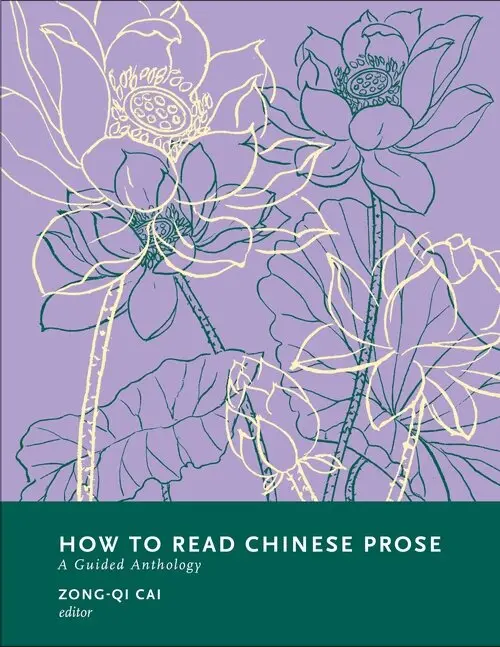
    How to Read Chinese Prose

    A Guided Anthology

    AvZong-qi Cai

    Häftad, Engelska, 2022

    Del i serien How to Read Chinese Literature

    365 kr

    Beställningsvara. Skickas inom 5-8 vardagar. Fri frakt över 249 kr.

    Beskrivning

    This book offers a guided introduction to Chinese nonfictional prose and its literary and cultural significance. It features more than one hundred major texts from antiquity through the Qing dynasty that exemplify major genres, styles, and forms of traditional Chinese prose. For each work, the book presents an English translation, the Chinese original, and accessible critical commentary by leading scholars.How to Read Chinese Prose teaches readers to appreciate the literary merits, stylistic devices, rhetorical choices, and argumentative techniques of a wide range of nonfictional writing. It emphasizes the interconnections among individual texts and across eras, helping readers understand the development of the literary tradition and what makes particular texts formative or distinctive within it. Organized by dynastic period and genre, the book identifies and examines four broad categories of prose—narrative, expository, descriptive, and communicative.How to Read Chinese Prose is suitable for a range of courses in Chinese literature, history, religion, and philosophy, as well as for scholars and interested readers seeking to deepen their knowledge of the Chinese prose tradition. A companion book, How to Read Chinese Prose in Chinese, is designed for Chinese-language learners and features many of the same texts.

    Produktinformation

    • Utgivningsdatum:2022-02-01
    • Mått:216 x 279 x 28 mm
    • Vikt:1 008 g
    • Format:Häftad
    • Språk:Engelska
    • Serie:How to Read Chinese Literature
    • Antal sidor:440
    • Förlag:Columbia University Press
    • ISBN:9780231203654

    Utforska kategorier

    • Pedagogik inom Psykologi och pedagogik

    Mer om författaren

    Zong-qi Cai is professor of Chinese and comparative literature at Lingnan University of Hong Kong and the University of Illinois at Urbana-Champaign. He is the general editor of the How to Read Chinese Literature series and the editor or coauthor of previous volumes in the series, most recently How to Read Chinese Poetry in Context: Poetic Culture from Antiquity Through the Tang (2018).

    Recensioner i media

    Professor Zongqi Cai and an all-star team have made a major contribution to the field of classical Chinese prose by creating the preeminent reader. The book, with its comprehensive coverage of periods, styles, and authors, and a lucid interpretation of textual meanings and linguistic structures, will be immensely useful to learners of not only Chinese prose but also Chinese humanities, from literature to history and thought.

    Innehållsförteckning

    • Thematic ContentsPreface to the How to Read Chinese Literature SeriesA Note on How to Use This AnthologyMajor Chinese DynastiesSymbols, Abbreviations, and Typographic ConventionsIntroduction: The Literary and Cultural Significance of Chinese Prose, by Zong-qi CaiPart I: Overview and Pre-Qin Times1. Anatomy of the Chinese Prose Form: An Overview, by Zong-qi Cai1.1 Zuo Tradition, “Zhu Zhiwu Convinced the Qin Army to Retreat”1.2 Han Yu, “A Prose Farewell to Dong Shaonan: Departing for North of the Yellow River”1.3 Fang Bao, “Anecdotes Concerning Zuo the Loyal and Steadfast”1.4 Mencius,“Fish Is What I Want”1.5 Zhuge Liang,“A Letter Admonishing My Son”1.6 Wu Jun, “A Letter to Zhu Yuansi” (excerpt)1.7 Liu Xie, Literary Mind,“Spirit Thought”1.8 Chen Zilong, “A Superior Man Detests Dying Without Achieving Renown”2. Pre-Qin Historical Prose: Zuo Tradition (Zuozhuan), by Wai-yee Li2.1 Zuo Tradition, “The Zheng Ruler Overcame Duan at Yan,”Yin 1.4 (722 BCE)2.2 Zuo Tradition, “Yong Ji’s Dilemma,” Huan 15.2 (697 BCE)2.3 Zuo Tradition, “Cai and Xi At Odds Because of Xi Gui,”Zhuang 10.3 (684 BCE)2.4 Zuo Tradition, “Xi Gui Had Not Spoken,” Zhuang 14.3 (680 BCE)2.5 Zuo Tradition, “Ziyuan Wanted to Seduce King Wen’s Wife,” Zhuang 28.3 (666 BCE)2.6 Zuo Tradition, “Cao Gui on Military Strategy,” Zhuang 10.1 (648 BCE)2.7 Zuo Tradition, “The Assassination of Lord Ling of Jin,”Xuan 2.3 (607 BCE)2.8 Zuo Tradition, “The Music Master Kuang on the Expulsion of a Ruler,” Xiang 14.6 (559 BCE)3. Pre-Qin Philosophical Prose: Recorded Conversations and Argumentative Essays, by Scott Bradley Cook3.1 Analects of Confucius, “Tai Bo” 8.83.2 Analects of Confucius, “Yong ye” 6.183.3 Analects of Confucius, “Zi han” 9.173.4 Analects of Confucius, “Shu er” 7.133.5 Analects of Confucius, “Wei zheng” 2.43.6 Analects of Confucius, “Xue er” 1.153.7 Analects of Confucius, “Yao yue” 20.23.8 Analects of Confucius, “Yang Huo” 17.43.9 Mencius, “Gongsun Chou, Part A” 2A.23.10 Mencius, “Gaozi, Part A” 6A.23.11 Xunzi, “Exhortation to Learning” (excerpt)3.12 Xunzi, “Human Nature Is Deplorable” (excerpt)3.13 Xunzi, “Discourse on Music” (excerpt)3.14 Analects of Confucius, “Tai Bo” 8.84. Pre-Qin Philosophical Prose: The Inner Chapters of the Zhuangzi, by Shuen-fu Lin4.1 Chapter 33, “The World” (excerpt)4.2 Chapter 27, “Metaphorical Words” (excerpt)4.3 Chapter 1, “Free and Easy Wandering” (excerpt)4.4 Chapter 6, “The Great Source as Teacher” (excerpt)4.5 Chapter 7, “Responding toBeing an Emperor or a King” (excerpt)4.6a Chapter 2, “Making All Things, and the Discussions on Them, Equal” (excerpts)4.6b Chapter 2, “Making All Things, and the Discussions on Them, Equal” (excerpts)4.6c Chapter 2, “Making All Things, and the Discussions on Them, Equal” (excerpts)4.7 Chapter 3, “The Principle of the Nurture of Life”4.8 Chapter 6, “The Great Source as Teacher” (excerpt)4.9 Chapter 5, “The Sign of Virtue Complete” (excerpt)4.10 Chapter 2, “Making All Things, and the Discussions on Them, Equal” (excerpt)4.11 Chapter 18, “Supreme Happiness” (excerpt)4.12 Chapter22, “Knowledge Wandered North” (excerpt)4.13 Chapter 6, “The Great Source as Teacher” (excerpt)5. Pre-Qin and Han Philosophical and Historical Prose: Self-Interest, Manipulation, and the Philosophical Marketplace, by Paul R. Goldin5.1 Stratagems of the Warring States, “Tang Ju Had an Audience with Lord Chunshen”5.2 Springs and Autumns of Mr. Lü (excerpt)5.3 Han Feizi, “The Five Kinds of Vermin” (excerpt)5.4 Han Feizi, “The Way of the Ruler” (excerpt)5.5 Sunzi, “Attacking Strategically” (excerpt)5.6 Sunzi, “Weak Points and Strong” (excerpt)5.7 Mozi, “The Will of Heaven, Part C” (excerpt)5.8 Grand Scribe’s Records, “Biographies of Amusing Figures” (excerpt)PART II: The Han Dynasty and the Six Dynasties6. Han Historical Prose: Sima Qian and the Grand Scribe’s Records (Shiji), by William H. Nienhauser Jr.6.1 Grand Scribe’s Records, “Biographies of the Assassin-Retainers, Cao Mo”6.2 Grand Scribe’s Records, “Biographies of the Assassin-Retainers, Yurang”6.3 Grand Scribe’s Records, “Biographies of the Assassin-Retainers, Jing Ke”7. Han and Six Dynasties Epistolary Prose: Memorials and Letters, by Liu Yucai, translated by Benjamin Ridgway7.1 Zhuge Liang, “Memorial on Deploying the Army”7.2 Li Mi, “Memorial Expressing My Feelings”7.3 Cao Zhi, “Memorial Seeking to Prove Myself”7.4 Sima Qian, “Letter to Ren An”7.5 Ji Kang, “Letter to Shan Tao Breaking Off Relations”7.6 Kong Rong, “Letter to Cao Cao on the Matter of Sheng Xiaozhang”7.7 Qiu Chi, “Letter to Chen Bo”7.8 Cao Pi, “Letter to Wu Zhi”7.9 Cao Zhi, “Letter to Wu Jizhong”7.10 Bao Zhao, “Letter to My Younger Sister Upon Ascending the Banks of Thunder Garrison”7.11 Wu Jun, “Letter to Zhu Yuansi”7.12 Tao Hongjing, “Letter Replying to Secretary Xie”8. Six Dynasties Informal Prose: A New Account of the Tales of the World (Shishuo xinyu), by Xinda Lian8.1 “Blameworthiness and Remorse, No. 13”8.2 “Cultivated Tolerance, No. 35”8.3 “Appearance and Manner, No. 1”8.4a “Virtuous Conduct, No. 11”8.4b “Virtuous Conduct, No. 13”8.5 “Virility and Boldness, No. 1”8.6 “Extravagance and Ostentation, No. 1”8.7 “Speech and Conversation, No. 31”8.8 “Grading Excellence, No. 35”8.9a “The Free and Unrestrained, No. 7”8.9b “The Free and Unrestrained, No. 8”8.9c “The Free and Unrestrained, No. 9”8.10 “Anger and Irascibility, No. 2”8.11 “Appreciation and Praise, No. 78”8.12a “The Free and Unrestrained, No. 47”8.12b “The Free and Unrestrained, No. 46”8.13 “Taunting and Teasing, No. 31”8.14 “Worthy Beauties, No. 5”8.15a “Speech and Conversation, No. 41”8.15b “Speech and Conversation, No. 19”8.16 “The Free and Unrestrained, No. 6”8.17a “Letters and Scholarship, No. 55” 8.17b “Letters and Scholarship, No. 40”8.18 “Appearance and Manner, No. 2”8.19 “Skill and Art, No. 9”8.20 “Appearance and Manner, No. 30”8.21a “Appreciation and Praise, No. 16”8.21b “Appreciation and Praise, No. 4”8.22 “Appearance and Manner, No. 39”8.23 “Admiration and Emulation, No. 6”8.24a “Appreciation and Praise, No. 56”8.24b “Appreciation and Praise, No. 50”8.25 “Appearance and Manner, No. 35”8.26 “Appreciation and Praise, No. 35”8.27 “Virtuous Conduct, No. 34”8.28 “Grading Excellence, No. 17”8.29a “Appearance and Manner, No. 11”8.29b “Appearance and Manner, No. 5”8.30 “Cultivated Tolerance, No. 2”8.31 “The Free and Unrestrained, No. 42”8.32a “Speech and Conversation, No. 61”8.32b “Speech and Conversation, No. 76”8.32c “Speech and Conversation, No. 32”8.32d “Speech and Conversation, No. 83”8.32e “Speech and Conversation, No. 55”8.33 “Insight and Judgment, No. 10”8.34 “The Free and Unrestrained, No. 22”9. Six Dynasties Parallel Prose: Descriptive and Expository, by Zong-qi Cai9.1 Zhuge Liang, “A Letter Admonishing My Son”9.2 Zong Bing, “Introduction to the Painting of Landscape”9.3 Wu Jun, “A Letter to Zhu Yuansi” (excerpt)9.4 Liu Xie, “Spirit Thought, from the Literary Mind” (excerpt)PART III: The Tang and Song Dynasties10. Tang and Song Expository Prose: The Practice of Persuasion by Alexei Kamran Ditter10.1 Han Yu, “On the Origin of the Way”(Yuan dao)10.2 Liu Zongyuan, “Theory of Heaven” (“Tianshuo”)10.3 Su Xun, “Disquisition on the Six States”(“Liu guo lun”)11. Tang and Song Occasional Prose: Accounts of Places, Things, and Events, by Ronald Egan11.1 Liu Zongyuan, “A Record of Little Stone Ramparts Hill”11.2 Han Yu, “A Prose Farewell to Dong Shaonan, Departing for North of the Yellow River”11.3 Fan Zongyan, “Yueyang Tower Inscription”11.4 Ouyang Xiu, “Account of My Three Zithers”11.5 Su Shi, “Record of a Nighttime Outing to Chengtian Temple”11.6 Su Shi, “A Nighttime Outing on First Prime”12. Tang and Song Occasional Prose: Prefaces and Letters, by Anna M. Shields and Stephen H. West12.1 Li Bai, “Preface to the Spring Feast at Peach Blossom Garden with My Younger Cousins”12.2 Meng Yuanlao, Hermit of the Hidden Thoroughwort, “Preface to A Record of Dreaming a Dream of Splendors Past in the Eastern Capital”12.3 Li Qingzhao, “Preface to a Handbook for ‘Capture the Horse’ ”12.4 Wang Wei, “Letter Sent to Illustrious Talent Pei Di from Wang Wei in the Mountains”12.5 Han Yu, “Letter in Reply to Li Yi”12.6 Su Zhe, “Letter Presented to Military Affairs Commissioner and Defender-in-Chief Han Qi”13. Tang and Song Biographical Prose: Allegorical and Fictional, by Yugen Wang13.1 Han Yu, “A Biography of Mao Ying, Master Brush Tip” (“Mao Ying zhuan”)13.2 Liu Zongyuan, “A Discourse of the Snake Catcher” (“Buzhe zhe shuo”)13.3 Liu Zongyuan, “An Account of Guo Hunchback, the Tree Grower” (“Zhongshu Guo Tuotuo zhuan”)13.4 Liu Zongyuan, “An Account of Li Chi” (“Li Chi zhuan”)13.5 Wang Anshi, “A Lament for Zhongyong” (“Shang Zhongyong”)13.6 Su Shi, “An Account of Fang Shanzi, Master Square Mountain” (“Fang Shanzi zhuan”)PART IV: The Ming and Qing Dynasties14. Ming and Qing Eight-Legged Essays, by Manling Luo14.1 Chen Zilong, “A Superior Man Detests Dying Without Achieving Renown”14.2 You Tong, “How Irresistible That Parting Glance of Her [Eyes, Like] Autumn Ripples?”15. Ming and Qing Occasional Prose: Letters and Funerary Inscriptions, by Rivi Handler-Spitz15.1 Gu Ruopu, “Letter to My Younger Brother”15.2 Fang Bao, “An Anecdote Concerning Zuo the Loyal and Steadfast”15.3 Zhang Pu, “The Five Men’s Grave Stele”15.4 Hou Fangyu, “Letter to Ruan Dacheng, Written in 1643 on the Day of My Departure from Jinling [Nanjing]”15.5 Xia Wanchun, “Letter to My Mothers, From Prison”15.6 Zheng Xie, “Fourth Letter to My Younger Cousin Mo, Written from My Official Residence in Fan County”15.7 Wang Duanshu, “Letter to Madame Feng”16. Ming and Qing Occasional Prose: Accounts of Places and People, by Yunte Huang16.1 Gui Youguang, “A Chronicle of the Xiangji Studio”16.2 Yuan Hongdao, “Record of a Trip to Manjing”16.3 Zhang Dai, “Mid-July on West Lake”16.4 Yuan Mei, “Discourse on Book Borrowing” (Huangsheng jieshu shuo)16.5 Yao Nai, “Record of Climbing Mount Tai” (Deng Taishan ji)16.6 Xue Fucheng, “Record of a Visit to an Oil Painting Exhibition in Paris” (Guan Bali youhua ji)Abbreviations of Primary TextsAcknowledgmentsContributorsGlossary-Index
    Hoppa över listan

    Du kanske också är intresserad av

    Zong-qi Cai, Jie Cui, Liu Yucai - How to Read Chinese Prose in Chinese, Häftad

    How to Read Chinese Prose in Chinese

    Zong-qi Cai, Jie Cui, Liu Yucai

    Häftad, 2022

    345 kr

    Zong-qi Cai - How to Read Chinese Poetry, Häftad

    How to Read Chinese Poetry

    Zong-qi Cai

    Häftad, 2007

    432 kr

    Zong-qi Cai - How to Read Chinese Poetry in Context, Inbunden

    How to Read Chinese Poetry in Context

    Zong-qi Cai

    Inbunden, 2018

    1 517 kr

    Zong-qi Cai, Jie Cui, Liu Yucai - How to Read Chinese Prose in Chinese, Inbunden

    How to Read Chinese Prose in Chinese

    Zong-qi Cai, Jie Cui, Liu Yucai

    Inbunden, 2022

    1 358 kr

    Zong-qi Cai - How to Read Chinese Poetry, Inbunden

    How to Read Chinese Poetry

    Zong-qi Cai

    Inbunden, 2007

    1 705 kr

    Patricia Sieber, Regina Llamas - How to Read Chinese Drama, Inbunden

    How to Read Chinese Drama

    Patricia Sieber, Regina Llamas

    Inbunden, 2022

    1 517 kr

    Patricia Sieber, Wenbo Chang, Yingde Guo, Xiaohui Zhang - How to Read Chinese Drama in Chinese, Häftad

    How to Read Chinese Drama in Chinese

    Patricia Sieber, Wenbo Chang, Yingde Guo, Xiaohui Zhang

    Häftad, 2023

    338 kr

    Zong-qi Cai - How to Read Chinese Poetry in Context, Häftad

    How to Read Chinese Poetry in Context

    Zong-qi Cai

    Häftad, 2018

    404 kr

    Zong-qi Cai - How to Read Chinese Prose, Inbunden

    How to Read Chinese Prose

    Zong-qi Cai

    Inbunden, 2022

    1 441 kr

    Patricia Sieber, Wenbo Chang, Yingde Guo, Xiaohui Zhang - How to Read Chinese Drama in Chinese, Inbunden

    How to Read Chinese Drama in Chinese

    Patricia Sieber, Wenbo Chang, Yingde Guo, Xiaohui Zhang

    Inbunden, 2023

    1 328 kr