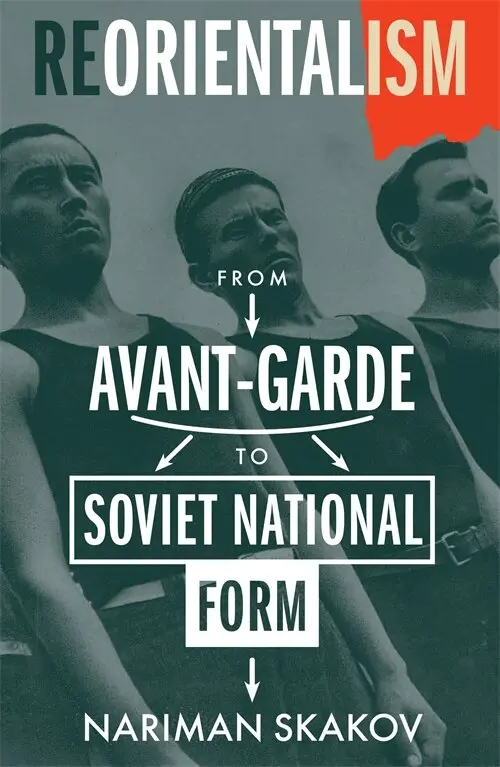
Inbunden, Engelska, 2025
Reorientalism
From Avant-Garde to Soviet National Form
Del i serien Modernist Latitudes
1421 kr
Beställningsvara. Skickas inom 7-10 vardagar. Fri frakt över 249 kr.
Fler format och utgåvor
Beskrivning
It is commonly believed that Stalinism ended a vibrant period in Soviet avant-garde art and literature. The triumph of socialist realism, in this view, curtailed experimentation with aesthetic form and replaced it with a call for clarity, accessibility, and ideological conformity. But Stalin’s formula “national in form, socialist in content” gave artists an opening for officially sanctioned formal innovation—as long as it drew on the national cultures of the Soviet Union.Nariman Skakov offers a new way to understand Soviet modernism, showing how writers and artists looked to the East to renew avant-garde experimentalism under Stalin. He traces how figures such as Victor Shklovsky, Aleksandr Rodchenko, Varvara Stepanova, Dziga Vertov, and Sergei Eisenstein responded to the Soviet state’s ideological demands by engaging with the traditions of the new socialist republics in Central Asia. The concept of national form gave these artists a sanctuary for aesthetic innovation, yet this experimentation relied on exoticization of the “strangeness” of the Soviet East and a fascination with ethnic others.Recasting Soviet aesthetics from the vantage point of Central Asia, Skakov rethinks orientalism and its relationship to socialism. Challenging conventional narratives of the fate of the Soviet avant-garde, Reorientalism provides a deeply original decentering of modernism.
Produktinformation
- Utgivningsdatum: 2025-10-28
- Mått: 156 x 235 x undefined mm
- Format: Inbunden
- Språk: Engelska
- Serie: Modernist Latitudes
- Antal sidor: 360
- Förlag: Columbia University Press
- ISBN: 9780231218009
Utforska kategorier
Mer om författaren
Nariman Skakov is a visiting researcher at the Slavic-Eurasian Research Center, Hokkaido University. He has taught at Stanford and Harvard Universities.
Recensioner i media
With dazzling erudition, Skakov shatters the spatial and temporal coordinates of Soviet modernism through its little-known encounters with Central Asia and Stalinist “national form”—encounters that enabled sustained artistic experimentation even amid the turn to socialist realism. The result is a transformative view of both the avant-garde’s fascination with the other and the early Soviet Union’s decolonizing claims.
Betyg & recensioner
0 recensioner
Inga recensioner tillgängliga.