• Fri frakt över 249 kr
  • •
  • Snabba leveranser
  • •
  • Billiga böcker
Kundservice

Du är på sajten för privatpersoner.

Företag, bibliotek eller offentlig verksamhet?

Du handlar på classic.bokus.com, där alla dina funktioner finns intakta.
Till classic.bokus.com
Bokus logotyp. Gå till startsidan.
  • Erbjudanden
  • Nyheter
  • Student
  • Topplistor
  • Barn & ungdom
  • Bokus Play
  • E-böcker
  • Pocketböcker
  • Spel & pussel

10% rabatt på allt med kod NYSTART10 →

Sidfot

Mina sidor

    Hjälp

    • Kundservice
    • Vanliga frågor och svar
    • Frakt och leverans
    • Retur vid ångerrätt
    • Reklamera vara
    • Betalning
    • Köpvillkor
    • Allmänna villkor
    • Information om webbplatsens tillgänglighet

    Om Bokus

    • Om oss
    • Pressrum
    • För studenter
    • För företag
    • För bibliotek och offentlig verksamhet
    • För leverantörer
    • Hållbarhet

    Populärt

    • Aktuella erbjudanden
    • Presentkort
    • Studentlitteratur
    • Nya böcker
    • Topplistor
    • Signerade böcker
    • Engelska böcker

    Inspiration

    • Boktips
    • BookTok
    • Populära bokserier
    • Barnbokskaraktärer
    • Populära författare
    Logotyp för Bokus
    Följ oss på Facebook (extern länk)Följ oss på Instagram (extern länk)Följ oss på YouTube (extern länk)Följ oss på TikTok (extern länk)
    bokus @ CookiesAnpassa cookiesIntegritetspolicyKöpvillkor
    Till Citymail hemsida (extern länk)Till Budbee hemsida (extern länk)Till Postnord hemsida (extern länk)Till Schenker hemsida (extern länk)Till Early Bird hemsida (extern länk)Till Walleys hemsida (extern länk)
    1. Samhälle och politik
    2. Sociologi och antropologi
    3. Antropologi

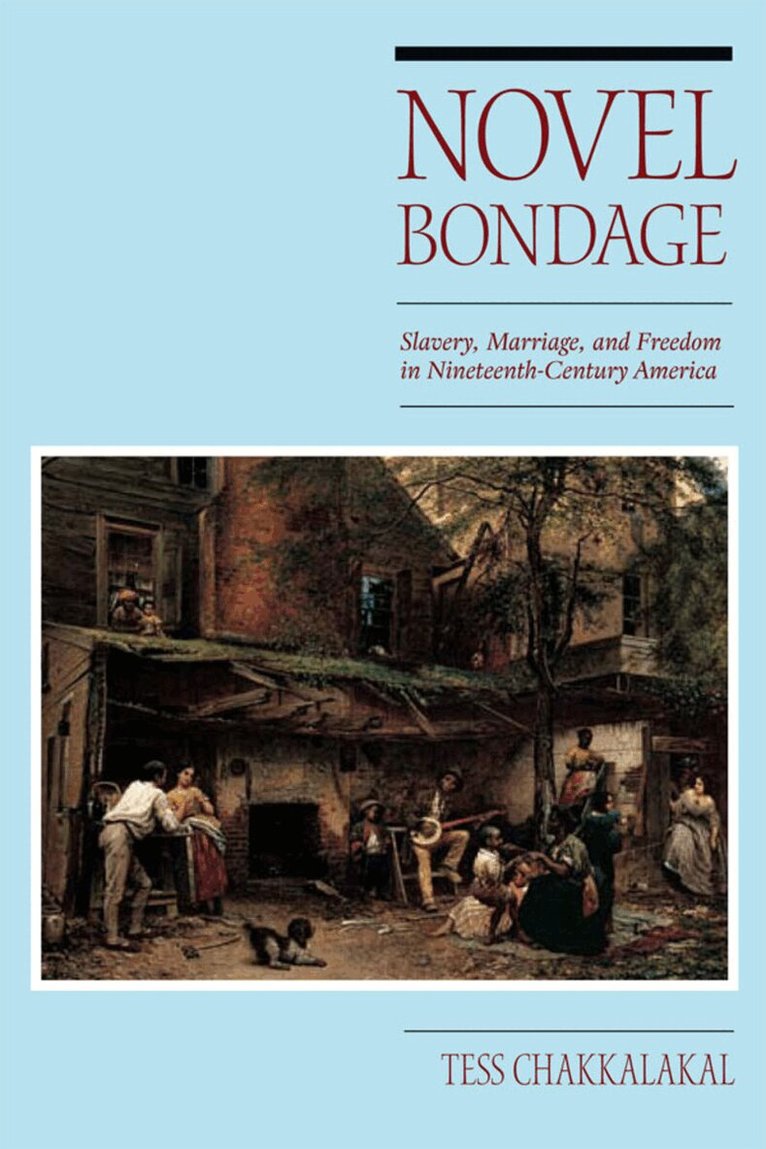
    Novel Bondage

    Slavery, Marriage, and Freedom in Nineteenth-Century America

    AvTess Chakkalakal

    E-bok
    Engelska, 2011

    550 kr

    Läs direkt i Bokus Reader – eller ladda ned till din enhet

    Fler format och utgåvor

    Inbunden

    1 394 kr

    Häftad

    339 kr

    Beskrivning

    Novel Bondage unravels the interconnections between marriage, slavery, and freedom through renewed readings of canonical nineteenth-century novels and short stories by black and white authors. Situating close readings of fiction alongside archival material concerning the actual marriages of authors such as Lydia Maria Child, Harriet Beecher Stowe, William Wells Brown, and Frank J. Webb, Chakkalakal examines how these early novels established literary conventions for describing the domestic lives of American slaves in describing their aspirations for personal and civic freedom. Exploring this theme in post-Civil War works by Frances E.W. Harper and Charles Chesnutt, she further reveals how the slave-marriage plot served as a fictional model for reforming marriage laws. Chakkalakal invites readers to rethink the "marital work" of nineteenth-century fiction and the historical role it played in shaping our understanding of the literary and political meaning of marriage, then and now.

    Produktinformation

    • Utgivningsdatum:2011-07-19
    • Språk:Engelska
    • Antal sidor:168
    • Filformat:EPUB
    • Kopieringsskydd:LCP
    • ISBN:9780252093388
    • Förlag:University of Illinois Press

    Utforska kategorier

    • Antropologi inom Samhälle och politik

    Mer om författaren

    Tess Chakkalakal is an assistant professor of Africana studies and English at Bowdoin College.

    Recensioner i media

    Selected as one of two winners of the Robert K. Martin Prize for Best Book, sponsored by the Canadian Association for American Studies (CAAS), 2012.— the Canadian Association for American Studies (CAAS)

    Innehållsförteckning

    • CoverTitle pageCopyright pageContentsIntroduction: The Slave-Marriage Plot1. Between Fiction and Experience: William Wells Brown's Clotel2. Dred and the Freedom of Marriage: Harriet Beecher Stowe's Fiction of Law3. Free, Black, and Married: Frank J. Webb's The Garies and Their Friends4. "A Legally Unmarried Race": Frances Harper's Marital Mission5. Wedded to Race: Charles Chesnutt's Stories of the Color LineConclusion: Reading Hannah Crafts in the Twenty-First CenturyNotesSelected BibliographyIndex