• Fri frakt över 249 kr
  • •
  • Snabba leveranser
  • •
  • Billiga böcker
Kundservice

Du är på sajten för privatpersoner.

Företag, bibliotek eller offentlig verksamhet?

Du handlar på classic.bokus.com, där alla dina funktioner finns intakta.
Till classic.bokus.com
Bokus logotyp. Gå till startsidan.
  • Erbjudanden
  • Nyheter
  • Student
  • Topplistor
  • Barn & ungdom
  • Bokus Play
  • E-böcker
  • Pocketböcker
  • Spel & pussel

10% rabatt på allt med kod: NYSTART10 →

Sidfot

Mina sidor

    Hjälp

    • Kundservice
    • Vanliga frågor och svar
    • Frakt och leverans
    • Retur vid ångerrätt
    • Reklamera vara
    • Betalning
    • Köpvillkor
    • Allmänna villkor
    • Information om webbplatsens tillgänglighet

    Om Bokus

    • Om oss
    • Pressrum
    • För studenter
    • För företag
    • För bibliotek och offentlig verksamhet
    • För leverantörer
    • Hållbarhet

    Populärt

    • Aktuella erbjudanden
    • Presentkort
    • Studentlitteratur
    • Nya böcker
    • Topplistor
    • Signerade böcker
    • Engelska böcker

    Inspiration

    • Boktips
    • BookTok
    • Populära bokserier
    • Barnbokskaraktärer
    • Populära författare
    Logotyp för Bokus
    Följ oss på Facebook (extern länk)Följ oss på Instagram (extern länk)Följ oss på YouTube (extern länk)Följ oss på TikTok (extern länk)
    bokus @ CookiesAnpassa cookiesIntegritetspolicyKöpvillkor
    Till Citymail hemsida (extern länk)Till Budbee hemsida (extern länk)Till Postnord hemsida (extern länk)Till Schenker hemsida (extern länk)Till Early Bird hemsida (extern länk)Till Walleys hemsida (extern länk)
    1. Kultur
    2. Scenkonst och film
    3. Film

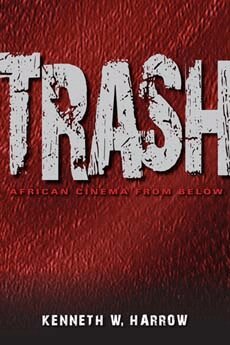
    Trash

    African Cinema from Below

    AvKenneth W. Harrow

    Häftad, Engelska, 2013

    Del i serien Indiana University Press (IPS)

    342 kr

    Beställningsvara. Skickas inom 5-8 vardagar. Fri frakt över 249 kr.

    Beskrivning

    Highlighting what is melodramatic, flashy, low, and gritty in the characters, images, and plots of African cinema, Kenneth W. Harrow uses trash as the unlikely metaphor to show how these films have depicted the globalized world. Rather than focusing on topics such as national liberation and postcolonialism, he employs the disruptive notion of trash to propose a destabilizing aesthetics of African cinema. Harrow argues that the spread of commodity capitalism has bred a culture of materiality and waste that now pervades African film. He posits that a view from below permits a way to understand the tropes of trash present in African cinematic imagery.

    Produktinformation

    • Utgivningsdatum:2013-04-09
    • Mått:152 x 229 x 18 mm
    • Vikt:590 g
    • Format:Häftad
    • Språk:Engelska
    • Serie:Indiana University Press (IPS)
    • Antal sidor:264
    • Förlag:Indiana University Press
    • ISBN:9780253007513

    Utforska kategorier

    • Film inom Kultur

    Mer om författaren

    Kenneth W. Harrow is Distinguished Professor of English at Michigan State University. He is author of Postcolonial African Cinema: From Political Engagement to Postmodernism (IUP, 2007).

    Recensioner i media

    "Reading these films in this manner becomes a metaphor of how one must understand African nations in a global context . . . . highly original and deeply historicized."—Frieda Ekotto, University of Michigan"Kenneth W. Harrow's Trash . . . is a timely intervention in the theorization of African cinema. It is an impassioned and committed interrogation of hybridity, syncretism and cross-fertilizaiton in postcolonial cinema and one that seeks to both celebrate and renegotiate the image of the marginalized and the discarded.5.2 2014"—Transnational Cinemas"Trash brings about a fresh perspective that figures African cinema as a type of mirror of condition, a kind of cinema verité that disrupts the aesthetics of necropolitics—whether from the north or the south—and the aesthetic order of high cinema."—African Arts"Harrow's engaging book offers readers a glimpse into the trash heaps . . . squalor, and poverty that have often been depicted in African cinema since independence, but which have rarely been the object of critical study.April 2014"—African Studies Review"Trash inspires a rigorous questioning of how we think about 'Africa from below' in our scholarly research: it is a speculative, probing, provocative book filled with questions about power, exclusion, representation, and subjectivity, and about how African cinema engages social realities without necessarily serving up palatable dishes of realism or political critique."—Journal of African History"This book is a work of erudition, understanding, engagement, and enthusiastic committment to African cinema studies and literature. . . . Highly recommended."—Choice

    Innehållsförteckning

    • Preface and AcknowledgementsIntroduction1. Bataille, Stam, and Locations of Trash2. Rancière: Aesthetics, Its Mésententes and Discontents3. The Out-of-Place Scene of Trash4. Globalization's Dumping Groun:, The Case of Trafigura5. Agency and the Mosquito: Mitchell and Chakrabarty6. Trashy Women: Karmen Gei, l'Oiseau Rebelle7. Trashy Women, Fallen Men: Fanta Nacro's "Puk Nini" and La Nuit de la vérité 8. Opening the Distribution of the Sensible: Kimberly Rivers and Trouble the Water9. Abderrahmane Sissako's Bamako and the Image: Trash in Its Materiality10. The Counter-Archive for a New Postcolonial Order: O Herói and Daratt 11. Nollywood and Its Masks: Fela, Osuofia in London, and Butler's Assujetissement12. Trash's Last Leaves: Nollywood, Nollywood, NollywoodNotesBibliographyFilmographyIndex