• Fri frakt över 249 kr
  • •
  • Snabba leveranser
  • •
  • Billiga böcker
Kundservice

Du är på sajten för privatpersoner.

Företag, bibliotek eller offentlig verksamhet?

Du handlar på classic.bokus.com, där alla dina funktioner finns intakta.
Till classic.bokus.com
Bokus logotyp. Gå till startsidan.
  • Erbjudanden
  • Nyheter
  • Student
  • Topplistor
  • Barn & ungdom
  • Bokus Play
  • E-böcker
  • Pocketböcker
  • Spel & pussel

10% rabatt på allt med kod: NYSTART10 →

Sidfot

Mina sidor

    Hjälp

    • Kundservice
    • Vanliga frågor och svar
    • Frakt och leverans
    • Retur vid ångerrätt
    • Reklamera vara
    • Betalning
    • Köpvillkor
    • Allmänna villkor
    • Information om webbplatsens tillgänglighet

    Om Bokus

    • Om oss
    • Pressrum
    • För studenter
    • För företag
    • För bibliotek och offentlig verksamhet
    • För leverantörer
    • Hållbarhet

    Populärt

    • Aktuella erbjudanden
    • Presentkort
    • Studentlitteratur
    • Nya böcker
    • Topplistor
    • Signerade böcker
    • Engelska böcker

    Inspiration

    • Boktips
    • BookTok
    • Populära bokserier
    • Barnbokskaraktärer
    • Populära författare
    Logotyp för Bokus
    Följ oss på Facebook (extern länk)Följ oss på Instagram (extern länk)Följ oss på YouTube (extern länk)Följ oss på TikTok (extern länk)
    bokus @ CookiesAnpassa cookiesIntegritetspolicyKöpvillkor
    Till Citymail hemsida (extern länk)Till Budbee hemsida (extern länk)Till Postnord hemsida (extern länk)Till Schenker hemsida (extern länk)Till Early Bird hemsida (extern länk)Till Walleys hemsida (extern länk)
    1. Skönlitteratur
    2. Litteraturvetenskap
    3. Litteraturvetenskap

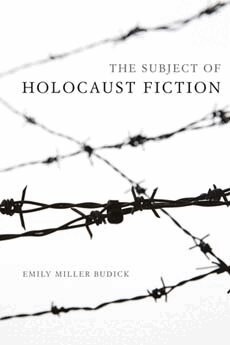
    Subject of Holocaust Fiction

    AvEmily Miller Budick

    Inbunden, Engelska, 2015

    Del i serien Jewish Literature and Culture

    1 015 kr

    Beställningsvara. Skickas inom 5-8 vardagar. Fri frakt över 249 kr.

    Fler format och utgåvor

    Häftad

    385 kr

    Beskrivning

    Fictional representations of horrific events run the risk of undercutting efforts to verify historical knowledge and may heighten our ability to respond intellectually and ethically to human experiences of devastation. In this captivating study of the epistemological, psychological, and ethical issues underlying Holocaust fiction, Emily Miller Budick examines the subjective experiences of fantasy, projection, and repression manifested in Holocaust fiction and in the reader's encounter with it. Considering works by Cynthia Ozick, Art Spiegelman, Aharon Appelfeld, Michael Chabon, and others, Budick investigates how the reading subject makes sense of these fictionalized presentations of memory and trauma, victims and victimizers.

    Produktinformation

    • Utgivningsdatum:2015-05-20
    • Mått:152 x 229 x 19 mm
    • Vikt:513 g
    • Format:Inbunden
    • Språk:Engelska
    • Serie:Jewish Literature and Culture
    • Antal sidor:266
    • Förlag:Indiana University Press
    • ISBN:9780253016263

    Utforska kategorier

    • Litteraturvetenskap inom Skönlitteratur

    Mer om författaren

    Emily Miller Budick holds the Ann and Joseph Edelman Chair in American Studies at The Hebrew University of Jerusalem, where she is also chair of the Department of English and Director of the Center for Literary Studies. Her major publications include Fiction and Historical Consciousness, Engendering Romance, Blacks and Jews in Literary Conversation, and Aharon Appelfeld's Fiction (IUP, 2004).

    Recensioner i media

    The Subject of Holocaust Fiction is a profoundly challenging work of literary criticism by a brave critic who asks us to look beyond the difficult hard facts of the Holocaust to the complex subjectivities of all those affected by it, a scholar whose final legacy to us is the insistence that the subject of humanities scholarship must ultimately and always be the human.(Studies in Contemporary Jewry) E. M. Budick's The Subject of Holocaust Fiction is a timely addition to the steadily growing academic canon on Holocaust fiction. . . As Budick rightly acknowledges, it is . . . self-scrutiny performed both by its writers and by its readers, that makes Holocaust fiction so important and that should ensure its future standing.(Literature and History) Budick (Hebrew University of Jerusalem) presents new readings of well-known and understudied but significant texts of Holocaust fiction. . . This is an important contribution to literary studies. . . . Highly recommended.V.47 2016(Choice) [E]xamining the themes of mourning, memory, and love, and considering the relationship of the Holocaust to apartheid and animal slaughter, the author provides a framework for students of literature, history, religion, philosophy, and ethics.(American Reference Book Annual) Gathers together almost a dozen essays on key Holocaust writers, from Cynthia Ozick and William Styron (in his role as the author of Sophie's Choice) to W. G. Sebald and Art Spiegelman. 5/11/16(Times Literary Supplement) Emily Miller Budick packs an astonishing number of texts into The Subject of Holocaust Fiction and explores them through a number of lenses. Students and scholars of comparative literatures, Holocaust studies, or trauma and psychology in literature will all find something of interest, and for those familiar with many of the above texts the intertextual reading the author weaves through the book makes it a useful new resource.(Holocaust Studies)

    Innehållsförteckning

    • IntroductionPrologue: Ghostwriting the Holocaust: The Ghost Writer, The Diary, The Kindly Ones, and MeSection One: Psychoanalytic Listening and Fictions of the Holocaust1. Voyeurism, Complicated Mourning, and the Fetish: Cynthia Ozick's The Shawl2. Forced Confessions: Subject Position, Framing, and the "Art" of Spiegelman's Maus3. Aryeh Lev Stollman's Far Euphrates: Re-picturing the Pre-Memory MomentSection Two: Golems, Ghosts, Idols, and Messiahs: Complicated Mourning and the Inter-textual Construction of a Jewish Symptom4. Bruno Schulz, the Messiah, and Ghost/writing the Past5. A Jewish History of Blocked Mourning and Love6. See Under: MourningSection Three: Mourning Becomes the Nations: Styron, Schlink, Sebald7. Blacks, Jews, and Southerners in William Styron's Sophie's Choice8. (Re)Reading the Holocaust from a German Point of View: Berhard Schlink's The Reader9. Mourning and Melancholia in W. G. Sebald's AusterlitzEpilogue: Holocaust, Apartheid, and the Slaughter of Animals: J. M. Coetzee's Elizabeth Costello and Cora Diamond's "Difficulty of Reality"NotesBibliographyIndex