• Fri frakt över 249 kr
  • •
  • Snabba leveranser
  • •
  • Billiga böcker
Kundservice

Du är på sajten för privatpersoner.

Företag, bibliotek eller offentlig verksamhet?

Du handlar på classic.bokus.com, där alla dina funktioner finns intakta.
Till classic.bokus.com
Bokus logotyp. Gå till startsidan.
  • Erbjudanden
  • Nyheter
  • Student
  • Topplistor
  • Barn & ungdom
  • Bokus Play
  • E-böcker
  • Pocketböcker
  • Spel & pussel

10% rabatt på allt med kod: NYSTART10 →

Sidfot

Mina sidor

    Hjälp

    • Kundservice
    • Vanliga frågor och svar
    • Frakt och leverans
    • Retur vid ångerrätt
    • Reklamera vara
    • Betalning
    • Köpvillkor
    • Allmänna villkor
    • Information om webbplatsens tillgänglighet

    Om Bokus

    • Om oss
    • Pressrum
    • För studenter
    • För företag
    • För bibliotek och offentlig verksamhet
    • För leverantörer
    • Hållbarhet

    Populärt

    • Aktuella erbjudanden
    • Presentkort
    • Studentlitteratur
    • Nya böcker
    • Topplistor
    • Signerade böcker
    • Engelska böcker

    Inspiration

    • Boktips
    • BookTok
    • Populära bokserier
    • Barnbokskaraktärer
    • Populära författare
    Logotyp för Bokus
    Följ oss på Facebook (extern länk)Följ oss på Instagram (extern länk)Följ oss på YouTube (extern länk)Följ oss på TikTok (extern länk)
    bokus @ CookiesAnpassa cookiesIntegritetspolicyKöpvillkor
    Till Citymail hemsida (extern länk)Till Budbee hemsida (extern länk)Till Postnord hemsida (extern länk)Till Schenker hemsida (extern länk)Till Early Bird hemsida (extern länk)Till Walleys hemsida (extern länk)
    1. Samhälle och politik
    2. Samhälle och kultur
    3. Sociala grupper och identitet

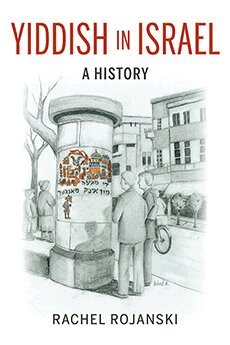
    Yiddish in Israel

    A History

    AvRachel Rojanski

    Häftad, Engelska, 2020

    Del i serien Perspectives on Israel Studies

    432 kr

    Beställningsvara. Skickas inom 5-8 vardagar. Fri frakt över 249 kr.

    Fler format och utgåvor

    Inbunden

    1 048 kr

    Beskrivning

    Yiddish in Israel: A History challenges the commonly held view that Yiddish was suppressed or even banned by Israeli authorities for ideological reasons, offering instead a radical new interpretation of the interaction between Yiddish and Israeli Hebrew cultures. Author Rachel Rojanski tells the compelling and yet unknown story of how Yiddish, the most widely used Jewish language in the pre-Holocaust world, fared in Zionist Israel, the land of Hebrew.Following Yiddish in Israel from the proclamation of the State until today, Rojanski reveals that although Israeli leadership made promoting Hebrew a high priority, it did not have a definite policy on Yiddish. The language's varying fortune through the years was shaped by social and political developments, and the cultural atmosphere in Israel. Public perception of the language and its culture, the rise of identity politics, and political and financial interests all played a part. Using a wide range of archival sources, newspapers, and Yiddish literature, Rojanski follows the Israeli Yiddish scene through the history of the Yiddish press, Yiddish theater, early Israeli Yiddish literature, and high Yiddish culture. With compassion, she explores the tensions during Israel's early years between Yiddish writers and activists and Israel's leaders, most of whom were themselves Eastern European Jews balancing their love of Yiddish with their desire to promote Hebrew. Finally Rojanski follows Yiddish into the 21st century, telling the story of the revived interest in Yiddish among Israeli-born children of Holocaust survivors as they return to the language of their parents.

    Produktinformation

    • Utgivningsdatum:2020-01-07
    • Mått:152 x 229 x 23 mm
    • Vikt:499 g
    • Format:Häftad
    • Språk:Engelska
    • Serie:Perspectives on Israel Studies
    • Antal sidor:338
    • Förlag:Indiana University Press
    • ISBN:9780253045157

    Utforska kategorier

    • Sociala grupper och identitet inom Samhälle och politik

    Mer om författaren

    Rachel Rojanski is Associate Professor of Judaic Studies at Brown University. She is author of Conflicting Identities: Labor Zionism in North America 1905-1931 (in Hebrew) as well as many articles on political and cultural history of East European Jewish immigrants in the U.S. and Israel.

    Recensioner i media

    "This important book is a pioneering, in-depth study of the status of Yiddish and postwar Yiddish culture in the state of Israel during its crucially formative first five decades. It surveys and analyzes the previously neglected Israeli Yiddish press, theater, literature, and academia. The book is a major contribution to scholarship in the fields of Jewish Studies, Israel Studies, and Nationalism."—Yael Chaver, author of "What Must Be Forgotten": The Survival of Yiddish in Zionist Palestine"A very important contribution to the field of Israel Studies providing evidence that Israeli policymakers had only marginal influence on the actual state of cultural production and consumption in Yiddish."—David Engel, author of Zionism: A Short History of a Big Idea"This is an important book for two reasons. First, it is a pioneering study on Yiddish in Israel, a topic that—for reasons that should be interrogated and explained—has not attracted much scholarly attention until recently. Second, the book is very well documented. It provides a wealth of information on Israeli Yiddish newspapers and journals, theater, academia, and other aspects of Yiddish and Israeli history."—Shachar Pinsker - University of Michigan, AJS REVIEW"In Yiddish in Israel, Rachel Rojanski sets outto revise this conception about the way Yiddish was regarded in Israel and to demonstratethe issue's much greater complexity."—Yaad Biran - Haifa University, Studies in Contemporary Jewry

    Innehållsförteckning

    • AcknowledgementsA Note on Transliteration, Translation, and Archival SignaturesIntroduction1. "Even the Stones Speak Hebrew": The Melting Pot, and Israel's Cultural Policy2. The Heart of Yiddish Culture: Yiddish Press 1948-19683. "We are Jewish Actors from the Diaspora": Yiddish Actors, Yiddish Theater, and the Jewish State, 1948–19654. "To Assemble the Scattered Spirit of Israel": High Yiddish Culture – Di goldene keyt and the Yiddish Chair at the Hebrew University5. "We Are Writing A New Chapter in Yiddish Literature":The literary Group Yung Yisroel and the Zionist Master Narrative6. "You No Longer Need to be Afraid to Love Yiddish": 1965, The Production of Di megile, and the Return of Eastern Europe to Israel's Collective Memory7. The End of the 20th Century: Private Memory, Collective Image and the Retreat from the 'Melting Pot'EpilogueBibliography