• Fri frakt över 249 kr
  • •
  • Snabba leveranser
  • •
  • Billiga böcker
Kundservice

Du är på sajten för privatpersoner.

Företag, bibliotek eller offentlig verksamhet?

Du handlar på classic.bokus.com, där alla dina funktioner finns intakta.
Till classic.bokus.com
Bokus logotyp. Gå till startsidan.
  • Erbjudanden
  • Student
  • Topplistor
  • Barn & ungdom
  • Bokus Play
  • E-böcker
  • Ljudböcker
  • Pocketböcker
  • Spel och pussel

Pocketfynda! Hundratals böcker för 49 kr/st →

Sidfot

Mina sidor

    Hjälp

    • Kundservice
    • Vanliga frågor och svar
    • Frakt och leverans
    • Retur vid ångerrätt
    • Reklamera vara
    • Betalning
    • Köpvillkor
    • Allmänna villkor
    • Information om webbplatsens tillgänglighet

    Om Bokus

    • Om oss
    • Pressrum
    • För studenter
    • För företag
    • För bibliotek och offentlig verksamhet
    • För leverantörer
    • Hållbarhet

    Populärt

    • Aktuella erbjudanden
    • Presentkort
    • Studentlitteratur
    • Nya böcker
    • Topplistor
    • Signerade böcker
    • Engelska böcker

    Inspiration

    • Boktips
    • BookTok
    • Barnbokskaraktärer
    • Populära författare
    Logotyp för Bokus
    Följ oss på Facebook (extern länk)Följ oss på Instagram (extern länk)Följ oss på YouTube (extern länk)Följ oss på TikTok (extern länk)
    bokus @ CookiesAnpassa cookiesIntegritetspolicyKöpvillkor
    Till Citymail hemsida (extern länk)Till Budbee hemsida (extern länk)Till Postnord hemsida (extern länk)Till Schenker hemsida (extern länk)Till Early Bird hemsida (extern länk)Till Walleys hemsida (extern länk)
    1. Samhälle och politik
    2. Samhälle och kultur
    3. Sociala grupper och identitet

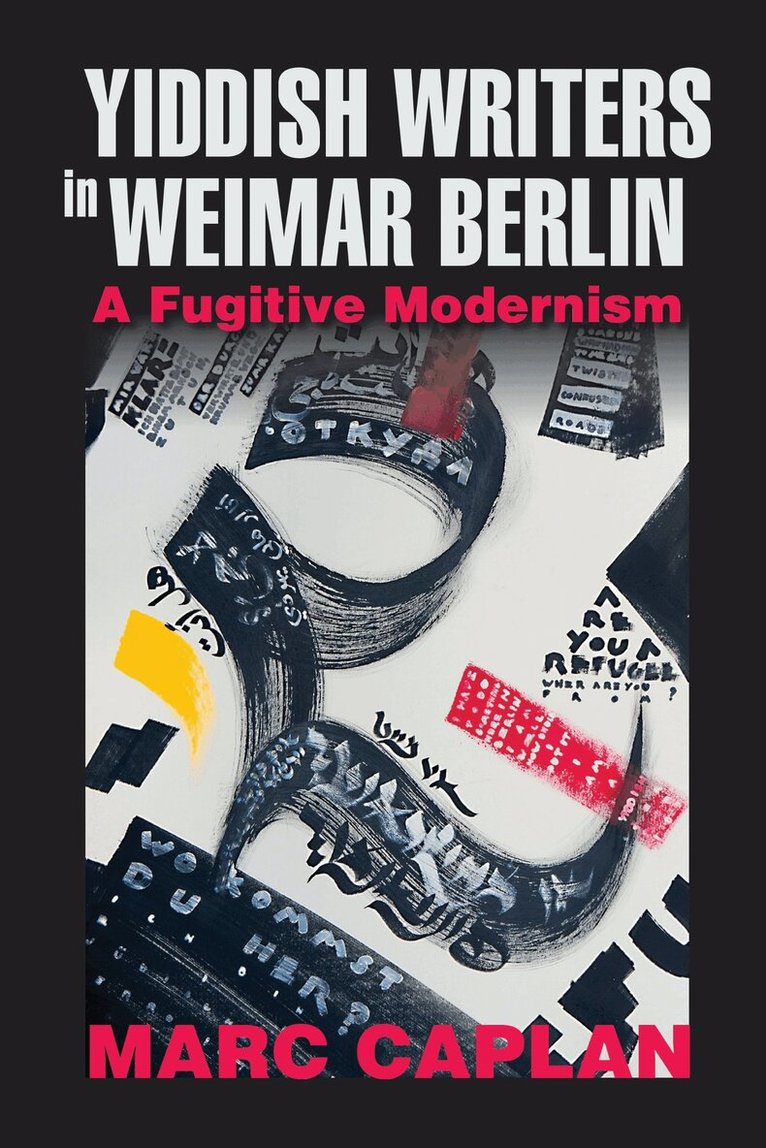
    Yiddish Writers in Weimar Berlin

    A Fugitive Modernism

    AvMarc Caplan

    Häftad, Engelska, 2021

    Del i serien German Jewish Cultures

    494 kr

    Beställningsvara. Skickas inom 5-8 vardagar. Fri frakt över 249 kr.

    Fler format och utgåvor

    Inbunden

    1 199 kr

    Beskrivning

    In Yiddish Writers in Weimar Berlin, Marc Caplan explores the reciprocal encounter between Eastern European Jews and German culture in the days following World War I. By concentrating primarily on a small group of avant-garde Yiddish writers—Dovid Bergelson, Der Nister, and Moyshe Kulbak—working in Berlin during the Weimar Republic, Caplan examines how these writers became central to modernist aesthetics. By concentrating on the character of Yiddish literature produced in Weimar Germany, Caplan offers a new method of seeing how artistic creation is constructed and a new understanding of the political resonances that result from it. Yiddish Writers in Weimar Berlin reveals how Yiddish literature participated in the culture of Weimar-era modernism, how active Yiddish writers were in the literary scene, and how German-speaking Jews read descriptions of Yiddish-speaking Jews to uncover the emotional complexity of what they managed to create even in the midst of their confusion and ambivalence in Germany. Caplan's masterful narrative affords new insights into literary form, Jewish culture, and the philosophical and psychological motivations for aesthetic modernism.

    Produktinformation

    • Utgivningsdatum:2021-01-05
    • Mått:152 x 229 x 23 mm
    • Vikt:576 g
    • Format:Häftad
    • Språk:Engelska
    • Serie:German Jewish Cultures
    • Antal sidor:394
    • Förlag:Indiana University Press
    • ISBN:9780253052001

    Utforska kategorier

    • Sociala grupper och identitet inom Samhälle och politik
    • Litteraturvetenskap inom Skönlitteratur
    • Litteraturvetenskap inom Skönlitteratur

    Mer om författaren

    Marc Caplan is Visiting Professor in the Taube Department of Jewish Studies at the University of Wroclaw, Poland. He is author of How Strange the Change: Language, Temporality, and Narrative Form in Peripheral Modernisms.

    Recensioner i media

    Yiddish Writers in Weimar Berlin is full of sharp insights and bold statements, which at times can raise incidental doubts in the reader's mind. Caplan's book is a work of creative critical research on modern Yiddish literature, particularly well-suited to the contemporary historical moment.(Forward Magazine) Caplan [is] mindful of and likely alarmed by the parallels between the 2020s and the 1920s, and rightly draw our attention to works of art and literature that might help us navigate our own troubled era.(LA Review of Books) Caplan's work is a sprawling, at times idiosyncratic, rich, and deeply earnest study of modernist aesthetics and the political, social, artistic, and literary contexts that inform them from the vantage points of center and periphery.- Jessica Kirzane (AJS Review) Yiddish Writers in Weimar Berlin is a remarkable work of critical imagination that stages a conversation between Yiddish and German modernism.- Matthew Johnson (German Studies Review) Caplan's work is a sprawling, at times idiosyncratic,rich, and deeply earnest stu y of modernist aesthetics and the political, social, artistic, and lit rary contexts that inform them from the vantage points of center and periphery.- Jessica Kirzane - The University of Chicago Yiddish Writers in Weimar Berlin is a remarkable work of critical imagination that stages a conversation between Yiddish and German modernism. In lively and often memorable prose, Caplan analyzes "the reciprocal encounter between Eastern European Jews and German culture, concentrating primarily on a small group of avant-garde Yiddish writers working in Berlin during the Weimar Republic, taken in comparison with corresponding figures working in German-language literature, critical theory, journalism, and film.- Matthew Johnson (German Studies Review) Yiddish Writers in Weimar Berlin offers a riveting analysis of the poetic and political force of Yiddish modernism, but it is also an invitation to look at Yiddish avant-garde beyond the confines of Jewish culture.- Marc Volovici (In Geveb: A Journal of Yiddish Studies) Caplan's analysis is most fascinating when it is able to illuminate points of tension or difference between German and yiddish-language gazes east that appear in literary depictions produced in Berlin in the 1920s and early 1930s.- Emma Woelk (The German Quarterly) Yiddish Writers in Weimar Berlin teems with rich readings as it situates its texts within the tradition of Yiddish literature while attempting to expand the outer frame of reference.- Sophie Duvernoy (SHOFAR)

    Innehållsförteckning

    • AcknowledgmentsIntroduction: Weimar and NowSpectral Empires: Landscapes, Nation-States, and the Homelessness of Weimar Modernism1. A Past Become Space: Alfred Döblin and Dovid Bergelson in Poland, the Soviet Union—and Berlin2. At the Crossroads of the Twentieth Century: Neue Sachlichkeit and Dovid Bergelson's Berlin StoriesMelancholic Conspiracies: Masks, Masques, and the Performance of Self in Yiddish and German Modernism3. Watch the Throne: The Baroque, The Gothic, and Symbolism in Der Nister's Early Stories4. Harold Lloyd and the Hermit: Popular Culture, Gothic Aesthetics, and the End of Der Nister's Symbolist CareerApocalyptic Origins: The Politics of Nostalgia in German and Yiddish Modernism5. Arrested Development: Fragmentation, Apocalypse, and the Pursuit of Origins in Joseph Roth's Representation of Eastern Europe6. Moyshe Kulbak's Berlin Writings: Here, There, Everywhere (Nowhere)Conclusion: Origin Is the GoalBibliographyIndex