• Fri frakt över 249 kr
  • •
  • Snabba leveranser
  • •
  • Billiga böcker
Kundservice

Du är på sajten för privatpersoner.

Företag, bibliotek eller offentlig verksamhet?

Du handlar på classic.bokus.com, där alla dina funktioner finns intakta.
Till classic.bokus.com
Bokus logotyp. Gå till startsidan.
  • Erbjudanden
  • Nyheter
  • Student
  • Topplistor
  • Barn & ungdom
  • Bokus Play
  • E-böcker
  • Pocketböcker
  • Spel & pussel

10% rabatt på allt med kod: NYSTART10 →

Sidfot

Mina sidor

    Hjälp

    • Kundservice
    • Vanliga frågor och svar
    • Frakt och leverans
    • Retur vid ångerrätt
    • Reklamera vara
    • Betalning
    • Köpvillkor
    • Allmänna villkor
    • Information om webbplatsens tillgänglighet

    Om Bokus

    • Om oss
    • Pressrum
    • För studenter
    • För företag
    • För bibliotek och offentlig verksamhet
    • För leverantörer
    • Hållbarhet

    Populärt

    • Aktuella erbjudanden
    • Presentkort
    • Studentlitteratur
    • Nya böcker
    • Topplistor
    • Signerade böcker
    • Engelska böcker

    Inspiration

    • Boktips
    • BookTok
    • Populära bokserier
    • Barnbokskaraktärer
    • Populära författare
    Logotyp för Bokus
    Följ oss på Facebook (extern länk)Följ oss på Instagram (extern länk)Följ oss på YouTube (extern länk)Följ oss på TikTok (extern länk)
    bokus @ CookiesAnpassa cookiesIntegritetspolicyKöpvillkor
    Till Citymail hemsida (extern länk)Till Budbee hemsida (extern länk)Till Postnord hemsida (extern länk)Till Schenker hemsida (extern länk)Till Early Bird hemsida (extern länk)Till Walleys hemsida (extern länk)
    1. Historia och arkeologi
    2. Historia
    3. Europas historia

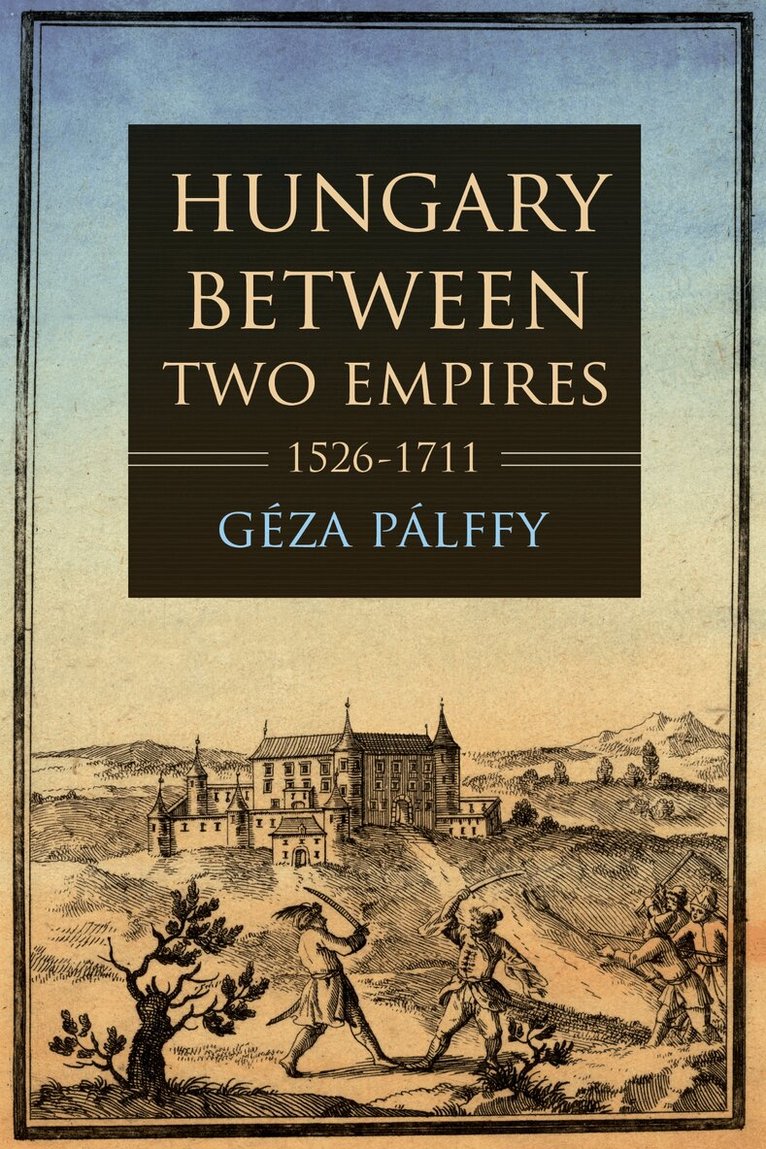
    Hungary Between Two Empires 1526–1711

    AvGéza Pálffy

    Inbunden, Engelska, 2021

    Del i serien Studies in Hungarian History

    981 kr

    Beställningsvara. Skickas inom 10-15 vardagar. Fri frakt över 249 kr.

    Fler format och utgåvor

    Häftad

    437 kr

    Beskrivning

    The Hungarian defeat to the Ottoman army at the pivotal Battle of Mohács in 1526 led to the division of the Kingdom of Hungary into three parts, altering both the shape and the ethnic composition of Central Europe for centuries to come. Hungary thus became a battleground between the Ottoman and Habsburg empires.In this sweeping historical survey, Géza Pálffy takes readers through a crucial period of upheaval and revolution in Hungary, which had been the site of a flowering of economic, cultural, and intellectual progress—but battles with the Ottomans lead to over a century of war and devastation. Pálffy explores Hungary's role as both a borderland and a theater of war through the turn of the 18th century. In this way, Hungary became a crucially important field on which key debates over religion, government, law, and monarchy played out. Reflecting 25 years of archival research and presented here in English for the first time, Hungary between Two Empires 1526–1711 offers a fresh and thorough exploration of this key moment in Hungarian history and, in turn, the creation of a modern Europe.

    Produktinformation

    • Utgivningsdatum:2021-06-08
    • Mått:178 x 254 x 28 mm
    • Vikt:776 g
    • Format:Inbunden
    • Språk:Engelska
    • Serie:Studies in Hungarian History
    • Antal sidor:318
    • Förlag:Indiana University Press
    • ISBN:9780253054630
    • Översättare:David Robert Evans

    Utforska kategorier

    • Europas historia inom Historia och arkeologi
    • Mellanösterns historia inom Historia och arkeologi
    • Renässansen inom Historia och arkeologi

    Mer om författaren

    Géza Pálffy is Research Professor in the Department of Early Modern History at the Hungarian Academy of Sciences, Research Centre for the Humanities, Institute of History, Budapest. He is author of The Kingdom of Hungary and the Habsburg Monarchy in the Sixteenth Century and coauthor of Crown and Coronation in Hungary 1000–1916 A.D., as well as five books in German, three in Slovak, two in Croatian, one in Romanian, and twenty Hungarian titles.

    Recensioner i media

    Pálffy offers a complex representation of the two centuries by not only depicting the military and political struggle for the liberation and the restoration of the unity of the Kingdom of Hungary. The result is a differentiated description of the developing institutions, infrastructure, economy, social structure and demographic development.- Marta Fata (Sehepunkte) Written in an elegant and seductive way, well-balanced, with assessments that are not only unique, but also solidly argued, with an exceptional iconographic support (maps, illustrations etc.) wonderfully distributed throughout the book, professor Gèza Pálffy's book will surely impose itself as an original synthesis with a substantial echo among the readers who are both historians and history enthusiasts.- Ionut Costea (Philobiblon) This important volume introduces English readers to one of the most critical periods of Central European history when "Hungary became the periphery and battleground of two empires, the Ottoman Empire and the Habsburg Monarchy." . . . Pálffy has written a masterpiece that goes well beyond introductory accounts so common in English-language academic publishing. The author provides both a window on the fascinating complexities of early modern Hungarian history as well as a refreshing reevaluation of traditional Hungarian historiography. In a more general sense, anyone interested in Central and Eastern Europe will appreciate how Pálffy illustrates the richness of Hungarian political, demographic, economic, and cultural developments. The book will benefit specialists, students, and general readers interested in the history of Hungary, its relationships with the Habsburg and Ottoman empires, and Hungary's place in early modern Europe. Students and scholars alike are well advised to put Pálffy's volume on their reading lists.- Georg B. Michels (Hungarian Studies Review) Filling a glaring lacuna in the English-language literature on late medieval and early modern Hungary, Pálffy's study critically challenges modern scholarship in ways that feel both timely and relevant given the troubling political climate in modern Hungary and much of the West.- Christopher M. Van Demark (Hungarian Cultural Studies) Pálffy has written a masterpiece that goes well beyond introductory ac- counts so common in English-language academic publishing. The author provides both a window on the fascinating complexities of early mod- ern Hungarian history as well as a refreshing reevaluation of traditional Hungarian historiography. In a more general sense, anyone interested in Central and Eastern Europe will appreciate how Pálffy illustrates the rich- ness of Hungarian political, demographic, economic, and cultural devel- opments.- Georg B Michels - University of California (Hungarian Studies Review) The present monograph by Géza Pálffy is intended as a survey work of the historical Kingdom of Hungary in the sixteenth and seventeenth centuries and is aimed decidedly at a broader public. At the same time, however, it also provides important impetus for discussions within the historical sciences. . . . The monograph is an inspiring overview that is definitely recommended reading.- Markus Koller (Central European History) A comprehensive English-language work like this on the history of early modern Hungary did not exist until now. It will certainly prove its worth to read for anyone dealing with Central Europe at this period.- Nicolette Mout (TIJDSCHRIFT VOOR GES CHIE DENIS)

    Innehållsförteckning

    • List of FiguresList of MapsList of TablesAcknowledgmentsNote on Terms and NamesList of AbbreviationsPolitical and Military Chronology, 1526–1711IntroductionPart I: Hungary after Mohács: A Century of Direction Seeking, 1526–16061. On the Frontier of Two Empires2. Roads from Istanbul to Vienna: The Ottomans in Hungary3. The Bumpy Road to Vienna: The Habsburgs and the Hungarians4. The Road to Istanbul: The State of King John Szapolyai and His Son5. On a Narrow Path: The Principality of Transylvania6. Society Finds Its Way7. The Economy and Its Roads to Europe8. The Search for a New Home: Ethnic and Demographic Changes9. Finding Faith: Hungary's New Religion10. Seeking a Language: A Cultural Golden Age11. Looking in Vain for a Way Out: The Long Turkish War, 1591–1606 Part II: Decay and Rejuvenation: The Janus-Faced Seventeenth Century, 1606–17111. Peace or Civil War on the Border of the Two Empires?2. New Ottoman Campaigns to Achieve an Old Goal3. The Rise of the Hungarian Estates and the Break with Vienna4. Transylvania Flourishes, Then Decays5. Militarization and Self-Administration: Changes in Society6. Economic Decline and Reorganization7. Hungarian Populations Fall—Other Ethnic Groups Rise8. The Revival of Catholicism—a Prolonged War of Religion9. Half a Century of Cultural Progress—Half a Century of Military Crisis10. A Country Liberated but Ravaged: The Long Turkish War, 1683–169911. Independence Movement and Civil War: The Rákóczi Uprising, 1703–1711GlossaryList of Rulers and Highest DignitariesSelect Bibliography (Monographs and Collected Studies)Name IndexPlace Index