• Fri frakt över 249 kr
  • •
  • Snabba leveranser
  • •
  • Billiga böcker
Kundservice

Du är på sajten för privatpersoner.

Företag, bibliotek eller offentlig verksamhet?

Du handlar på classic.bokus.com, där alla dina funktioner finns intakta.
Till classic.bokus.com
Bokus logotyp. Gå till startsidan.
  • Erbjudanden
  • Nyheter
  • Student
  • Topplistor
  • Barn & ungdom
  • Bokus Play
  • E-böcker
  • Pocketböcker
  • Spel & pussel

10% rabatt på allt med kod: NYSTART10 →

Sidfot

Mina sidor

    Hjälp

    • Kundservice
    • Vanliga frågor och svar
    • Frakt och leverans
    • Retur vid ångerrätt
    • Reklamera vara
    • Betalning
    • Köpvillkor
    • Allmänna villkor
    • Information om webbplatsens tillgänglighet

    Om Bokus

    • Om oss
    • Pressrum
    • För studenter
    • För företag
    • För bibliotek och offentlig verksamhet
    • För leverantörer
    • Hållbarhet

    Populärt

    • Aktuella erbjudanden
    • Presentkort
    • Studentlitteratur
    • Nya böcker
    • Topplistor
    • Signerade böcker
    • Engelska böcker

    Inspiration

    • Boktips
    • BookTok
    • Populära bokserier
    • Barnbokskaraktärer
    • Populära författare
    Logotyp för Bokus
    Följ oss på Facebook (extern länk)Följ oss på Instagram (extern länk)Följ oss på YouTube (extern länk)Följ oss på TikTok (extern länk)
    bokus @ CookiesAnpassa cookiesIntegritetspolicyKöpvillkor
    Till Citymail hemsida (extern länk)Till Budbee hemsida (extern länk)Till Postnord hemsida (extern länk)Till Schenker hemsida (extern länk)Till Early Bird hemsida (extern länk)Till Walleys hemsida (extern länk)
    1. Kultur
    2. Scenkonst och film
    3. Film

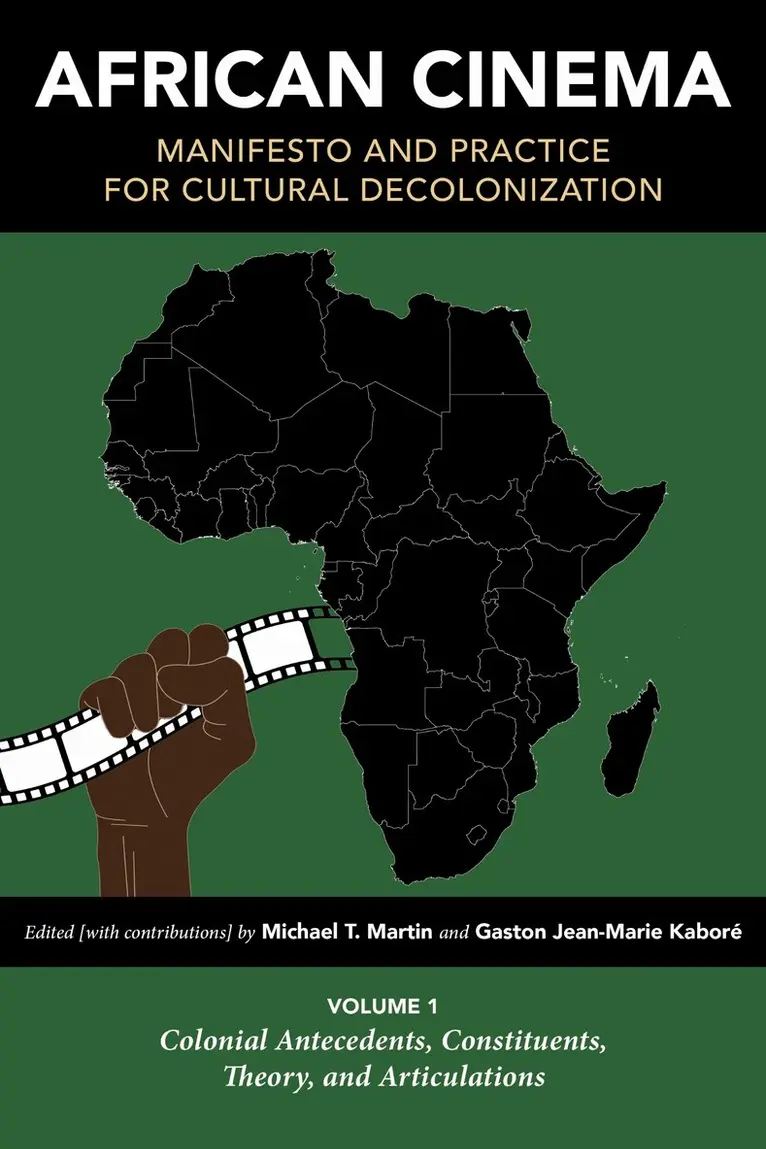
    African Cinema: Manifesto and Practice for Cultural Decolonization

    Volume 1: Colonial Antecedents, Constituents, Theory, and Articulations

    AvMichael T. Martin,Gaston Jean-Marie Kaboré

    Inbunden, Engelska, 2023

    Del i serien Studies in the Cinema of the Black Diaspora

    1 053 kr

    Beställningsvara. Skickas inom 5-8 vardagar. Fri frakt över 249 kr.

    Beskrivning

    Challenging established views and assumptions about traditions and practices of filmmaking in the African diaspora, this three-volume set offers readers a researched critique on black film. Volume One of this landmark series on African cinema draws together foundational scholarship on its history and evolution. Beginning with the ideological project of colonial film to legitimize the economic exploitation and cultural hegemony of the African continent during imperial rule to its counter-historical formation and theorization. It comprises essays by film scholars and filmmakers alike, among them Roy Armes, Med Hondo, Fèrid Boughedir, Haile Gerima, Oliver Barlet, Teshome Gabriel, and David Murphy, including three distinct dossiers: a timeline of key dates in the history of African cinema; a comprehensive chronicle and account of the contributions by African women in cinema; and a homage and overview of Ousmane Sembène, the "Father" of African cinema.

    Produktinformation

    • Utgivningsdatum:2023-08-29
    • Mått:152 x 229 x 35 mm
    • Vikt:1 016 g
    • Format:Inbunden
    • Språk:Engelska
    • Serie:Studies in the Cinema of the Black Diaspora
    • Antal sidor:638
    • Förlag:Indiana University Press
    • ISBN:9780253066206

    Utforska kategorier

    • Film inom Kultur

    Mer om författaren

    Michael T. Martin is Professor of Cinema and Media Studies at the Media School at Indiana University, Bloomington. He is editor or coeditor of several anthologies, including (with David C. Wall) The Politics and Poetics of Black Film: Nothing But a Man and Race and the Revolutionary Impulse in The Spook Who Sat by the Door. Martin directed and coproduced the award-winning feature documentary on Nicaragua, In the Absence of Peace, distributed by Third World Newsreel. Gaston Jean-Marie Kaboré is a film director, producer, and screenwriter and the former director of the Centre National du Cinéma in Burkina Faso.

    Recensioner i media

    "African Cinema: Manifesto and Practice for Cultural Decolonization combines theory and praxis as a means to explore the social, cultural, political, economic and gendered dynamics of African cinemas within a global context, all of which are determining factors in how African filmmaking practitioners and stakeholders negotiate their place as directors, producers, organizers, activists, scholars, distributors, cultural readers. The collection is an important addition to African Cinema Studies in particular, and the library of Film Studies in general."—Beti Ellerson, Founder and Director, Centre for the Study and Research of African Women in Cinema"Setting out, African Cinema positioned itself at the intersection of a theory and practice of cultural self-apprehension, with all the contradictions that come with that position. In this three-volume compendium, Martin, Kaboré and their various collaborators have provided a comprehensive, almost exhaustive, account eventuating in a third, element—history. A more comprehensive account will be hard to find anywhere else."—Akin Adesokan, Indiana University"This is a long-awaited volume of detailed, and analytical information and commentary that maps the development of the cinema of a large continent and the background ideas that have influenced its formation."—June Givanni, Director of the June Givanni Pan African Cinema Archive (JGPACA)

    Innehållsförteckning

    • DedicationAcknowledgmentsAfrican Cinema and the Diasporic: Introductory Considerations, by Michael T. Martin and Gaston Jean-Marie KaboréPart I: Colonial FormationsColonial Cinema, by Roy ArmesThe Colonialist Regime of Representation, 1945-1960, by James E. GenovaPolitics of Cultural Conversion in Colonialist African Cinema, by Femi Okiremuete ShakaThe African Bioscope: Movie-House Culture in British Colonial Africa, by James BurnsFrom the Inside: The Colonial Film Unit and the Beginning of the End, by Tom RiceThe Independence Generation: Film Culture and the Anti-Colonial Struggle in the 1950s, by Odile GoergPart II: Constituting African CinemaWhat Is Cinema for Us?, by Med HondoA Cinema Fighting for Its Liberation, by Férid BoughedirWhere Are the African Women Filmmakers?, by Haile GerimaThe FEPACI and Its Artistic Legacies, by Sada NiangNew Avenues for FEPACI: Interview with Seipati Bulane-Hopa, by Monique Mbeka PhobaThe Six Decades of African Film, by Olivier BarletAfrica, The Last Cinema, by Clyde R. TaylorThe Pan-African Cinema Movement: Achievements, Misadventures, and Failures (1969-2020), by Férid BoughedirPart III: Theorizing African CinemaAfrican Cinema(s): Definitions, Identity, and Theoretical Considerations, by Alexie TcheuyapTheorizing African Cinema: Contemporary African Cinematic Discourse and Its Discontents, by Esiaba IrobiThe Theoretical Construction of African Cinema, by Stephen A. ZacksToward a Critical Theory of Third World Films, by Teshome H. GabrielAfricans Filming Africa: Questioning Theories of an Authentic African Cinema, by David MurphyTradition/Modernity and the Discourse of African Cinema, by Jude AkudinobiToward a Theory of Orality in African Cinema, by Keyan G. Tomaselli, Arnold Shepperson, and Maureen N. EkeFilm and the Problem of Languages in Africa, by Paulin Soumanou VieyraIn Defense of African Film Studies, by Boukary SawadogoPart IV: Articulations of African CinemaDossier 1: Key Dates in the History of African Cinema, by Olivier Barlet and Claude ForestDossier 2: Ousmane Sembène, by Sada Niang and Samba GadjigoDossier 3: African Women in Cinema, by Beti Ellerson