• Fri frakt över 249 kr
  • •
  • Snabba leveranser
  • •
  • Billiga böcker
Kundservice

Du är på sajten för privatpersoner.

Företag, bibliotek eller offentlig verksamhet?

Du handlar på classic.bokus.com, där alla dina funktioner finns intakta.
Till classic.bokus.com
Bokus logotyp. Gå till startsidan.
  • Erbjudanden
  • Nyheter
  • Student
  • Topplistor
  • Barn & ungdom
  • Bokus Play
  • E-böcker
  • Pocketböcker
  • Spel & pussel

10% studentrabatt med kod TERM26

Sidfot

Mina sidor

    Hjälp

    • Kundservice
    • Vanliga frågor och svar
    • Frakt och leverans
    • Retur vid ångerrätt
    • Reklamera vara
    • Betalning
    • Köpvillkor
    • Allmänna villkor
    • Information om webbplatsens tillgänglighet

    Om Bokus

    • Om oss
    • Pressrum
    • För studenter
    • För företag
    • För bibliotek och offentlig verksamhet
    • För leverantörer
    • Hållbarhet

    Populärt

    • Aktuella erbjudanden
    • Presentkort
    • Studentlitteratur
    • Nya böcker
    • Topplistor
    • Signerade böcker
    • Engelska böcker

    Inspiration

    • Boktips
    • BookTok
    • Populära bokserier
    • Barnbokskaraktärer
    • Populära författare
    Logotyp för Bokus
    Följ oss på Facebook (extern länk)Följ oss på Instagram (extern länk)Följ oss på YouTube (extern länk)Följ oss på TikTok (extern länk)
    bokus @ CookiesAnpassa cookiesIntegritetspolicyKöpvillkor
    Till Citymail hemsida (extern länk)Till Budbee hemsida (extern länk)Till Postnord hemsida (extern länk)Till Schenker hemsida (extern länk)Till Early Bird hemsida (extern länk)Till Walleys hemsida (extern länk)
    1. Samhälle och politik
    2. Samhälle och kultur
    3. Sociala grupper och identitet
    4. Genusvetenskap

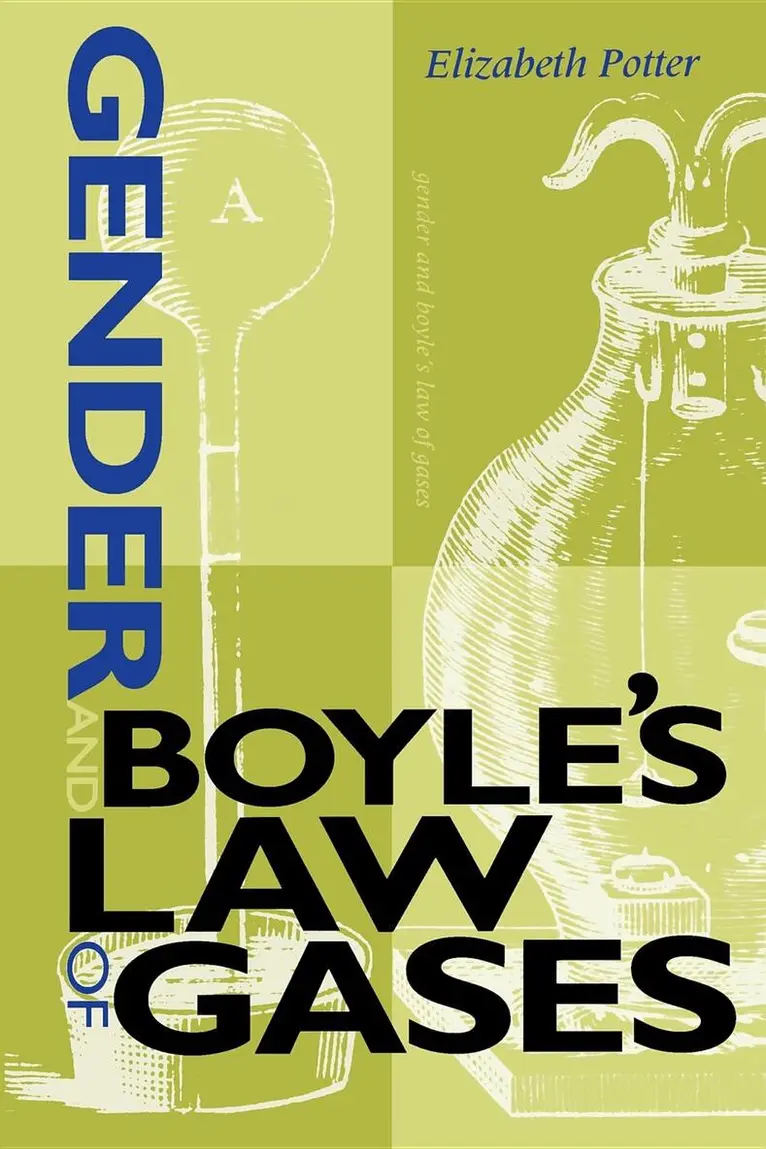
    Gender and Boyle's Law of Gases

    AvElizabeth Potter

    Häftad, Engelska, 2001

    Del i serien Indiana University Press (IPS)

    229 kr

    Beställningsvara. Skickas inom 10-15 vardagar. Fri frakt över 249 kr.

    Beskrivning

    Boyle's Law, which describes the relation between the pressure and volume of a gas, was worked out by Robert Boyle in the mid-1600s. His experiments are still considered examples of good scientific work and continue to be studied along with their historical and intellectual contexts by philosophers, historians, and sociologists. Now there is controversy over whether Boyle's work was based only on experimental evidence or whether it was influenced by the politics and religious controversies of the time, including especially class and gender politics.Elizabeth Potter argues that even good science is sometimes influenced by such issues, and she shows that the work leading to the Gas Law, while certainly based on physical evidence, was also shaped by class and gendered considerations. At issue were two descriptions of nature, each supporting radically different visions of class and gender arrangements. Boyle's Law rested on mechanistic principles, but Potter shows us an alternative law based on hylozooic principles (the belief that all matter is animated), whose adherents challenged social stability and the status quo in 17th-century England.

    Produktinformation

    • Utgivningsdatum:2001-04-22
    • Mått:152 x 229 x 12 mm
    • Vikt:308 g
    • Format:Häftad
    • Språk:Engelska
    • Serie:Indiana University Press (IPS)
    • Antal sidor:224
    • Förlag:Indiana University Press
    • ISBN:9780253214553

    Utforska kategorier

    • Genusvetenskap inom Samhälle och politik
    • Materietillstånd inom Naturvetenskap och teknik
    • Naturvetenskap:allmänt inom Naturvetenskap och teknik

    Mer om författaren

    Elizabeth Potter is the Alice Andrews Quigley Professor ofWomen's Studies at Mills College. She is co-editor of Feminist Epistemologies and author of numerous articles in feminist epistemology and feminist philosophy of science.

    Recensioner i media

    "Gender and Boyle's Law of Gases is about more than its title implies: not only does Potter (Mills College) engage in the continuing dialogue about if and how gender might affect the practice of science, but she also goes beyond gender and enters the contemporary discussion about the social dimension of science. Accordingly, most of the book is devoted to a review of the history of the English Civil War and Revolution, the radical social and political groups that were active at that time (Levellers, sectaries), and to a discussion of the religious and social meaning of hylozoism (an early Greek philosophy that states that all matter has life) in the 17th century. Potter argues for a compromise position between those who would insist that Boyle's science was derived entirely from experimental and observational evidence, and those who believe that his ideas about gender and his total rejection of hylozoism (because of its radical political implications) influenced the science that led to the Gas Law. Her argument is that although Boyle's work is not free of contextual values, he produced good science and hence good science can be value-laden. Of interest to feminist and social philosophers of science, historians, and sociologists of science. No bibliography. Upper-division undergraduates through faculty.January 2002"—M. H. Chaplin, Wellesley College"[P]olitics, society, philosophy, religion, science and gender all influenced Boyle in his scientific how (his choice of experiments) and why (the way he interpreted his results)—and yet, ironically, enduring science was done."—American Scientist

    Innehållsförteckning

    • ContentsIntroductionPart I: The Intersection of Gender and Science: Now We See It. Now We Don't.1. Now We See It2. Now We Don'tPart II: Boyle's Work in Context1. Economics, Politics and Religion: Stuart Conflicts With Parliament2. Civil War Approaches3. The Intersection of Class and Gender Politics4. The Boyle Family's Religious and Class Politics5. More Class and Gender Politics6. Boyle's Gender Politics7. Boyle's Background Reading8. Boyle's Hermeticism, Magic and Active Principles9. Hermeticism, Hylozooism and Radical Politics10. Boyle's Concern Over the Sectaries11. Boyle's Objections to Hylozooism12. Experimental Support for the Corpuscular Philosophy13. Boyle's Law of Gases14. The Production of An Alternative Law15. Methodological Considerations16. "The Data Alone Proved Boyle's Hypothesis"17. Good ScienceConclusion