• Fri frakt över 249 kr
  • •
  • Snabba leveranser
  • •
  • Billiga böcker
Kundservice

Du är på sajten för privatpersoner.

Företag, bibliotek eller offentlig verksamhet?

Du handlar på classic.bokus.com, där alla dina funktioner finns intakta.
Till classic.bokus.com
Bokus logotyp. Gå till startsidan.
  • Erbjudanden
  • Student
  • Topplistor
  • Barn & ungdom
  • Bokus Play
  • E-böcker
  • Ljudböcker
  • Pocketböcker
  • Spel & pussel

Upp till 25% på utvalda nyheter →

Sidfot

Mina sidor

    Hjälp

    • Kundservice
    • Vanliga frågor och svar
    • Frakt och leverans
    • Retur vid ångerrätt
    • Reklamera vara
    • Betalning
    • Köpvillkor
    • Allmänna villkor
    • Information om webbplatsens tillgänglighet

    Om Bokus

    • Om oss
    • Pressrum
    • För studenter
    • För företag
    • För bibliotek och offentlig verksamhet
    • För leverantörer
    • Hållbarhet

    Populärt

    • Aktuella erbjudanden
    • Presentkort
    • Studentlitteratur
    • Nya böcker
    • Topplistor
    • Signerade böcker
    • Engelska böcker

    Inspiration

    • Boktips
    • BookTok
    • Populära bokserier
    • Barnbokskaraktärer
    • Populära författare
    Logotyp för Bokus
    Följ oss på Facebook (extern länk)Följ oss på Instagram (extern länk)Följ oss på YouTube (extern länk)Följ oss på TikTok (extern länk)
    bokus @ CookiesAnpassa cookiesIntegritetspolicyKöpvillkor
    Till Citymail hemsida (extern länk)Till Budbee hemsida (extern länk)Till Postnord hemsida (extern länk)Till Schenker hemsida (extern länk)Till Early Bird hemsida (extern länk)Till Walleys hemsida (extern länk)
    1. Historia och arkeologi
    2. Historia
    3. Afrikas historia

    Somalia

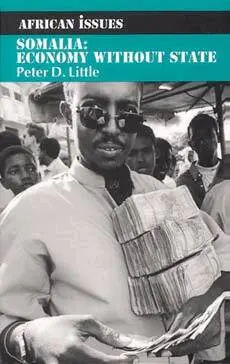
    Economy Without State

    AvPeter D. Little

    Häftad, Engelska, 2003

    Del i serien African Issues

    250 kr

    Beställningsvara. Skickas inom 10-15 vardagar. Fri frakt över 249 kr.

    Fler format och utgåvor

    Häftad

    337 kr

    Beskrivning

    In the wake of the collapse of the Somali government in 1991, a "second" or "informal" economy based on trans-border trade and smuggling is thriving. While focusing primarily on pastoral and agricultural markets, Peter D. Little demonstrates that the Somalis are resilient and opportunistic and that they use their limited resources effectively. While it is true that many Somalis live in the shadow of brutal warlords and lack access to basic health care and education, Little focuses on those who have managed to carve out a productive means of making ends meet under difficult conditions and emphasizes the role of civic culture even when government no longer exists. Exploring questions such as, Does statelessness necessarily mean anarchy and disorder? Do money, international trade, and investment survive without a state? Do pastoralists care about development and social improvement? This book describes the complexity of the Somali situation in the light of international terrorism.

    Produktinformation

    • Utgivningsdatum:2003-10-30
    • Mått:140 x 216 x 17 mm
    • Vikt:286 g
    • Format:Häftad
    • Språk:Engelska
    • Serie:African Issues
    • Antal sidor:224
    • Förlag:Indiana University Press
    • ISBN:9780253216489

    Utforska kategorier

    • Afrikas historia inom Historia och arkeologi

    Mer om författaren

    Peter D. Little is Professor of Anthropology at the University of Kentucky. He is author of The Elusive Granary: Herder, Farmer, and State in Northern Kenya

    Recensioner i media

    "Little (anthropology, Univ. of Kentucky) shows how since 1991, Somalia has adapted to a freewheeling, stateless capitalism. As in other collapsed African states, the borders between war and peace, official and unofficial, and legal and illegal are fuzzy, especially for pastoralists. Moreover, like Terrance Ranger (The Invention of Tribalism in Zimbabwe, 1985), Little sees ethnicity and clanism as created, manifested, combined, and reconstituted in struggles for political and economic benefits. In the 1990s, the UN and allied parties contributed to the proliferation of clan and subclan by elevating their significance in allocating resources. In some instances, to increase power disguised militia leaders or warlords became elders and their followers clans. Little's thorough, clearly written, and well—organized book is a treat for scholars. His study combines an economic anthropology of Somalian herding and trading communities; explanations of how people survive in failed states and who wins and who loses; how people organize their financial transactions without a central bank; the growth of telecommunications facilities and financial stability amid a collapsed state; how conflict contributes to the decline of major urban areas; and how all these have been affected by the US-led war on terror. Summing Up: Highly recommended. Upper—division undergraduate through professional collections."—E. W. Nafziger, Kansas State University , Choice, may 2004"Little's thorough, clearly written, and well-organized book is a treat for scholars. . . . Highly recommended.May 2004"—Choice

    Innehållsförteckning

    • Preliminary Table of Contents: Acknowledgments1. Introduction to a Stateless Economy2. Land of Livestock3. The Destruction of Rural-Urban Relations4. Tough Choices5. Boom Times in a Bust State6. Life Goes On7. Conclusions: Somalia in a Wider ContextEpilogue: In the Aftermath of September 11thReferences