• Fri frakt över 249 kr
  • •
  • Snabba leveranser
  • •
  • Billiga böcker
Kundservice

Du är på sajten för privatpersoner.

Företag, bibliotek eller offentlig verksamhet?

Du handlar på classic.bokus.com, där alla dina funktioner finns intakta.
Till classic.bokus.com
Bokus logotyp. Gå till startsidan.
  • Erbjudanden
  • Nyheter
  • Student
  • Topplistor
  • Barn & ungdom
  • Bokus Play
  • E-böcker
  • Pocketböcker
  • Spel & pussel

10% rabatt på allt med kod: NYSTART10 →

Sidfot

Mina sidor

    Hjälp

    • Kundservice
    • Vanliga frågor och svar
    • Frakt och leverans
    • Retur vid ångerrätt
    • Reklamera vara
    • Betalning
    • Köpvillkor
    • Allmänna villkor
    • Information om webbplatsens tillgänglighet

    Om Bokus

    • Om oss
    • Pressrum
    • För studenter
    • För företag
    • För bibliotek och offentlig verksamhet
    • För leverantörer
    • Hållbarhet

    Populärt

    • Aktuella erbjudanden
    • Presentkort
    • Studentlitteratur
    • Nya böcker
    • Topplistor
    • Signerade böcker
    • Engelska böcker

    Inspiration

    • Boktips
    • BookTok
    • Populära bokserier
    • Barnbokskaraktärer
    • Populära författare
    Logotyp för Bokus
    Följ oss på Facebook (extern länk)Följ oss på Instagram (extern länk)Följ oss på YouTube (extern länk)Följ oss på TikTok (extern länk)
    bokus @ CookiesAnpassa cookiesIntegritetspolicyKöpvillkor
    Till Citymail hemsida (extern länk)Till Budbee hemsida (extern länk)Till Postnord hemsida (extern länk)Till Schenker hemsida (extern länk)Till Early Bird hemsida (extern länk)Till Walleys hemsida (extern länk)
    1. Ekonomi och Ledarskap
    2. Nationalekonomi
    3. Internationell ekonomi

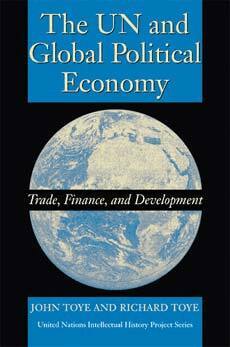
    UN and Global Political Economy

    Trade, Finance, and Development

    AvJohn Toye,Richard Toye

    Häftad, Engelska, 2004

    Del i serien United Nations Intellectual History Project Series

    327 kr

    Beställningsvara. Skickas inom 10-15 vardagar. Fri frakt över 249 kr.

    Beskrivning

    Against the backdrop of a 20-year revolt against free trade orthodoxy by economists inside the UN and their impact on policy discussions since the 1960s, the authors show how the UN both nurtured and inhibited creative and novel intellectual contributions to the trade and development debate. Presenting a stirring account of the main UN actors in this debate, The UN and Global Political Economy focuses on the accomplishments and struggles of UN economists and the role played by such UN agencies as the Department of Economic (and Social) Affairs, the United Nations Commission on Trade and Development, and the Economic Commission for Latin America (and the Caribbean). It also looks closely at the effects of the Latin American debt crisis of the 1980s, the growing strength of the World Trade Organization (WTO) in the 1990s, and the lessons to be drawn from these and other recent developments.

    Produktinformation

    • Utgivningsdatum:2004-07-09
    • Mått:156 x 235 x 24 mm
    • Vikt:630 g
    • Format:Häftad
    • Språk:Engelska
    • Serie:United Nations Intellectual History Project Series
    • Antal sidor:416
    • Förlag:Indiana University Press
    • ISBN:9780253216861

    Utforska kategorier

    • Internationell ekonomi inom Ekonomi och Ledarskap
    • Internationella relationer inom Samhälle och politik

    Mer om författaren

    John Toye is a political economist who has directed research on economic development at the Universities of Wales, Sussex, and Oxford. He has also worked as a British civil servant, as the director of a private consultancy company, and as a director of the United Nations Committee on Trade and Development. His previous books include Dilemmas of Development (2nd ed., 1993) and Keynes on Population (2000) and he has published numerous academic articles. Richard Toye is lecturer in history at Homerton College, Cambridge. He is the author of The Labour Party and the Planned Economy, 1931–1951 (2003) and co-author, with Jamie Miller, of Cripps versus Clayton (forthcoming).

    Recensioner i media

    "John Toye (British political economist) and Richard Toye (history, Cambridge Univ., UK), a father-son team, examine, as part of the United Nations Intellectual History Project, contributions to development economics by the UN and its specialized agencies. They acknowledge that, despite high aspirations by some for the UN to be the principal international organization to promote economic development, its status in the field of finance, development, and trade became ancillary to that of the International Monetary Fund, the World Bank, and the World Trade Organization, which operate independently within the UN framework. The authors explain why the UN became marginal (inter alia, the Cold War, excessive demands by Third World countries, the Latin American debt crisis, and financial resources of the IMF and World Bank). The research output of a number of prominent economists in the UN's employ, however, left a lasting legacy to the trade and development debate. The substance of the research produced by these economists (e.g., Michal Kalecki, Nicholas Kaldor) during their UN service, and the historical, political, and bureaucratic setting in which the research was performed, is clearly and informatively summarized. Of special interest to students of economic development and trade policy and policy makers in these areas. Summing Up: Recommended. Public, academic, and professional library collections."—C. J. Siegman, formerly, Federal Reserve Board/International Monetary Fund , 2004dec CHOICE

    Innehållsförteckning

    • Foreword by Louis Emmerij, Richard Jolly, and Thomas G. WeissAcknowledgmentsList of AbbreviationsIntroduction1. The UN Trade and Development Debates of the 1940s2. The UN Recruits Economists3. Michal Kalecki, the World Economic Report, and McCarthyism4. From Full Employment to Economic Development5. The Early Terms-of-Trade Controversy6. ECLA, Industrialization, and Inflation7. Competitive Coexistence and the Politics of Modernization8. The Birth of UNCTAD9. UNCTAD under Raúl Prebisch: Success or Failure?10. World Monetary Problems and the Challenge of Commodities11. The Conservative Counterrevolution of the 1980s12. What Lessons for the Future?Appendix: List of Archival SourcesNotesIndexAbout the AuthorsAbout the UN Intellectual History Project