• Fri frakt över 249 kr
  • •
  • Snabba leveranser
  • •
  • Billiga böcker
Kundservice

Du är på sajten för privatpersoner.

Företag, bibliotek eller offentlig verksamhet?

Du handlar på classic.bokus.com, där alla dina funktioner finns intakta.
Till classic.bokus.com
Bokus logotyp. Gå till startsidan.
  • Erbjudanden
  • Nyheter
  • Student
  • Topplistor
  • Barn & ungdom
  • Bokus Play
  • E-böcker
  • Pocketböcker
  • Spel & pussel

10% rabatt på allt med kod: NYSTART10 →

Sidfot

Mina sidor

    Hjälp

    • Kundservice
    • Vanliga frågor och svar
    • Frakt och leverans
    • Retur vid ångerrätt
    • Reklamera vara
    • Betalning
    • Köpvillkor
    • Allmänna villkor
    • Information om webbplatsens tillgänglighet

    Om Bokus

    • Om oss
    • Pressrum
    • För studenter
    • För företag
    • För bibliotek och offentlig verksamhet
    • För leverantörer
    • Hållbarhet

    Populärt

    • Aktuella erbjudanden
    • Presentkort
    • Studentlitteratur
    • Nya böcker
    • Topplistor
    • Signerade böcker
    • Engelska böcker

    Inspiration

    • Boktips
    • BookTok
    • Populära bokserier
    • Barnbokskaraktärer
    • Populära författare
    Logotyp för Bokus
    Följ oss på Facebook (extern länk)Följ oss på Instagram (extern länk)Följ oss på YouTube (extern länk)Följ oss på TikTok (extern länk)
    bokus @ CookiesAnpassa cookiesIntegritetspolicyKöpvillkor
    Till Citymail hemsida (extern länk)Till Budbee hemsida (extern länk)Till Postnord hemsida (extern länk)Till Schenker hemsida (extern länk)Till Early Bird hemsida (extern länk)Till Walleys hemsida (extern länk)
    1. Kultur
    2. Scenkonst och film
    3. Film

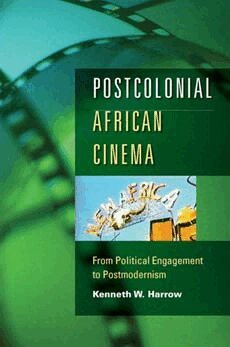
    Postcolonial African Cinema

    From Political Engagement to Postmodernism

    AvKenneth W. Harrow

    Häftad, Engelska, 2007

    Del i serien Indiana University Press (IPS)

    317 kr

    Beställningsvara. Skickas inom 10-15 vardagar. Fri frakt över 249 kr.

    Beskrivning

    Kenneth W. Harrow offers a new critical approach to African cinema—one that requires that we revisit the beginnings of African filmmaking and the critical responses to which they gave rise, and that we ask what limitations they might have contained, what price was paid for the approaches then taken, and whether we are still caught in those limitations today.Using Žižek, Badiou, and a range of Lacanian and postmodern-based approaches, Harrow attempts to redefine the possibilities of an African cinematic practice—one in which fantasy and desire are placed within a more expansive reading of the political and the ideological. The major works of Sembène Ousmane, Djibril Diop Mambéty, Souleymane Cisse, Jean-Pierre Bekolo, Jean-Marie Teno, Bassak ba Kohbio, and Fanta Nacro are explored, while at the same time the project of current postmodern theory, especially that of Jameson, is called into question in order that an African postmodernist cultural enterprise might be envisioned.

    Produktinformation

    • Utgivningsdatum:2007-07-20
    • Mått:156 x 235 x 16 mm
    • Vikt:458 g
    • Format:Häftad
    • Språk:Engelska
    • Serie:Indiana University Press (IPS)
    • Antal sidor:296
    • Förlag:Indiana University Press
    • ISBN:9780253219145

    Utforska kategorier

    • Film inom Kultur

    Mer om författaren

    Kenneth W. Harrow is Professor of English at Michigan State University. His publications include Threshold of Change in African Literature: The Emergence of a Tradition, Less Than One and Double, and African Cinema: Postcolonial and Feminist Readings.

    Recensioner i media

    "[This book] is at once a strange and exciting work worthy of attention ...Issue 47"—Film International"Every now and again a single book changes a discipline. Richard Harvey did this in geography; C. Wright Mills preceded him in sociology. And now Ken Harrow has done it for cinema studies. The short preface to Postcolonial African Cinema offers a subversive exhortation written in the style of manifestos issued by other Africanists on the nature, objectives, and identity of African cinema. Through a layered analysis, Harrow positions his study relative to his critics, to African essentialism, and to critical assumptions embedded in outworn conceptual frameworks, refining the counterargument initially developed in Less than One and Double (Heinemann, 2002).Volume 52.2, September 2009"—Keyan A. Tomaselli, AFRICAN STUDIES REVIEW"[A] welcome and important addition to the literatures on African cinema, and beyond that, on the praxis of cultural production in Africa and elsewhere."—Akin Adesokan, Indiana University

    Innehållsförteckning

    • ContentsPreface: Out with the Authentic, In with the WazimamotoAcknowledgmentsIntroduction: The Creation of a Cinema Engagé1. Did We Get Off to the Wrong Start? Toward an Aesthetic of Surface versus Depth2. Sembène's Xala, the Fetish, and the Failed Trickster3. Cameroonian Cinema: Ba Kobhio, Teno, and the Technologies of Power4. From Jalopy to Goddess: Quartier Mozart, Faat Kine, and Divine carcasse5. Toward a Žižekian Reading of African Cinema6. Aristotle's Plot: What's Inside the Can?7. Finye: The Fantasmic Support8. Hyenas: Truth, Badiou's Ethics, and the Return of the Void9. Toward a Postmodern African Cinema: Fanta Nacro's "Un Certain matin" and Djibril Diop Mambéty's Parlons Grand-MèreNotesFilmographyBibliographyIndex