• Fri frakt över 249 kr
  • •
  • Snabba leveranser
  • •
  • Billiga böcker
Kundservice

Du är på sajten för privatpersoner.

Företag, bibliotek eller offentlig verksamhet?

Du handlar på classic.bokus.com, där alla dina funktioner finns intakta.
Till classic.bokus.com
Bokus logotyp. Gå till startsidan.
  • Erbjudanden
  • Student
  • Topplistor
  • Barn & ungdom
  • Bokus Play
  • E-böcker
  • Ljudböcker
  • Pocketböcker
  • Spel & pussel

10% rabatt på allt med kod NYSTART10 →

Sidfot

Mina sidor

    Hjälp

    • Kundservice
    • Vanliga frågor och svar
    • Frakt och leverans
    • Retur vid ångerrätt
    • Reklamera vara
    • Betalning
    • Köpvillkor
    • Allmänna villkor
    • Information om webbplatsens tillgänglighet

    Om Bokus

    • Om oss
    • Pressrum
    • För studenter
    • För företag
    • För bibliotek och offentlig verksamhet
    • För leverantörer
    • Hållbarhet

    Populärt

    • Aktuella erbjudanden
    • Presentkort
    • Studentlitteratur
    • Nya böcker
    • Topplistor
    • Signerade böcker
    • Engelska böcker

    Inspiration

    • Boktips
    • BookTok
    • Populära bokserier
    • Barnbokskaraktärer
    • Populära författare
    Logotyp för Bokus
    Följ oss på Facebook (extern länk)Följ oss på Instagram (extern länk)Följ oss på YouTube (extern länk)Följ oss på TikTok (extern länk)
    bokus @ CookiesAnpassa cookiesIntegritetspolicyKöpvillkor
    Till Citymail hemsida (extern länk)Till Budbee hemsida (extern länk)Till Postnord hemsida (extern länk)Till Schenker hemsida (extern länk)Till Early Bird hemsida (extern länk)Till Walleys hemsida (extern länk)
    1. Historia och arkeologi
    2. Historia
    3. Mellanösterns historia

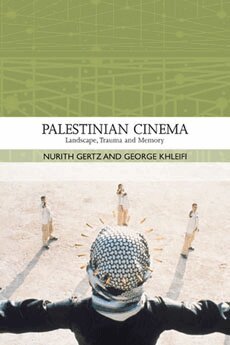
    Palestinian Cinema

    Landscape, Trauma, and Memory

    AvNurith Gertz,George Khleifi

    Häftad, Engelska, 2008

    460 kr

    Beställningsvara. Skickas inom 3-6 vardagar. Fri frakt över 249 kr.

    Beskrivning

    Although in recent years the entire world has been increasingly concerned with the Israeli-Palestinian conflict, there are few truly reliable sources of information about Palestinian society and culture. One of the best sources for understanding Palestinian culture is the cinema, which has strived to delineate Palestinian history and to portray the daily lives of Palestinian men, women, and children. Here, an Israeli and a Palestinian scholar, in a rare and welcome collaboration, follow the development of Palestinian cinema, commenting on its response to political and social transformations. They reveal that the more that social, political, and economic conditions have worsened and chaos and pain prevail, the more Palestinian cinema has engaged with the national struggle.

    Produktinformation

    • Utgivningsdatum:2008-03-03
    • Mått:156 x 235 x undefined mm
    • Vikt:340 g
    • Format:Häftad
    • Språk:Engelska
    • Antal sidor:256
    • Förlag:Indiana University Press
    • ISBN:9780253220073

    Utforska kategorier

    • Mellanösterns historia inom Historia och arkeologi
    • Film inom Kultur

    Mer om författaren

    Nurith Gertz is Professor of Cinema and Literature at the Open University and Professor and Head of the Program in Theory and History in the Department of Cinema and Television at Tel Aviv University. Her numerous books include Myths in Israeli Culture and Not From Here. She lives in Jerusalem.George Khleifi is a Palestinian filmmaker and Deputy Director of the Institute of Modern Media at Al Quds University, Ramallah. He is the author of numerous articles on Palestinian cinema. He lives in Nazareth.

    Recensioner i media

    "Exploring Palestinian cinema from both Israeli and Palestinian perspectives, Gertz (Open Univ. and Tel Aviv Univ.) and Khleifi (Palestinian filmmaker; director, Institute of Modern Media, Al Quds Univ., Ramallah) find that as the conflict between Israel and Palestine worsens, Palestinian cinema reflects a changing and more difficult social, political, and economic environment. In the earliest Palestinian cinema (the 1970s), the individual represents an unchanging collective, its struggles, and its fate, but by the 1980s the individual has become a distinct entity. The films of the 1990s refine that approach, looking deeper at the mundane life of average Palestinians. These cinematic representations exist in dynamic opposition to Israeli character, and Palestinian cinema develops to represent this tragic relationship. The films the authors examine are well chosen: they chronicle the Palestinian effort at self-definition and preservation in the midst of continual national chaos emerges. Although the conclusions may seem obvious, two elements mark this work as seminal: the ongoing conflict makes analysis of Palestinian society and politics rare; even rarer is a concerted analytical effort by representatives of both sides. The latter, in particular, makes this volume important scholarship and (one hopes) a model for future collaboration. Summing Up: Highly recommended. All readers, all levels."—S. Kowtko, Spokane Community College, Choice, September 2008"Although in recent years the entire world has been increasingly concerned with the Israeli-Palestinian conflict, there are few truly reliable sources of information about Palestinian society and culture. One of the best sources for understanding Palestinian culture is the cinema, which has strived to delineate Palestinian history and to portray the daily lives of Palestinian men, women, and children. Here, an Israeli and a Palestinian scholar follow the development of Palestinian cinema, commenting on its response to political and social transformations. They find that the more social, political, and economic conditions have worsened and chaos and pain prevail, the more Palestinian cinema has engaged with the national struggle."—Joseph Haberer, Book Editor, SHOFAR, Vol. 27, 1 Fall 2008"[O]ffers an in-depth study of an emergent body of films produced under extremely adverse circumstances; it situates these films in their historical, political, and ideological contexts; and it contributes meaningfully to our broader understanding of other 'emergent,' 'Third World,' and 'postcolonial' cinemas. Happily, it is also erudite, providing necessary information to the initiated and uninitiated alike, and it is written in clear, jargon-free language. These qualities make Palestinian Cinema at once authoritative and accessible. Fall 2010"—Cinema Journal"Exploring Palestinian cinema from both Israeli and Palestinian perspectives, Gertz . . . and Khleifi . . . find that as the conflict between Israel and Palestine worsens, Palestinian cinema reflects a changing and more difficult social, political, and economic environment. . . . The films the authors examine are well chosen: they chronicle the Palestinian effort at self-definition and preservation in the midst of continual national chaos emerges. . . . [T]wo elements mark this work as seminal: the ongoing conflict makes analysis of Palestinian society and politics rare; even rarer is a concerted analytical effort by representatives of both sides. The latter, in particular, makes this volume important scholarship and (one hopes) a model for future collaboration. . . . Highly recommended.September 2008"—S. Kowtko, Spokane Community College

    Innehållsförteckning

    • Introduction1. A Chronicle of Palestinian Cinema2. From Bleeding Memories to Fertile Memories3. About Place adn Time: The Films of Michael Khleifi4. without Place, Without Time: The Films of Rashid Masharawi5. The House and Its Destruction: The Films of Ali Nassar6. A Dead-End: Roadblock Movies7. Between Exile and Homeland: The Films of Elia SuleimanConclusion