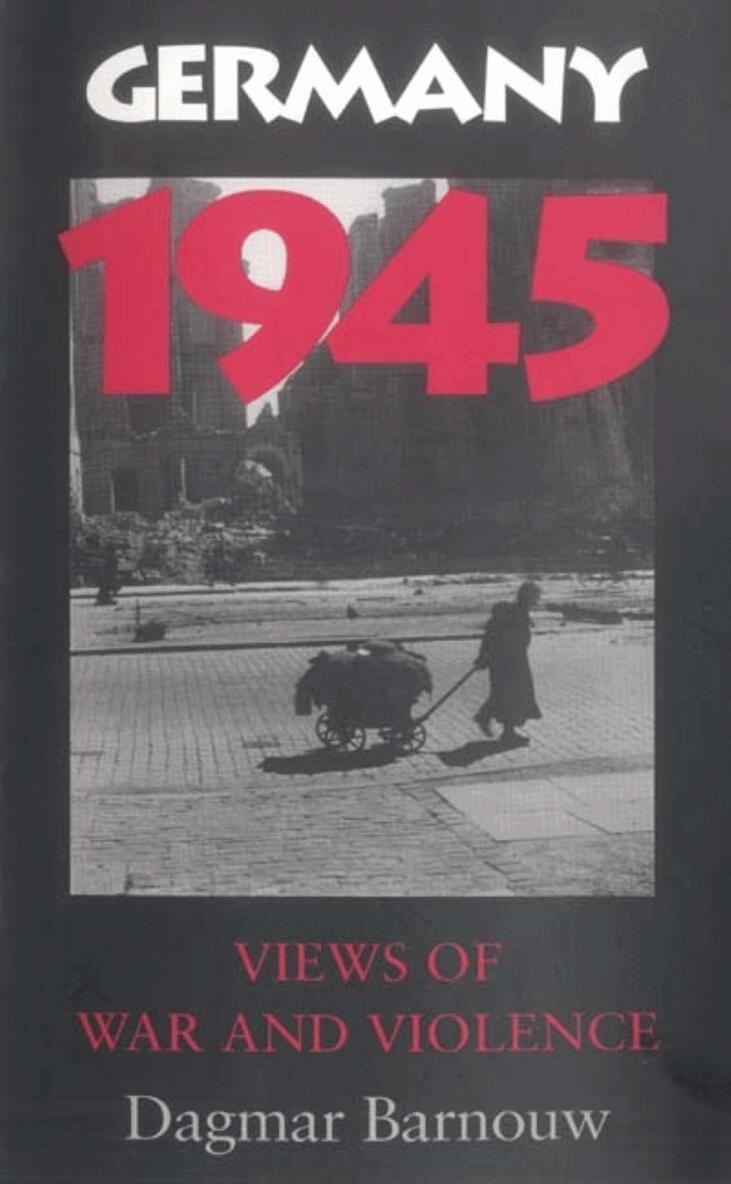
Germany 1945
Views of War and Violence
279 kr
Beställningsvara. Skickas inom 10-15 vardagar. Fri frakt över 249 kr.
Du är på sajten för privatpersoner.
279 kr
Beställningsvara. Skickas inom 10-15 vardagar. Fri frakt över 249 kr.
Dagmar Barnouw was Professor of German and Comparative Literature, University of Southern California, until her sudden death in May 2008. Her books include Weimar Intellectuals and the Threat of Modernity (IUP, 1988) and Naipaul's Strangers (IUP, 2003), among other books of cultural criticism.
[Barnouw's] work shows that perspective plays a key role both in photography and in trying to master Germany's past. [F]ascinating.(Library Journal) Germany 1945 is best seen as a contribution to [the] debate . . . about the uniqueness or otherwise of Nazi crimes, and the related questions of collective responsibility for those crimes, and the need to go on remembering them.(Times Literary Supplement) Resist the impulse to 'historicize' the Holocaust . . . and you run the danger of sacralizing it. Barnouw's effort to grapple with these dilemmas is provocative, brilliant, and unsettling.(Washington Times) Germany 1945 contributes a vigorous voice to the expanding chorus of scholars who have called for increased examination of the immediate postwar years. (H-NET Reviews Humanities & Social Sciences) [Barnouw's] thoughtful analysis of a large assortment of photographs . . . allows Barnouw to look at how and not just what people saw, and to bring that perspective into conversation with the historical debates about the war's end in Germany. (Journal of Contemporary History)
Du är på sajten för privatpersoner.
279 kr
Beställningsvara. Skickas inom 10-15 vardagar. Fri frakt över 249 kr.
Dagmar Barnouw was Professor of German and Comparative Literature, University of Southern California, until her sudden death in May 2008. Her books include Weimar Intellectuals and the Threat of Modernity (IUP, 1988) and Naipaul's Strangers (IUP, 2003), among other books of cultural criticism.
[Barnouw's] work shows that perspective plays a key role both in photography and in trying to master Germany's past. [F]ascinating.(Library Journal) Germany 1945 is best seen as a contribution to [the] debate . . . about the uniqueness or otherwise of Nazi crimes, and the related questions of collective responsibility for those crimes, and the need to go on remembering them.(Times Literary Supplement) Resist the impulse to 'historicize' the Holocaust . . . and you run the danger of sacralizing it. Barnouw's effort to grapple with these dilemmas is provocative, brilliant, and unsettling.(Washington Times) Germany 1945 contributes a vigorous voice to the expanding chorus of scholars who have called for increased examination of the immediate postwar years. (H-NET Reviews Humanities & Social Sciences) [Barnouw's] thoughtful analysis of a large assortment of photographs . . . allows Barnouw to look at how and not just what people saw, and to bring that perspective into conversation with the historical debates about the war's end in Germany. (Journal of Contemporary History)