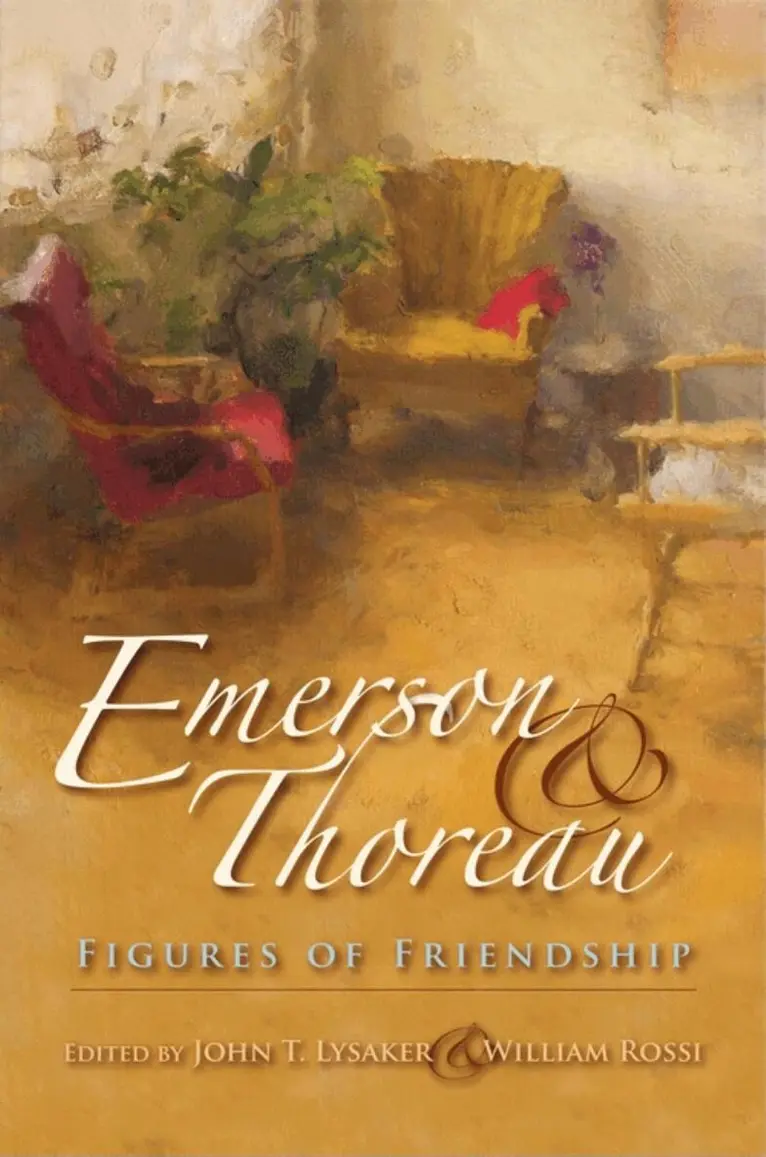
Emerson and Thoreau
Figures of Friendship
258 kr
Beställningsvara. Skickas inom 5-8 vardagar. Fri frakt över 249 kr.
Du är på sajten för privatpersoner.
258 kr
Beställningsvara. Skickas inom 5-8 vardagar. Fri frakt över 249 kr.
John T. Lysaker is Professor and Head of Philosophy at the University of Oregon. He is author of Emerson and Self-Culture (IUP, 2008).William Rossi is Associate Professor and Director of Undergraduate Studies in English at the University of Oregon. He is editor of Walden and Resistance to Civil Government and several volumes of Thoreau's works, including Walden, Civil Disobedience, and Other Writings and Journal, volumes 3 and 6.
"Henry David Thoreau and Ralph Waldo Emerson, the two giants of American transcendentalism, enjoyed a friendship that was both positive and negative. They had mutual intellectual interests, liked and admired each other, and shared many of life experiences. But their friendship was also challenged by personal rivalries, disappointments, and misunderstandings—which is to say that their friendship mirrored the friendships that many experience. Lysaker (philosophy, Univ. of Oregon) and Rossi (English, Univ. of Oregon) believe that by studying Thoreau and Emerson's unique friendship and also their writing on the subject of friendship one can learn much about the mysterious and sometimes contradictory elements that tie all humans in friendship. Released in the 'American Philosophy' series, this book comprises nine essays by scholars from a variety of disciplines, including philosophy, English, education, and religion. Divided into four sections—'Transcendental Contexts,' 'Emerson's "Friendship,"' 'Thoreau's Divergent Melodies,' and 'Giving Friendship for Life'—the essays interpret various aspects and characteristics of the bond that the two men shared. Close examination of their written essays, letters, and journals does in fact enrich understanding of what the two men experienced. Summing Up: Recommended. Upper-division undergraduates through faculty. — Choice"—P. J. Ferlazzo, Northern Arizona University, September 2010"Emerson & Thoreau rises above the rest in that it sheds light not only on ideas but on the human interests that imbue them sometimes with beauty, occasionally with virtue, and too often with tragedy.V.6.2 Summer 2011"—The Pluralist"[T]his splendid volume ... is a substantial contribution to our understanding of the friendship between Emerson and Thoreau, and of nineteenth century literary culture more generally.Vol. 22.1 Spring 2011"—Emerson Society Papers"This thought-provoking collection offers valuable insights not only about Emerson and Thoreau but also about the ways in which their views of friendship resonate today. December 2010, Vol. 83, no. 4"—The New England Quarterly"In their new book, John T. Lysaker and William Rossi have assembled a set of excellent scholarly essays that situate Emerson and Thoreau in the tradition of Western thinking about friendship stretching from Plato to Derrida."—Times Literary Supplement"Lysaker and Rossi believe that by studying Thoreau and Emerson's unique friendship and also their writing on the subject of friendship one can learn much about the mysterious and sometimes contradictory elements that tie all humans in friendship. . . . Close examination of their written essays, letters, and journals does in fact enrich understanding of what the two men experienced. . . . Recommended."—Choice"Emerson & Thoreau: Figures of Friendship... offers compelling biographical background on [Emerson and Thoreau's] famous friendship, as well as insightful scholarship on their main writings about friendship: Emerson's essay 'Friendship,' and the 'Wednesday' section of Thoreau's A Week on the Concord and Merrimack Rivers (1849).... The book's aspiration is to be that rare hybrid: an academic work urgent enough to change a reader's life.... In both Emerson and Thoreau's thinking, friendship is indispensable in bringing about our better selves: our flourishing cannot occur without the challenges and opportunities for growth our friends provide us.#80 2010"—Scott Parker, Philosophy Now"Emerson, Thoreau, and the Transcendentalists had a lot more to say about friendship than is generally thought, and this is a good point of departure for these new readings."—Robert F. Sayre, University of Iowa"Addresses an issue—friendship—that is of crucial importance to the ethical and social visions of Emerson and Thoreau."—James M. Albrecht, Pacific Lutheran University
Henry David Thoreau, William Rossi, Heather Kirk Thomas
Inbunden, 2000
1 359 kr
William Rossi
Häftad, 2018
155 kr
William Rossi
Häftad, 2018
143 kr
Du är på sajten för privatpersoner.
258 kr
Beställningsvara. Skickas inom 5-8 vardagar. Fri frakt över 249 kr.
John T. Lysaker is Professor and Head of Philosophy at the University of Oregon. He is author of Emerson and Self-Culture (IUP, 2008).William Rossi is Associate Professor and Director of Undergraduate Studies in English at the University of Oregon. He is editor of Walden and Resistance to Civil Government and several volumes of Thoreau's works, including Walden, Civil Disobedience, and Other Writings and Journal, volumes 3 and 6.
"Henry David Thoreau and Ralph Waldo Emerson, the two giants of American transcendentalism, enjoyed a friendship that was both positive and negative. They had mutual intellectual interests, liked and admired each other, and shared many of life experiences. But their friendship was also challenged by personal rivalries, disappointments, and misunderstandings—which is to say that their friendship mirrored the friendships that many experience. Lysaker (philosophy, Univ. of Oregon) and Rossi (English, Univ. of Oregon) believe that by studying Thoreau and Emerson's unique friendship and also their writing on the subject of friendship one can learn much about the mysterious and sometimes contradictory elements that tie all humans in friendship. Released in the 'American Philosophy' series, this book comprises nine essays by scholars from a variety of disciplines, including philosophy, English, education, and religion. Divided into four sections—'Transcendental Contexts,' 'Emerson's "Friendship,"' 'Thoreau's Divergent Melodies,' and 'Giving Friendship for Life'—the essays interpret various aspects and characteristics of the bond that the two men shared. Close examination of their written essays, letters, and journals does in fact enrich understanding of what the two men experienced. Summing Up: Recommended. Upper-division undergraduates through faculty. — Choice"—P. J. Ferlazzo, Northern Arizona University, September 2010"Emerson & Thoreau rises above the rest in that it sheds light not only on ideas but on the human interests that imbue them sometimes with beauty, occasionally with virtue, and too often with tragedy.V.6.2 Summer 2011"—The Pluralist"[T]his splendid volume ... is a substantial contribution to our understanding of the friendship between Emerson and Thoreau, and of nineteenth century literary culture more generally.Vol. 22.1 Spring 2011"—Emerson Society Papers"This thought-provoking collection offers valuable insights not only about Emerson and Thoreau but also about the ways in which their views of friendship resonate today. December 2010, Vol. 83, no. 4"—The New England Quarterly"In their new book, John T. Lysaker and William Rossi have assembled a set of excellent scholarly essays that situate Emerson and Thoreau in the tradition of Western thinking about friendship stretching from Plato to Derrida."—Times Literary Supplement"Lysaker and Rossi believe that by studying Thoreau and Emerson's unique friendship and also their writing on the subject of friendship one can learn much about the mysterious and sometimes contradictory elements that tie all humans in friendship. . . . Close examination of their written essays, letters, and journals does in fact enrich understanding of what the two men experienced. . . . Recommended."—Choice"Emerson & Thoreau: Figures of Friendship... offers compelling biographical background on [Emerson and Thoreau's] famous friendship, as well as insightful scholarship on their main writings about friendship: Emerson's essay 'Friendship,' and the 'Wednesday' section of Thoreau's A Week on the Concord and Merrimack Rivers (1849).... The book's aspiration is to be that rare hybrid: an academic work urgent enough to change a reader's life.... In both Emerson and Thoreau's thinking, friendship is indispensable in bringing about our better selves: our flourishing cannot occur without the challenges and opportunities for growth our friends provide us.#80 2010"—Scott Parker, Philosophy Now"Emerson, Thoreau, and the Transcendentalists had a lot more to say about friendship than is generally thought, and this is a good point of departure for these new readings."—Robert F. Sayre, University of Iowa"Addresses an issue—friendship—that is of crucial importance to the ethical and social visions of Emerson and Thoreau."—James M. Albrecht, Pacific Lutheran University
Henry David Thoreau, William Rossi, Heather Kirk Thomas
Inbunden, 2000
1 359 kr
William Rossi
Häftad, 2018
155 kr
William Rossi
Häftad, 2018
143 kr
Du är på sajten för privatpersoner.
258 kr
Beställningsvara. Skickas inom 5-8 vardagar. Fri frakt över 249 kr.
John T. Lysaker is Professor and Head of Philosophy at the University of Oregon. He is author of Emerson and Self-Culture (IUP, 2008).William Rossi is Associate Professor and Director of Undergraduate Studies in English at the University of Oregon. He is editor of Walden and Resistance to Civil Government and several volumes of Thoreau's works, including Walden, Civil Disobedience, and Other Writings and Journal, volumes 3 and 6.
"Henry David Thoreau and Ralph Waldo Emerson, the two giants of American transcendentalism, enjoyed a friendship that was both positive and negative. They had mutual intellectual interests, liked and admired each other, and shared many of life experiences. But their friendship was also challenged by personal rivalries, disappointments, and misunderstandings—which is to say that their friendship mirrored the friendships that many experience. Lysaker (philosophy, Univ. of Oregon) and Rossi (English, Univ. of Oregon) believe that by studying Thoreau and Emerson's unique friendship and also their writing on the subject of friendship one can learn much about the mysterious and sometimes contradictory elements that tie all humans in friendship. Released in the 'American Philosophy' series, this book comprises nine essays by scholars from a variety of disciplines, including philosophy, English, education, and religion. Divided into four sections—'Transcendental Contexts,' 'Emerson's "Friendship,"' 'Thoreau's Divergent Melodies,' and 'Giving Friendship for Life'—the essays interpret various aspects and characteristics of the bond that the two men shared. Close examination of their written essays, letters, and journals does in fact enrich understanding of what the two men experienced. Summing Up: Recommended. Upper-division undergraduates through faculty. — Choice"—P. J. Ferlazzo, Northern Arizona University, September 2010"Emerson & Thoreau rises above the rest in that it sheds light not only on ideas but on the human interests that imbue them sometimes with beauty, occasionally with virtue, and too often with tragedy.V.6.2 Summer 2011"—The Pluralist"[T]his splendid volume ... is a substantial contribution to our understanding of the friendship between Emerson and Thoreau, and of nineteenth century literary culture more generally.Vol. 22.1 Spring 2011"—Emerson Society Papers"This thought-provoking collection offers valuable insights not only about Emerson and Thoreau but also about the ways in which their views of friendship resonate today. December 2010, Vol. 83, no. 4"—The New England Quarterly"In their new book, John T. Lysaker and William Rossi have assembled a set of excellent scholarly essays that situate Emerson and Thoreau in the tradition of Western thinking about friendship stretching from Plato to Derrida."—Times Literary Supplement"Lysaker and Rossi believe that by studying Thoreau and Emerson's unique friendship and also their writing on the subject of friendship one can learn much about the mysterious and sometimes contradictory elements that tie all humans in friendship. . . . Close examination of their written essays, letters, and journals does in fact enrich understanding of what the two men experienced. . . . Recommended."—Choice"Emerson & Thoreau: Figures of Friendship... offers compelling biographical background on [Emerson and Thoreau's] famous friendship, as well as insightful scholarship on their main writings about friendship: Emerson's essay 'Friendship,' and the 'Wednesday' section of Thoreau's A Week on the Concord and Merrimack Rivers (1849).... The book's aspiration is to be that rare hybrid: an academic work urgent enough to change a reader's life.... In both Emerson and Thoreau's thinking, friendship is indispensable in bringing about our better selves: our flourishing cannot occur without the challenges and opportunities for growth our friends provide us.#80 2010"—Scott Parker, Philosophy Now"Emerson, Thoreau, and the Transcendentalists had a lot more to say about friendship than is generally thought, and this is a good point of departure for these new readings."—Robert F. Sayre, University of Iowa"Addresses an issue—friendship—that is of crucial importance to the ethical and social visions of Emerson and Thoreau."—James M. Albrecht, Pacific Lutheran University
Henry David Thoreau, William Rossi, Heather Kirk Thomas
Inbunden, 2000
1 359 kr
William Rossi
Häftad, 2018
155 kr
William Rossi
Häftad, 2018
143 kr