• Fri frakt över 249 kr
  • •
  • Snabba leveranser
  • •
  • Billiga böcker
Kundservice

Du är på sajten för privatpersoner.

Företag, bibliotek eller offentlig verksamhet?

Du handlar på classic.bokus.com, där alla dina funktioner finns intakta.
Till classic.bokus.com
Bokus logotyp. Gå till startsidan.
  • Erbjudanden
  • Student
  • Topplistor
  • Barn & ungdom
  • Bokus Play
  • E-böcker
  • Ljudböcker
  • Pocketböcker
  • Spel & pussel

Upp till 25% på utvalda nyheter →

Sidfot

Mina sidor

    Hjälp

    • Kundservice
    • Vanliga frågor och svar
    • Frakt och leverans
    • Retur vid ångerrätt
    • Reklamera vara
    • Betalning
    • Köpvillkor
    • Allmänna villkor
    • Information om webbplatsens tillgänglighet

    Om Bokus

    • Om oss
    • Pressrum
    • För studenter
    • För företag
    • För bibliotek och offentlig verksamhet
    • För leverantörer
    • Hållbarhet

    Populärt

    • Aktuella erbjudanden
    • Presentkort
    • Studentlitteratur
    • Nya böcker
    • Topplistor
    • Signerade böcker
    • Engelska böcker

    Inspiration

    • Boktips
    • BookTok
    • Populära bokserier
    • Barnbokskaraktärer
    • Populära författare
    Logotyp för Bokus
    Följ oss på Facebook (extern länk)Följ oss på Instagram (extern länk)Följ oss på YouTube (extern länk)Följ oss på TikTok (extern länk)
    bokus @ CookiesAnpassa cookiesIntegritetspolicyKöpvillkor
    Till Citymail hemsida (extern länk)Till Budbee hemsida (extern länk)Till Postnord hemsida (extern länk)Till Schenker hemsida (extern länk)Till Early Bird hemsida (extern länk)Till Walleys hemsida (extern länk)
    1. Filosofi och religion
    2. Filosofi
    3. Filosofiska discipliner

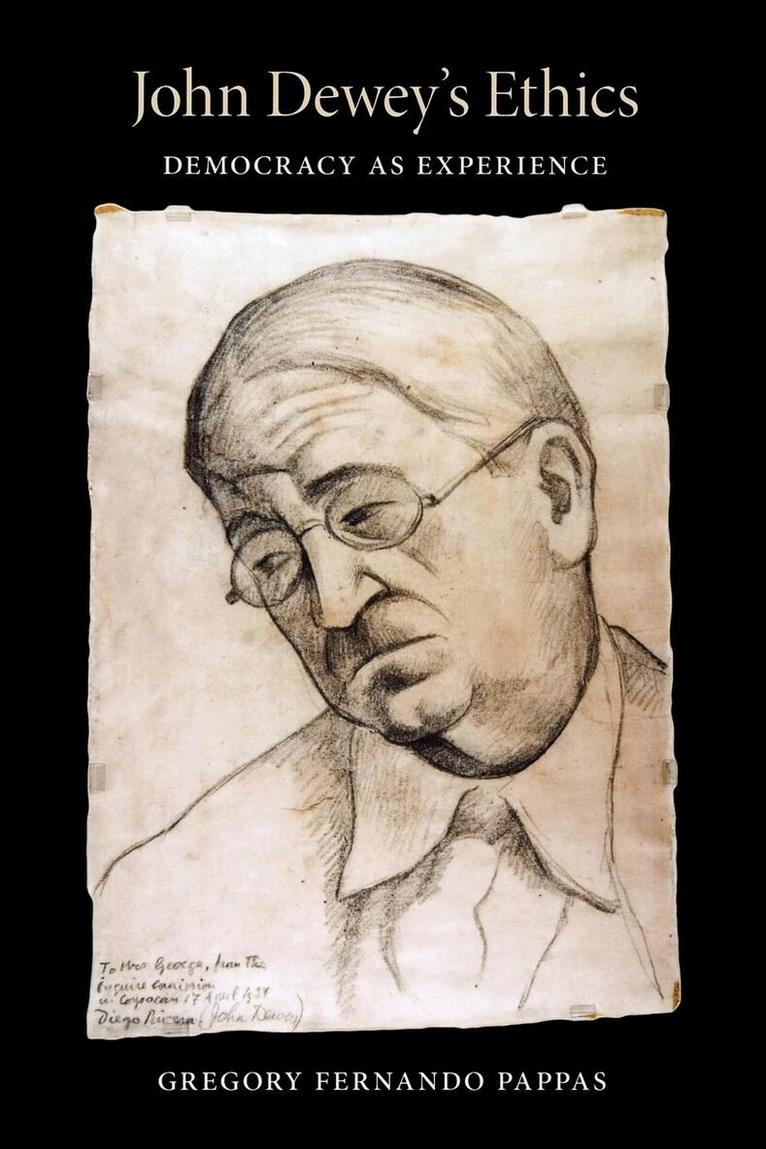
    John Dewey's Ethics

    Democracy As Experience

    AvGregory Pappas

    Häftad, Engelska, 2008

    Del i serien American Philosophy

    289 kr

    . Fri frakt över 249 kr.

    Beskrivning

    John Dewey, widely known as "America's philosopher," provided important insights into education and political philosophy, but surprisingly never set down a complete moral or ethical philosophy. Gregory Fernando Pappas presents the first systematic and comprehensive treatment of Dewey's ethics. By providing a pluralistic account of moral life that is both unified and coherent, Pappas considers ethics to be key to an understanding of Dewey's other philosophical insights, especially his views on democracy. Pappas unfolds Dewey's ethical vision by looking carefully at the virtues and values of ideal character and community. Showing that Dewey's ethics are compatible with the rest of his philosophy, Pappas corrects the reputation of American pragmatism as a philosophy committed to skepticism and relativism. Readers will find a robust and boldly detailed view of Dewey's ethics in this groundbreaking book.

    Produktinformation

    • Utgivningsdatum:2008-07-02
    • Mått:156 x 235 x undefined mm
    • Vikt:522 g
    • Format:Häftad
    • Språk:Engelska
    • Serie:American Philosophy
    • Antal sidor:368
    • Förlag:Indiana University Press
    • ISBN:9780253219794

    Utforska kategorier

    • Filosofiska discipliner inom Filosofi och religion

    Mer om författaren

    Gregory Fernando Pappas is Associate Professor of Philosophy at Texas A&M University. He is the author of numerous articles on the philosophy of William James and John Dewey. He has been the recipient of a Ford Foundation Postdoctoral Fellowship as well as the William James and the Latin American Thought prizes by the American Philosophical Association.

    Recensioner i media

    "John Dewey, perhaps the most prolific figure in American philosophy and pragmatism, is roundly considered deficient with respect to ethics. Pappas (Texas A&M) addresses this misconception by demonstrating that ethics is the organizing center of Dewey's entire philosophical approach. This is a challenging thesis to argue for both dedicated pragmatists and philosophers of ethics from the analytic or Continental traditions. Pappas's argument moves in three steps: experience as method, moral theory and practice, and the normative standpoint of pragmatism. The claim to normativity is the most interesting and problematic. Pappas says that "the broadest characterization of Dewey's ideal is that he advocates living a moral life that is intelligent, aesthetic, and democratic." Imagination and conscientiousness are primary aspects of this emergent normativity, and Pappas also explores Dewey's notion of affections and virtues of character. Pappas is consistent in signaling the qualitative notion of faith present in Dewey's moral thought, although the content of this faith remains necessarily vague. This book handles Dewey's disparate texts and broad research adeptly, and focuses on the issues of experience and experiment in a holistic treatment of pragmatic ethics. Summing Up: Highly recommended. Lower-level undergraduates through faculty/researchers; general readers. —Choice"—R. Ward, Georgetown College, Feb. 2009"John Dewey, perhaps the most prolific figure in American philosophy and pragmatism, is roundly considered deficient with respect to ethics. Pappas (Texas A&M) addresses this misconception by demonstrating that ethics is the organizing center of Dewey's entire philosophical approach. . . . This book handles Dewey's disparate texts and broad research adeptly, and focuses on the issues of experience and experiment in a holistic treatment of pragmatic ethics. Summing Up: Highly recommended. Lower-level undergraduates through faculty/researchers; general readers. February 2009"—Choice". . . an extensive and pioneering elucidation of John Dewey's ethics. [The author] thoughtfully articulates Dewey's quest to bring qualitative experience to the forefront of moral thought. Pappas' new book is a grand contibution to the chronicles of Deweyan thought.Vol. 35.1 Spring 2008"—Marjorie Cavey, Southern Illinois University, Carbondale"[This] book is impressive in scope and accomplishment. Pappas draws on the entire corpus of Dewey's work to reconstruct Dewey's mature moral philosophy and convincingly shows that Dewey's view is not only distinct and defensible philosophically, but vital for dealing with contemporary real-world concerns."—Transactions of the Charles S. Peirce Society"[A] sporting analogy for ethics reinforces Pappas's essential point, that the best ethics for democracy emerge on the playing fields of experience. John Dewey's philosophy articulates that promise, while Gregory Pappas's work marks the maturing of the awareness of its relevance for modern democracies in search of themselves.44.1 Feb. 2010"—Journal of American Studies"Gregory Pappas gives us a Dewey whose emphasis on the qualitative aspects of experience has the power to greatly enrich contemporary debates about ethics and democracy. . . . This well organized and carefully argued work will surely take its place among the most influential studies of Dewey's philosophy."—Larry Hickman, The Center for Dewey Studies"A distinct and important interpretation of Dewey's moral philosophy."—Todd Lekan, Muskingum College"Extremely clear, careful, and straightforward . . . always solid and often refreshing."—Shannon Sullivan, The Pennsylvania State University

    Innehållsförteckning

    • PrefaceList of AbbreviationsIntroductionPart 1. Moral Theory and Experience1. Experience as Method2. Moral Theory and Moral Practice3. The Normative Standpoint of PragmatismPart 2. Dewey's View of Moral Experience4. Morality as Experience5. The "What" of Moral Experience6. The "How" of Moral Experience7. Character and Conduct: Dewey and the Great Divide in Ethics8. Present Activity and the Meaning of Moral Life9. Conclusion: The Need for a Recovery of Moral PhilosophyPart 3. The Ideal Moral Life10. The Intelligent, Aesthetic, and Democratic Way of Life11. The Ideal Moral Self12. Democracy as the Ideal Moral Community13. A Philosophical Justification of DemocracyConclusionNotesBibliographyIndex