• Fri frakt över 249 kr
  • •
  • Snabba leveranser
  • •
  • Billiga böcker
Kundservice

Du är på sajten för privatpersoner.

Företag, bibliotek eller offentlig verksamhet?

Du handlar på classic.bokus.com, där alla dina funktioner finns intakta.
Till classic.bokus.com
Bokus logotyp. Gå till startsidan.
  • Erbjudanden
  • Nyheter
  • Student
  • Topplistor
  • Barn & ungdom
  • Bokus Play
  • E-böcker
  • Pocketböcker
  • Spel & pussel

10% rabatt på allt med kod: NYSTART10 →

Sidfot

Mina sidor

    Hjälp

    • Kundservice
    • Vanliga frågor och svar
    • Frakt och leverans
    • Retur vid ångerrätt
    • Reklamera vara
    • Betalning
    • Köpvillkor
    • Allmänna villkor
    • Information om webbplatsens tillgänglighet

    Om Bokus

    • Om oss
    • Pressrum
    • För studenter
    • För företag
    • För bibliotek och offentlig verksamhet
    • För leverantörer
    • Hållbarhet

    Populärt

    • Aktuella erbjudanden
    • Presentkort
    • Studentlitteratur
    • Nya böcker
    • Topplistor
    • Signerade böcker
    • Engelska böcker

    Inspiration

    • Boktips
    • BookTok
    • Populära bokserier
    • Barnbokskaraktärer
    • Populära författare
    Logotyp för Bokus
    Följ oss på Facebook (extern länk)Följ oss på Instagram (extern länk)Följ oss på YouTube (extern länk)Följ oss på TikTok (extern länk)
    bokus @ CookiesAnpassa cookiesIntegritetspolicyKöpvillkor
    Till Citymail hemsida (extern länk)Till Budbee hemsida (extern länk)Till Postnord hemsida (extern länk)Till Schenker hemsida (extern länk)Till Early Bird hemsida (extern länk)Till Walleys hemsida (extern länk)
    1. Skönlitteratur
    2. Litteraturvetenskap
    3. Litteraturvetenskap

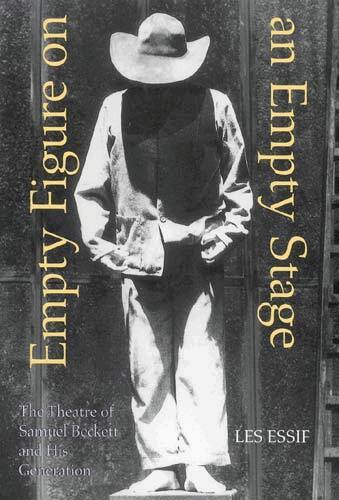
    Empty Figure on an Empty Stage

    The Theatre of Samuel Beckett and His Generation

    AvLes Essif

    Inbunden, Engelska, 2001

    Del i serien Drama and Performance Studies

    567 kr

    Beställningsvara. Skickas inom 10-15 vardagar. Fri frakt över 249 kr.

    Beskrivning

    Empty Figure on an Empty StageThe Theatre of Samuel Beckett and His GenerationLes EssifAn original and exciting approach to the theatre of the absurd.This study considers the ways playwrights draw meaning from emptiness. With reference to actual performances of dramatic works, Les Essif examines drama associated with nonrealistic movement known as theatre of the absurd, focusing on the ways dramatists create an impression of emptiness not only on the stage but also in the body and mind of the central character. Essif makes a case for the meta-dramatic fusion of stage and character.Empty Figure on an Empty Stage begins with a discussion of philosophical, socio-cultural, and theatrical implications of emptiness. Bringing together pioneers in theatre phenomenology Bert O. States and Stanton B. Garner, Jr., with theatrical thinkers Antonin Artaud and Gordon Craig, and socio-aesthetic thinkers Mikhail Bakhtin and Theodore Adorno, Essif formulates a fresh approach to drama and performance and presents an overview of the evolution of "empty" characters and "empty" space in Western drama. After examining Samuel Beckett's drama and performance, Essif studies works of other dramatists of this generation, primarily from France (Ionesco, Vian, Dubillard, Obaldia), but also from other Western national cultures (Bernhard, Pinter, Stoppard, Handke, Shepard). He supports his thesis with photographs of works of art as well as scenes from theatrical performances of the plays in question.Les Essif is Associate Professor of Modern Languages and Literatures at the University of Tennessee, Knoxville.Drama and Performance Studies—Timothy Wiles, general editorJuly 2001272 pages, 18 b&w photos, 6 1/8 x 9 1/4, index, append.cloth0-253-33847-6$39.95 s / £30.50

    Produktinformation

    • Utgivningsdatum:2001-04-22
    • Mått:156 x 235 x 26 mm
    • Vikt:612 g
    • Format:Inbunden
    • Språk:Engelska
    • Serie:Drama and Performance Studies
    • Antal sidor:272
    • Förlag:Indiana University Press
    • ISBN:9780253338471

    Utforska kategorier

    • Litteraturvetenskap inom Skönlitteratur
    • Teater inom Kultur

    Mer om författaren

    Les Essif is Associate Professor of Modern Languages and Literatures at the University of Tennessee, Knoxville.

    Recensioner i media

    "Essif (Univ. of Tennessee, Knoxville) presents a sophisticated analysis of theatrical and psychic space, particularly of Beckett's empty figure on an empty stage. With special regard for the later plays, particularly Rockaby and Not I, the author identifies the techniques that focus the spectator's attention on the human body—the hypersubjective dramatic character—that connects the empty outer space of the stage and the empty inner space of the mind. Such a study necessitates an analysis not only of the ontological and metaphorical but also of the development of modern drama. Essif links Beckett with other playwrights (many French) in the nouveau théâtre (theatre) and offers a parenthetical chapter on the work of others—Pinter, Stoppard, Handke, Shepard—by way of contrast, an approach that succeeds admirably in situating Beckett. And in a final, illuminating chapter, he extends his reach to the figures of the harlequin of commedia and Pierrot, a modern mutant, distinguishing between them and connecting Beckett with the more meditative, socially isolated Pierrot. This is an intelligent, evocative study that, in its modest way, does more than most others in conceptualizing and articulating Beckett's fascination with emptiness and silence. Upper-division undergraduates and above.November 2001"—J. Schlueter, Lafayette College

    Innehållsförteckning

    • Preliminary Table of Contents:AcknowledgmentsIntroduction1. Emptiness: Ontological, Theatrical, Theatro-psychic2. Surrealist Inner Space: Theatre of the (Empty) Mind3. Beckett's Pursuit of Emptiness: The Concentrated (Empty) Image Behind the Fragmented Story In the Late Plays4. Avatars of the Hypersubjective Dramatic Character5. The Hypersubject Avatar Manqué6. TheHypersubjective Marionette-like Legacy of Pierrot: From the Social Space of the Commedia to the Empty Space of Nouveau ThéâtreConclusionWorks Cited