• Fri frakt över 249 kr
  • •
  • Snabba leveranser
  • •
  • Billiga böcker
Kundservice

Du är på sajten för privatpersoner.

Företag, bibliotek eller offentlig verksamhet?

Du handlar på classic.bokus.com, där alla dina funktioner finns intakta.
Till classic.bokus.com
Bokus logotyp. Gå till startsidan.
  • Erbjudanden
  • Nyheter
  • Student
  • Topplistor
  • Barn & ungdom
  • Bokus Play
  • E-böcker
  • Pocketböcker
  • Spel & pussel

10% rabatt på allt med kod NYSTART10 →

Sidfot

Mina sidor

    Hjälp

    • Kundservice
    • Vanliga frågor och svar
    • Frakt och leverans
    • Retur vid ångerrätt
    • Reklamera vara
    • Betalning
    • Köpvillkor
    • Allmänna villkor
    • Information om webbplatsens tillgänglighet

    Om Bokus

    • Om oss
    • Pressrum
    • För studenter
    • För företag
    • För bibliotek och offentlig verksamhet
    • För leverantörer
    • Hållbarhet

    Populärt

    • Aktuella erbjudanden
    • Presentkort
    • Studentlitteratur
    • Nya böcker
    • Topplistor
    • Signerade böcker
    • Engelska böcker

    Inspiration

    • Boktips
    • BookTok
    • Populära bokserier
    • Barnbokskaraktärer
    • Populära författare
    Logotyp för Bokus
    Följ oss på Facebook (extern länk)Följ oss på Instagram (extern länk)Följ oss på YouTube (extern länk)Följ oss på TikTok (extern länk)
    bokus @ CookiesAnpassa cookiesIntegritetspolicyKöpvillkor
    Till Citymail hemsida (extern länk)Till Budbee hemsida (extern länk)Till Postnord hemsida (extern länk)Till Schenker hemsida (extern länk)Till Early Bird hemsida (extern länk)Till Walleys hemsida (extern länk)
    1. Ekonomi och Ledarskap
    2. Nationalekonomi
    3. Ekonomisk politik

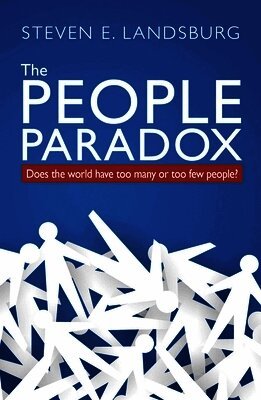
    People Paradox

    Does the world have too many or too few people?

    AvSteven E. Landsburg

    Häftad, Engelska, 2022

    Del i serien Institute of Economic Affairs

    190 kr

    Beställningsvara. Skickas inom 5-8 vardagar. Fri frakt över 249 kr.

    Beskrivning

    It’s one of the big questions of our time: Are there too many people in the world? Or too few?Whichever way, how would we decide? Here, economist Steven E. Landsburg, acclaimed author of The Armchair Economist and Can You Outsmart an Economist?, assesses the benefits – and the drawbacks – of having a bigger global population. The People Paradox is based on the transcript of his fascinating 2017 IEA Hayek Memorial Lecture, in which Landsburg details how the growth in the world population has brought immense improvements to our quality of life. He contends the planet still has plenty of room – and addresses continued calls for population control.Landsburg, professor of economics at the University of Rochester in Rochester, New York, draws on everything from modern history to everyday life (including the contents of his sock drawer!) to mount a thought-provoking, powerful – and often humorous – argument for continued population growth.With a commentary by Dr Stephen Davies, Head of Education at the Institute of Economic Affairs in London.

    Produktinformation

    • Utgivningsdatum:2022-06-28
    • Mått:133 x 202 x 4 mm
    • Vikt:93 g
    • Format:Häftad
    • Språk:Engelska
    • Serie:Institute of Economic Affairs
    • Antal sidor:72
    • Förlag:Institute of Economic Affairs
    • ISBN:9780255368094

    Utforska kategorier

    • Ekonomisk politik inom Ekonomi och Ledarskap
    • Geografi inom Naturvetenskap och teknik
    • Populärekonomi inom Ekonomi och Ledarskap

    Mer om författaren

    Steven Landsburg is a professor of economics at the University of Rochester and the author of ‘More Sex Is Safer Sex’, ‘The Armchair Economist’, ‘Fair Play’, ‘Can You Outsmart an Economist?’, ‘The Big Questions’, two textbooks on economics and over thirty journal articles in mathematics, economics, and philosophy. He’s been hailed by Steven Levitt as ‘better than anyone else at making economics interesting to non-economists’ and praised by political satirist and journalist P. J. O’Rourke for writing ‘funny, jargon-free, shocking, and true essays on our material circumstances’. He inaugurated the popular ‘Everyday Economics’ column in Slate magazine and has written for Forbes, the Wall Street Journal, the New York Times, and other publications.