• Fri frakt över 249 kr
  • •
  • Snabba leveranser
  • •
  • Billiga böcker
Kundservice

Du är på sajten för privatpersoner.

Företag, bibliotek eller offentlig verksamhet?

Du handlar på classic.bokus.com, där alla dina funktioner finns intakta.
Till classic.bokus.com
Bokus logotyp. Gå till startsidan.
  • Erbjudanden
  • Nyheter
  • Student
  • Topplistor
  • Barn & ungdom
  • Bokus Play
  • E-böcker
  • Pocketböcker
  • Spel & pussel

10% rabatt på allt med kod: NYSTART10 →

Sidfot

Mina sidor

    Hjälp

    • Kundservice
    • Vanliga frågor och svar
    • Frakt och leverans
    • Retur vid ångerrätt
    • Reklamera vara
    • Betalning
    • Köpvillkor
    • Allmänna villkor
    • Information om webbplatsens tillgänglighet

    Om Bokus

    • Om oss
    • Pressrum
    • För studenter
    • För företag
    • För bibliotek och offentlig verksamhet
    • För leverantörer
    • Hållbarhet

    Populärt

    • Aktuella erbjudanden
    • Presentkort
    • Studentlitteratur
    • Nya böcker
    • Topplistor
    • Signerade böcker
    • Engelska böcker

    Inspiration

    • Boktips
    • BookTok
    • Populära bokserier
    • Barnbokskaraktärer
    • Populära författare
    Logotyp för Bokus
    Följ oss på Facebook (extern länk)Följ oss på Instagram (extern länk)Följ oss på YouTube (extern länk)Följ oss på TikTok (extern länk)
    bokus @ CookiesAnpassa cookiesIntegritetspolicyKöpvillkor
    Till Citymail hemsida (extern länk)Till Budbee hemsida (extern länk)Till Postnord hemsida (extern länk)Till Schenker hemsida (extern länk)Till Early Bird hemsida (extern länk)Till Walleys hemsida (extern länk)
    1. Filosofi och religion
    2. Filosofi
    3. Filosofiska discipliner

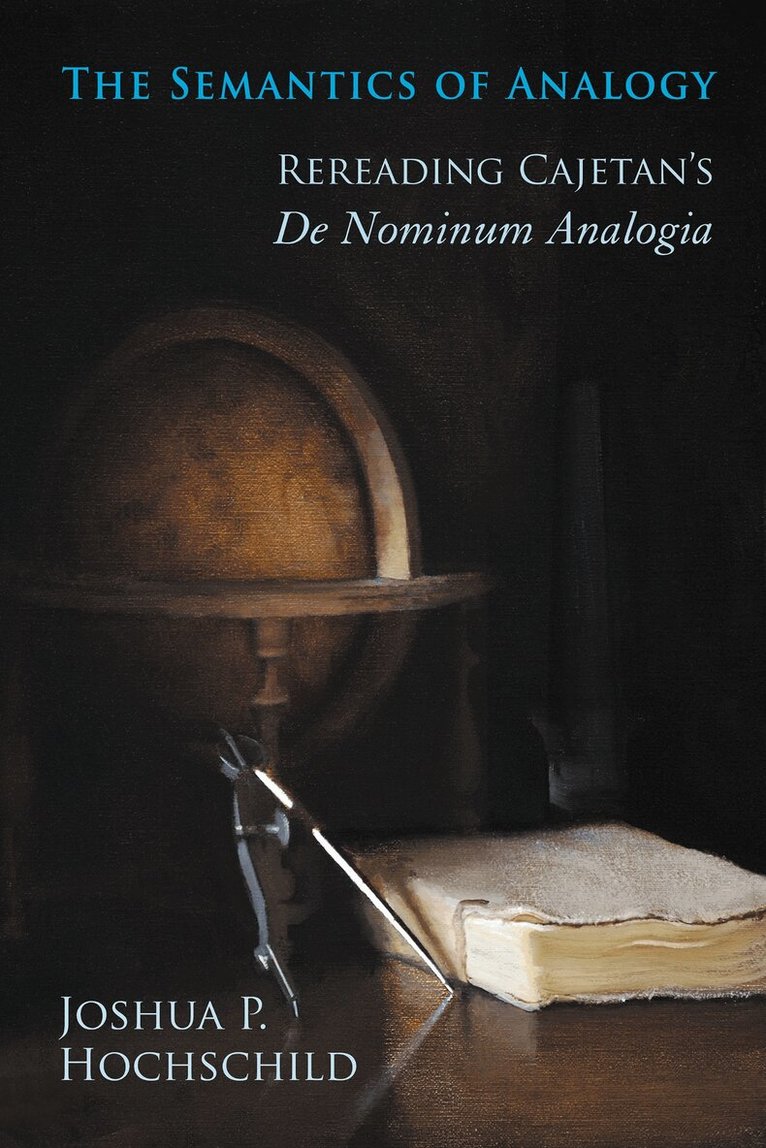
    Semantics of Analogy

    Rereading Cajetan's De Nominum Analogia

    AvJoshua P. Hochschild

    Häftad, Engelska, 2010

    363 kr

    Beställningsvara. Skickas inom 5-8 vardagar. Fri frakt över 249 kr.

    Fler format och utgåvor

    Inbunden

    858 kr

    Beskrivning

    The Semantics of Analogy is the first book-length interpretive study in English of Thomas de Vio Cajetan's (1469?-1534) classic treatise on analogy. Written in 1498, De Nominum Analogia (On the Analogy of Names) has long been treated as Cajetan's attempt to systematize Aquinas's theory of analogy. A traditional interpretation regarded it as the official Thomistic treatise on analogy, but current scholarly consensus holds that Cajetan misinterpreted Aquinas and misunderstood the phenomenon of analogy.Both approaches, argues Joshua P. Hochschild, ignore the philosophical and historical context and fail to accurately assess Cajetan's work. In The Semantics of Analogy, Hochschild reinterprets De Nominum Analogia as a significant philosophical treatise in its own right. He addresses some of the most well-known criticisms of Cajetan's analogy theory and explicates the later chapters of De Nominum Analogia, which are usually ignored by commentators. He demonstrates that Cajetan was aware of the limits of semantic analysis, had a sophisticated view of the relationship between semantics and metaphysics, and expressed perceptive insights about concept formation and hermeneutics that are of continuing philosophical relevance.

    Produktinformation

    • Utgivningsdatum:2010-04-30
    • Mått:150 x 226 x 20 mm
    • Vikt:431 g
    • Format:Häftad
    • Språk:Engelska
    • Antal sidor:270
    • Förlag:University of Notre Dame Press
    • ISBN:9780268030919

    Utforska kategorier

    • Filosofiska discipliner inom Filosofi och religion

    Mer om författaren

    Joshua P. Hochschild is associate professor of philosophy and Dean of the College of Liberal Arts at Mount St. Mary's University.

    Recensioner i media

    "This lucid . . . study is an account of Cajetan's short work, De nominum analogia. After successfully refuting a number of earlier inaccurate accounts of the work's nature and importance, Hochschild gives a useful extended paraphrase and explanation of the work's contents. In so doing, he raises a number of interesting issues about late medieval semantics which call for further exploration." —Notre Dame Philosophical Reviews". . . this is an excellent and constructive contribution to a topic that is still of considerable relevance to the philosophical questions surrounding religious language." —Journal of Theological Studies"Hochschild convincingly argues that, considered as a philosophical response to a Scotistic criticism, Cajetan's discussion of analogous naming is sophisticated and initially plausible. In general, the book is well written, enjoyable to read, and includes many rich discussions which cannot all be mentioned in a short book review." —The Thomist"In The Semantics of Analogy: Rereading Cajetan's De Nominum Analogia, Joshua Hochschild takes on some of the most difficult issues, and, in a major contribution to the history of analogical discourse, convincingly shows why Cajetan (1469–1534) was not explicating Aquinas' theory of analogy." —Modern Theology"Hochschild's book provides a clear exposition of Cajetan's doctrine and a philosophically intriguing analysis of it. . . . But for historians of philosophy generally, and historians of early modern philosophy of language in particular, Hochschild's book provides a fabulous introduction to Cajetan's historically and philosophically important doctrine and is an ideal companion for reading it." —Philosophy in Review"Re-reading this classic text required hermeneutical skills akin to untangling a knot tightened by generations of misreading, so readers engaging in the task with the author can only admire his deft hand. Hochschild sets out to restore the logical-grammatical perspective of the original text. After an illuminating analysis of Aristotle on analogical usage and a brief resume of key figures between Aristotle and Aquinas, Hochschild executes a hermeneutical tour-de-force, using Collingwood, Gadamer, and Thomas Kuhn to initiate a 'new paradigm,' one based on identifying the questions Cajetan actually faced rather than reading in the expectations later Thomists brought to the text." —Nova et Vetera"In his study of De nominum analogia, Hochschild sets out to do two things. First, he demolishes what he describes as an outdated paradigm concerning the interpretation of Cajetan's work. Second, Hochschild gives an explanation and what amounts to a paraphrase of Cajetan's distinctions and arguments in their order of presentation. . . . this book should certainly be read by Thomists, and by anyone who wants a readable account of what Cajetan actually said." —Philosophy Reviews"In this work, Joshua Hochschild presents the semantic principles of Cajetan's understanding of analogy, arguing that they should be understood on their own terms and not as a commentary on Aquinas despite the inevitable comparisons between the two thinkers. Hochschild's work is both readable and well argued and will no doubt expose Cajetan's writings to a wider audience. Moreover, this volume should appeal to scholars interested in semantics and philosophy of language, as well as those interested in religious language and the history of philosophy." —Journal of the History of Philosophy"Students of the Protestant Reformation may remember Cardinal Cajetan as Martin Luther's key opponent during a crucial early phase of the reformer's public career. . . . Joshua Hochschild's careful analysis of Cajetan's recondite defense of analogy late in the 15th century may yet once again challenge Protestants to become more self-conscious about how they speak about God, themselves, and the world in the early 21st century." —Books and Culture"Cajetan's work on analogy is 'the' classic, systematic account of this logico-linguistic phenomenon and its far-reaching metaphysical and epistemological implications. While historians of philosophy, especially Thomists, tended to evaluate Cajetan's theory in terms of its faithfulness to Aquinas' intentions, Hochschild's work engages it from a systematic philosophical perspective, showing its relevance to contemporary theorizing about the subject, despite its historical and conceptual distance from contemporary research in the field. While always treating Cajetan's work in its proper historical context, Hochschild's down-to-earth philosophical style effortlessly closes the conceptual gap between Cajetan and us, breathing new life into Cajetan's difficult, rarefied philosophical prose." —Gyula Klima, Fordham University