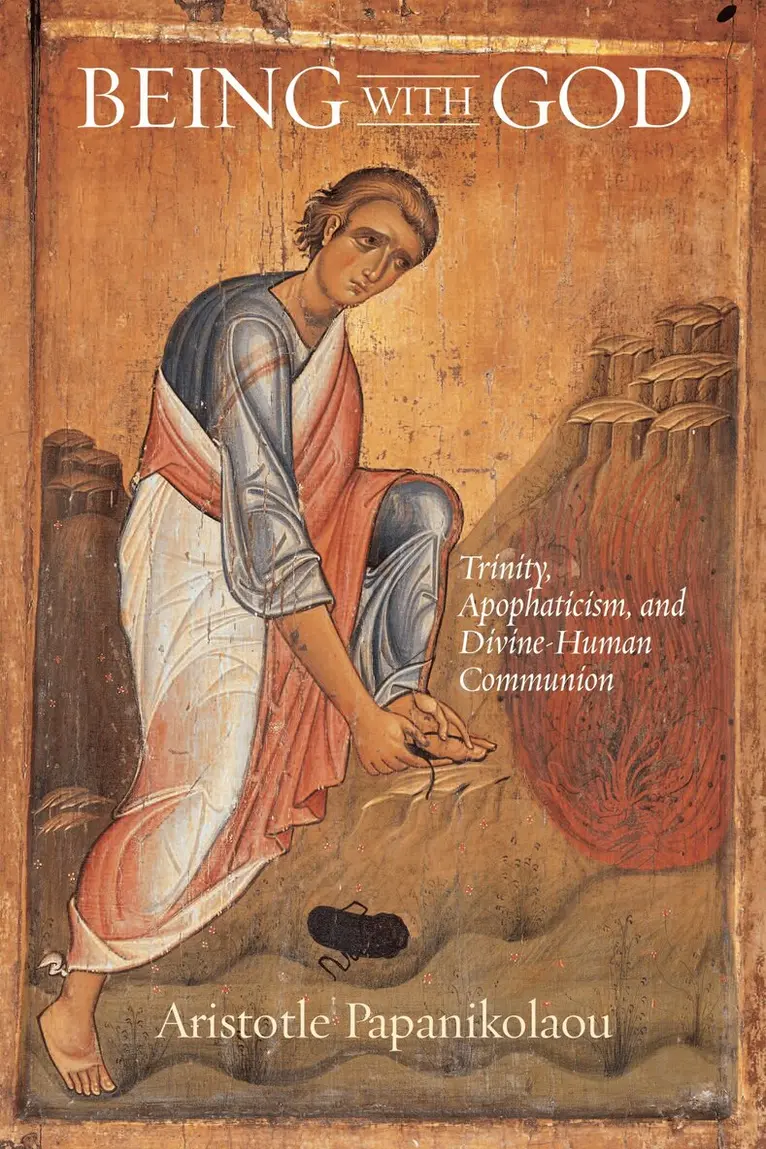
Inbunden, Engelska, 2006
Being with God
Trinity, Apophaticism, and Divine-Human Communion
1537 kr
Beställningsvara. Skickas inom 3-6 vardagar. Fri frakt över 249 kr.
Fler format och utgåvor
Beskrivning
Produktinformation
- Utgivningsdatum: 2006-02-24
- Mått: 152 x 229 x 18 mm
- Vikt: 514 g
- Format: Inbunden
- Språk: Engelska
- Antal sidor: 248
- Förlag: University of Notre Dame Press
- ISBN: 9780268038304
Utforska kategorier
Mer om författaren
Aristotle Papanikolaou is professor of theology and co-founding director of the Orthodox Christian Studies Center at Fordham University. He is the author and co-editor of a number of books, including The Mystical as Political: Democracy and Non-Radical Orthodoxy (University of Notre Dame Press, 2012).
Recensioner i media
"This carefully researched, cogently argued book undertakes a comparative exploration of two twentieth century orthodox theologians: Vladimir Lossky and John Zizioulas. While their emphases and conclusions differ, both authors endeavor to counteract the 'western' rationalism sneaking into contemporary orthodoxy by appealing to the doctrine of theosis. . . . By far the most beautifully written sections of Being with God are those concerned with Zizioulas's Eucharistic theology which, for Papanikolaou, counters with Losskian dangers of individualism, impersonalism, and substantialism." —Modern Theology"This book is a tour de force of conversational theology. The author offers a beautiful exercise in a 'hermeneutics of charity,' because, for him, critical engagement with the two theologians under discussion does not amount to deconstruction but to a fruitful and truthful encounter, which takes the 'struggle' of conversation seriously." —The Journal of Religion"How is divine-human encounter possible given that the triune God transcends human logic, thought, and speech-so that man can speak of him only in apophatic (negative) terms? How is this possible unless the triune God is immanent within creation and man can speak of him in cataphatic (positive) terms? . . . Papanikolaou's work is important because it critically compares two ontological answers to these questions by Vladimir Lossky (1903-1958) and John Zizioulas (1931-), two of the most influential Eastern Orthodox theologians of the twentieth century. As such, it provides a window into significant developments and debates in contemporary Orthodox thought." —Westminster Theological Journal "This is an analysis of the relation between apophaticism, Trinitarian theology, and divine-human communion through a critical comparison of the Trinitarian theologies of Vladimir Lossky and John Zizioulas, arguably two of the most influential Orthodox theologians of the past century. Papanikolaou shows how an ontology of divine-human communion is at the center of both Lossky's and Zizioula's theological projects and how they use this core belief as a self-identifying marker against 'Western' theologies." —Theology Digest"The result is a helpful comparative analysis that shows how common affirmations within the theological task can lead to very different outcomes: Lossky with his prominent apophaticism and Zizioulas with his Eucharistic ecclesiology. . . . Being with God shows that substantial diversity exists within contemporary Orthodox theology . . . Papanikolaou shows himself to be a careful reader of Lossky and Zizioulas." —International Journal of Systematic Theology"In this book, Aristotle Papanikolaou compares the Trinitarian theologies of Vladimir Lossky and John Zizioulas, two of the foremost Orthodox minds of the twentieth century. He argues that while both men take the reality of divine-human communion as the starting point for their reflection about God, they wind up constructing dissimilar, even mutually incompatible, theologies." —Anglican Theological Review"The book compares the Trinitarian theologies of Vladimir Lossky and John Zizioulas with a view to illustrating how each author conceives of the communion between God and humanity. Both authors affirm the reality of the divine-human communion, yet there are profound differences in the way Lossky and Zizioulas envisage and explain such communion." —Logos: A Journal of Eastern Christian Studies
Betyg & recensioner
0 recensioner
Inga recensioner tillgängliga.