• Fri frakt över 249 kr
  • •
  • Snabba leveranser
  • •
  • Billiga böcker
Kundservice

Du är på sajten för privatpersoner.

Företag, bibliotek eller offentlig verksamhet?

Du handlar på classic.bokus.com, där alla dina funktioner finns intakta.
Till classic.bokus.com
Bokus logotyp. Gå till startsidan.
  • Erbjudanden
  • Nyheter
  • Student
  • Topplistor
  • Barn & ungdom
  • Bokus Play
  • E-böcker
  • Pocketböcker
  • Spel & pussel

10% studentrabatt med kod TERM26

Sidfot

Mina sidor

    Hjälp

    • Kundservice
    • Vanliga frågor och svar
    • Frakt och leverans
    • Retur vid ångerrätt
    • Reklamera vara
    • Betalning
    • Köpvillkor
    • Allmänna villkor
    • Information om webbplatsens tillgänglighet

    Om Bokus

    • Om oss
    • Pressrum
    • För studenter
    • För företag
    • För bibliotek och offentlig verksamhet
    • För leverantörer
    • Hållbarhet

    Populärt

    • Aktuella erbjudanden
    • Presentkort
    • Studentlitteratur
    • Nya böcker
    • Topplistor
    • Signerade böcker
    • Engelska böcker

    Inspiration

    • Boktips
    • BookTok
    • Populära bokserier
    • Barnbokskaraktärer
    • Populära författare
    Logotyp för Bokus
    Följ oss på Facebook (extern länk)Följ oss på Instagram (extern länk)Följ oss på YouTube (extern länk)Följ oss på TikTok (extern länk)
    bokus @ CookiesAnpassa cookiesIntegritetspolicyKöpvillkor
    Till Citymail hemsida (extern länk)Till Budbee hemsida (extern länk)Till Postnord hemsida (extern länk)Till Schenker hemsida (extern länk)Till Early Bird hemsida (extern länk)Till Walleys hemsida (extern länk)
    1. Samhälle och politik
    2. Politik och statsskick
    3. Internationella relationer

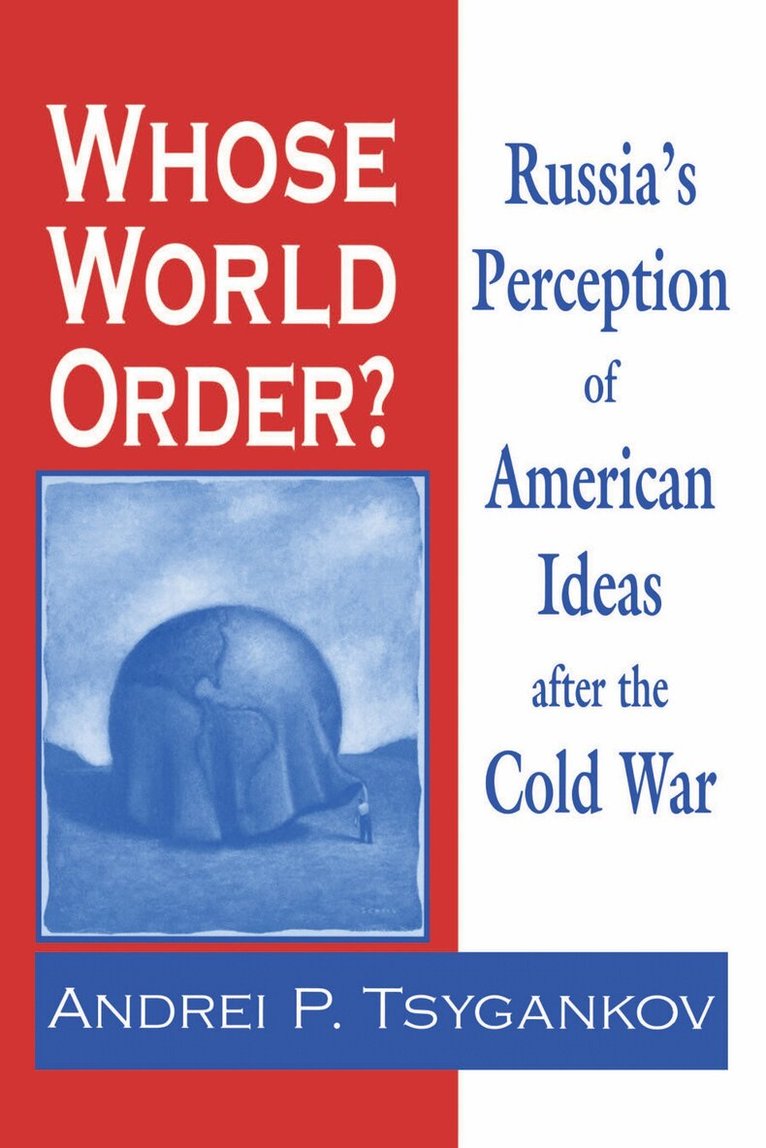
    Whose World Order?

    Russia's Perception of American Ideas After the Cold War

    AvAndrei P. Tsygankov

    Inbunden, Engelska, 2004

    858 kr

    Beställningsvara. Skickas inom 5-8 vardagar. Fri frakt över 249 kr.

    Fler format och utgåvor

    Häftad

    307 kr

    Beskrivning

    In Whose World Order? Andrei P. Tsygankov examines how Russian elites engage American ideas of world order and why Russians perceive these ideas as unlikely to promote a just or stable international system. Tsygankov focuses on Francis Fukuyama's "end of history" thesis, which argues for the global ascendancy of Western-style market democracy, and Samuel Huntington's "clash of civilizations," which drew attention to what Huntington perceived to be an increasingly dominant global disorder. Tsygankov argues that Russian intellectuals received the ideas of these two prominent American scholars critically. Tsygankov traces the reasons for Russian perceptions to the ethnocentric nature of the two sets of ideas and the inability of their authors to fully appreciate Russia's distinctive historical, geopolitical, and institutional perspectives.Throughout this rich study Tsygankov points to the need for scholars to study cultural perceptions in world politics as a means of eliminating some of the obstacles that stand in the way of a truly global society. He also raises the issue of whether or not intellectuals should accept moral responsibility for the ideas they produce and what implications this may have for international relations theory.

    Produktinformation

    • Utgivningsdatum:2004-04-14
    • Mått:152 x 229 x 17 mm
    • Vikt:482 g
    • Format:Inbunden
    • Språk:Engelska
    • Antal sidor:224
    • Förlag:University of Notre Dame Press
    • ISBN:9780268042288

    Utforska kategorier

    • Internationella relationer inom Samhälle och politik

    Mer om författaren

    Andrei P. Tsygankov is professor of international relations and political science at San Francisco State University.

    Recensioner i media

    "Recommended." —Choice"Anyone seeking to understand the Russian side of the debate should read this informative and insightful study. Among recent works on the American-Russian relationship, it stands out as an original contribution to our understanding of the Russian and American encounter over theories of global politics. The book's dialectical examination of that encounter invites us to enter into the discussion and the debate as well. Upper-level college students, graduate students, Russian specialists, and, for that matter, informed general readers will find Whose World Order? most rewarding." —Perspectives on Political Science"…valuable for its very cogent analysis of the discourses of Russian foreign policy…." —Slavic Review"…a contribution to the analysis of the intellectual life in the country. …an interesting book…." —The Russian Review