• Fri frakt över 249 kr
  • •
  • Snabba leveranser
  • •
  • Billiga böcker
Kundservice

Du är på sajten för privatpersoner.

Företag, bibliotek eller offentlig verksamhet?

Du handlar på classic.bokus.com, där alla dina funktioner finns intakta.
Till classic.bokus.com
Bokus logotyp. Gå till startsidan.
  • Erbjudanden
  • Nyheter
  • Student
  • Topplistor
  • Barn & ungdom
  • Bokus Play
  • E-böcker
  • Pocketböcker
  • Spel & pussel

10% rabatt på allt med kod NYSTART10 →

Sidfot

Mina sidor

    Hjälp

    • Kundservice
    • Vanliga frågor och svar
    • Frakt och leverans
    • Retur vid ångerrätt
    • Reklamera vara
    • Betalning
    • Köpvillkor
    • Allmänna villkor
    • Information om webbplatsens tillgänglighet

    Om Bokus

    • Om oss
    • Pressrum
    • För studenter
    • För företag
    • För bibliotek och offentlig verksamhet
    • För leverantörer
    • Hållbarhet

    Populärt

    • Aktuella erbjudanden
    • Presentkort
    • Studentlitteratur
    • Nya böcker
    • Topplistor
    • Signerade böcker
    • Engelska böcker

    Inspiration

    • Boktips
    • BookTok
    • Populära bokserier
    • Barnbokskaraktärer
    • Populära författare
    Logotyp för Bokus
    Följ oss på Facebook (extern länk)Följ oss på Instagram (extern länk)Följ oss på YouTube (extern länk)Följ oss på TikTok (extern länk)
    bokus @ CookiesAnpassa cookiesIntegritetspolicyKöpvillkor
    Till Citymail hemsida (extern länk)Till Budbee hemsida (extern länk)Till Postnord hemsida (extern länk)Till Schenker hemsida (extern länk)Till Early Bird hemsida (extern länk)Till Walleys hemsida (extern länk)
    1. Skönlitteratur
    2. Litteraturvetenskap
    3. Litteraturvetenskap

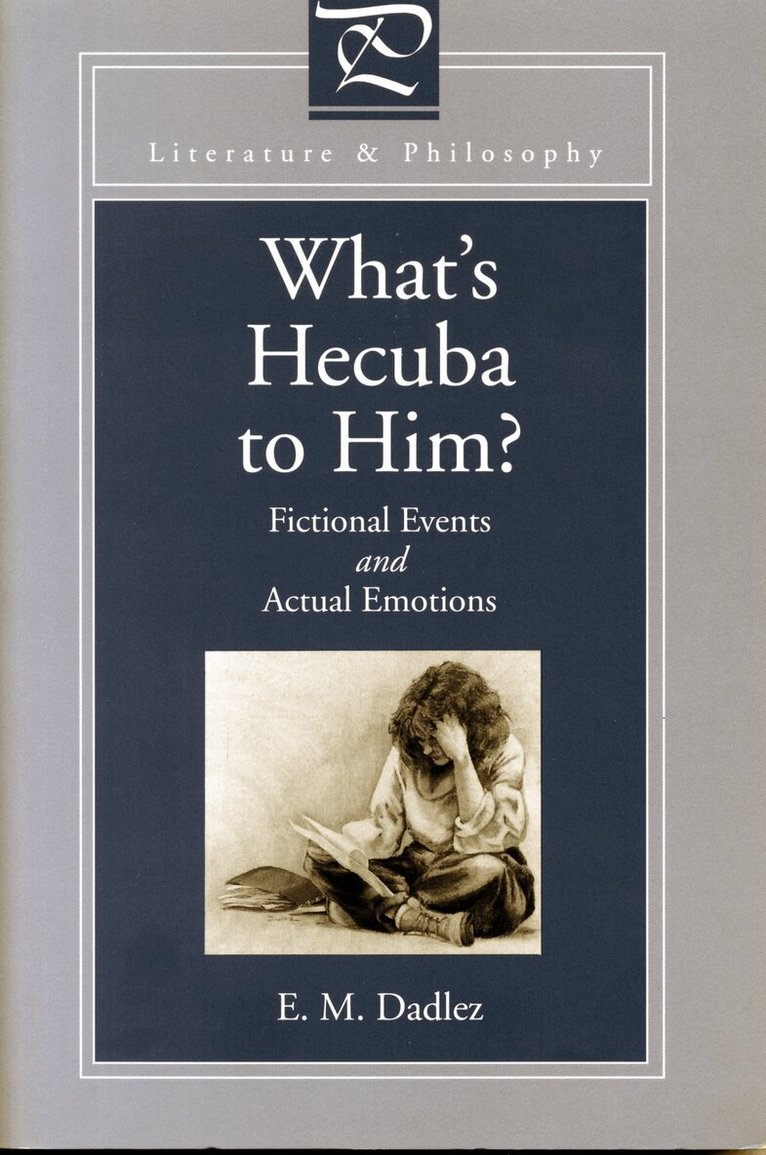
    What's Hecuba to Him?

    Fictional Events and Actual Emotions

    AvEva M. Dadlez

    Häftad, Engelska, 1997

    Del i serien Literature and Philosophy

    669 kr

    Beställningsvara. Skickas inom 5-8 vardagar. Fri frakt över 249 kr.

    Beskrivning

    Fiction transports us. We inhabit new worlds in our imagination, adopt perspectives not our own, and even respond emotionally to persons and events that we know are not real.The very nature of our emotional engagement with fiction, says E. M. Dadlez, attests to the possibility of its moral significance, just as the nature of our imaginative engagement makes us collaborators in the creation of the worlds we imagine.This book engages contemporary debate over the seeming irrationality or inauthenticity of our emotional response to fiction, examining the many positions taken in this debate and arguing that we can understand the relation between cognition and emotion without devaluing our emotional responses to fiction. It takes Hamlet's famous query as the first step in an analytic philosophical inquiry and, by considering some of the answers that derive from that question, arrives at a set of necessary conditions for an emotional response to fiction.What Hamlet's player feels for Hecuba, proposes Dadlez, is no more illusory than what we feel for Hamlet; that the actor weeps for Hecuba reflects both our capacity to envision and understand a seemingly limitless variety of human situations—to empathize with others—and the capacity of fiction to facilitate such understanding. What's Hecuba to Him? is an enticingly written work that opens an entire philosophical arena to literary scholars and illuminates the significance that literature has for our moral life.

    Produktinformation

    • Utgivningsdatum:1997-09-15
    • Mått:152 x 229 x 21 mm
    • Vikt:426 g
    • Format:Häftad
    • Språk:Engelska
    • Serie:Literature and Philosophy
    • Antal sidor:252
    • Förlag:Pennsylvania State University Press
    • ISBN:9780271016511

    Utforska kategorier

    • Litteraturvetenskap inom Skönlitteratur
    • Litteraturteori inom Skönlitteratur

    Mer om författaren

    E. M. Dadlez is Assistant Professor in the Department of Humanities and Philosophy at the University of Central Oklahoma.

    Recensioner i media

    “Dadlez offers a clear, precise, and compelling account of why it is rational to have emotions for fictive characters.”—Charles Altieri, University of California, Berkeley