• Fri frakt över 249 kr
  • •
  • Snabba leveranser
  • •
  • Billiga böcker
Kundservice

Du är på sajten för privatpersoner.

Företag, bibliotek eller offentlig verksamhet?

Du handlar på classic.bokus.com, där alla dina funktioner finns intakta.
Till classic.bokus.com
Bokus logotyp. Gå till startsidan.
  • Erbjudanden
  • Nyheter
  • Student
  • Topplistor
  • Barn & ungdom
  • Bokus Play
  • E-böcker
  • Pocketböcker
  • Spel & pussel

10% rabatt på allt med kod NYSTART10 →

Sidfot

Mina sidor

    Hjälp

    • Kundservice
    • Vanliga frågor och svar
    • Frakt och leverans
    • Retur vid ångerrätt
    • Reklamera vara
    • Betalning
    • Köpvillkor
    • Allmänna villkor
    • Information om webbplatsens tillgänglighet

    Om Bokus

    • Om oss
    • Pressrum
    • För studenter
    • För företag
    • För bibliotek och offentlig verksamhet
    • För leverantörer
    • Hållbarhet

    Populärt

    • Aktuella erbjudanden
    • Presentkort
    • Studentlitteratur
    • Nya böcker
    • Topplistor
    • Signerade böcker
    • Engelska böcker

    Inspiration

    • Boktips
    • BookTok
    • Populära bokserier
    • Barnbokskaraktärer
    • Populära författare
    Logotyp för Bokus
    Följ oss på Facebook (extern länk)Följ oss på Instagram (extern länk)Följ oss på YouTube (extern länk)Följ oss på TikTok (extern länk)
    bokus @ CookiesAnpassa cookiesIntegritetspolicyKöpvillkor
    Till Citymail hemsida (extern länk)Till Budbee hemsida (extern länk)Till Postnord hemsida (extern länk)Till Schenker hemsida (extern länk)Till Early Bird hemsida (extern länk)Till Walleys hemsida (extern länk)
    1. Naturvetenskap och teknik
    2. Matematik och naturvetenskap
    3. Naturvetenskap:allmänt
    4. Naturvetenskapens filosofi

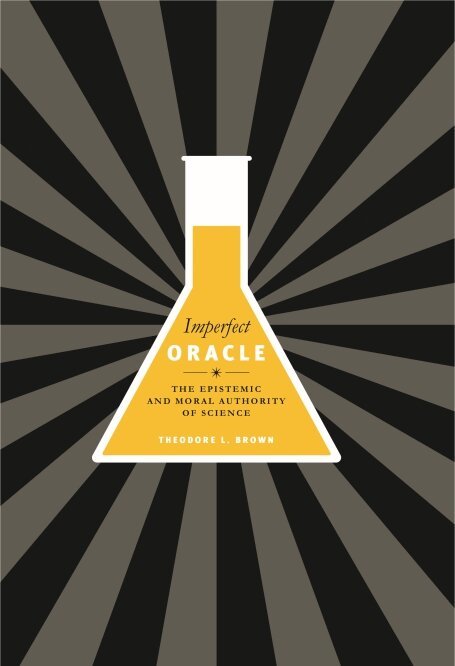
    Imperfect Oracle

    The Epistemic and Moral Authority of Science

    AvTheodore L. Brown

    Häftad, Engelska, 2011

    511 kr

    Beställningsvara. Skickas inom 5-8 vardagar. Fri frakt över 249 kr.

    Beskrivning

    Science and its offshoot, technology, enter into the very fabric of our society in so many ways that we cannot imagine life without them. We are surrounded by crises and debates over climate change, stem-cell research, AIDS, evolutionary theory and “intelligent design,” the use of DNA in solving crimes, and many other issues. Society is virtually forced to follow our natural tendency, which is to give great weight to the opinions of scientific experts. How is it that these experts have come to acquire such authority, and just how far does their authority reach? Does specialized knowledge entitle scientists to moral authority as well? How does scientific authority actually function in our society, and what are the countervailing social forces (including those deriving from law, politics, and religion) with which it has to contend? Theodore Brown seeks to answer such questions in this magisterial work of synthesis about the role of science in society. In Part I, he elucidates the concept of authority and its relation to autonomy, and then traces the historical growth of scientific authority and its place in contemporary American society. In Part II, he analyzes how scientific authority plays out in relation to other social domains, such as law, religion, government, and the public sphere.

    Produktinformation

    • Utgivningsdatum:2011-07-15
    • Mått:152 x 229 x 25 mm
    • Vikt:513 g
    • Format:Häftad
    • Språk:Engelska
    • Antal sidor:352
    • Förlag:Pennsylvania State University Press
    • ISBN:9780271035369

    Utforska kategorier

    • Naturvetenskapens filosofi inom Naturvetenskap och teknik

    Mer om författaren

    Theodore L. Brown is Professor Emeritus of Chemistry and Founding Director Emeritus of the Beckman Institute at the University of Illinois. From 1980 to 1986, he served as Vice Chancellor for Research and Dean of the Graduate School there. He is co-author of the best-selling chemistry textbook Chemistry: The Central Science, now in its eleventh edition from Prentice Hall. Besides his scientific research publications, he is also the author of a previous study in the philosophy of science titled Making Truth: Metaphors in Science (2003) as well as Bridging Divides: The Origins of the Beckman Institute at Illinois (2009).

    Recensioner i media

    “This book aims to provide a rich, overarching account of the authority of science in American society. It examines the nature of scientists’ cognitive and moral authority; the historical origins of science; its roles and limits in various spheres of society, including law, the courts, state policy, public culture, and religious life; the sources and conditions of scientific authority; and its conflicts with other sources of authority, such as common sense, religious conviction, and legal practices. Ted Brown makes a very significant contribution to the field of ’science studies.’ He succeeds in synthesizing a diverse set of scholarly insights from the literature in various fields and unifies (or reformulates) them into one powerful account of scientific authority that stands on its own. Imperfect Oracle provides a fresh and engaging perspective. The author creates a bridge between different disciplines by approaching issues like scientific testimony, evidence, and credibility through the work of philosophers, sociologists, public policy scientists, historians, and biographers, among others. The book is exceptionally well written, with clear, concise, lively, and well-balanced prose. The virtue of Imperfect Oracle is that it provides a more comprehensive and synoptic view of scientific authority than is otherwise available.”—Jerry Doppelt, University of California, San Diego

    Innehållsförteckning

    • ContentsPrefaceList of AbbreviationsIntroduction1Part I Foundations1. Authority and Autonomy2. Historical Origins of Scientific Authority3. American Science4. Scientific Authority in Contemporary SocietyPart II Science in Society5. Science and the Courts6. Science and Religion7. Science and Government8. Science and the Public9. The Prospects for Scientific AuthorityReferencesIndex