Theodore L. Brown - Böcker
Visar alla böcker från författaren Theodore L. Brown. Handla med fri frakt och snabb leverans.
4 produkter
4 produkter
387 kr
Skickas inom 7-10 vardagar
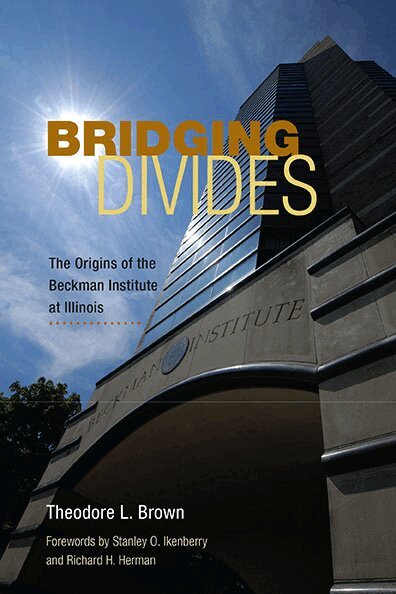
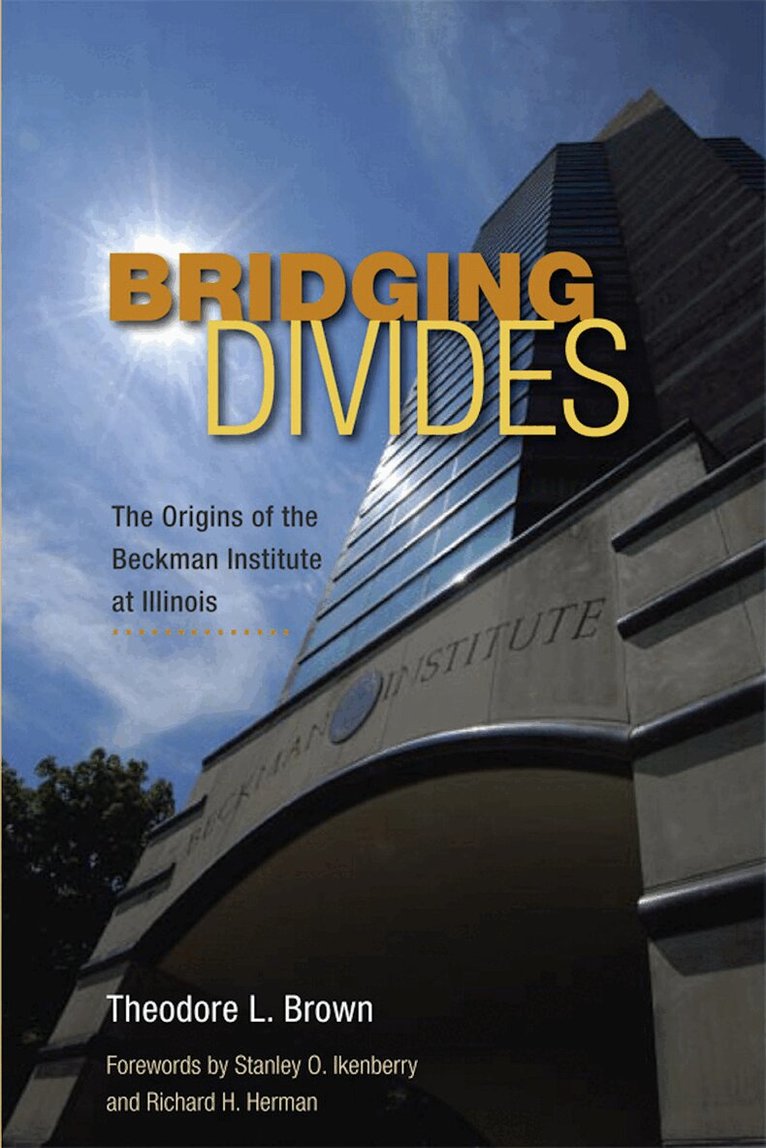
Bridging Divides offers a first-hand account of the origins of the Beckman Institute for Advanced Science and Technology, an interdisciplinary research institute at the University of Illinois at Urbana-Champaign devoted to leading-edge research in the physical sciences, computation, engineering, biology, behavior, cognition, and neuroscience. The book follows the progress of the Beckman Institute's creation, from the initial conceptualization of a large, multi-disciplinary institute; through proposal formulation; to the architectural design and actual construction of its state-of-the-art building, made possible by the largest gift made to any public university at the time: a $40 million contribution from Illinois alumnus and founder of Beckman Instruments, Inc., Arnold O. Beckman and his wife Mabel M. Beckman. Theodore L. Brown, the founding director of the Beckman Institute, brings an insider's personal perspective on its conception and its early operations. The evolution of a physical facility that matched a developing sense of what multidisciplinary and interdisciplinary research might be was a vital ingredient in the Institute's development. In addition, because the Institute represented a dramatic departure from traditional university organization, many challenges involving its administration and faculty had to be overcome. A celebration of the Beckman Institute's first twenty years of operation since the building's completion in 1989, Bridging Divides provides an informative look back at the history of this groundbreaking interdisciplinary research center. The book also includes forewords by Stanley O. Ikenberry, former president of the University of Illinois, and Richard H. Herman, chancellor of the University of Illinois at Urbana-Champaign.
282 kr
Skickas inom 7-10 vardagar
How does science work? Making Truth: Metaphor in Science argues that most laypeople, and many scientists, do not have a clear understanding of how metaphor relates to scientific thinking. With stunning clarity, and bridging the worlds of scientists and nonscientists, Theodore L. Brown demonstrates the presence and the power of metaphorical thought. To illustrate the roles of metaphor in science, Brown presents a series of studies of scientific systems. These range from the atom, historically one of the most important ideas in science, through models in chemistry and biology, including current “hot” topics such as protein folding, chaperone proteins, and global warming. The case studies in Making Truth illustrate the deeply metaphorical nature of scientific reasoning and communication. They provide the basis for far-reaching conclusions about science as an intellectual and social practice and about the nature of scientific truth.
373 kr
Skickas inom 7-10 vardagar
Science and its offshoot, technology, enter into the very fabric of our society in so many ways that we cannot imagine life without them. We are surrounded by crises and debates over climate change, stem-cell research, AIDS, evolutionary theory and “intelligent design,” the use of DNA in solving crimes, and many other issues. Society is virtually forced to follow our natural tendency, which is to give great weight to the opinions of scientific experts. How is it that these experts have come to acquire such authority, and just how far does their authority reach? Does specialized knowledge entitle scientists to moral authority as well? How does scientific authority actually function in our society, and what are the countervailing social forces (including those deriving from law, politics, and religion) with which it has to contend? Theodore Brown seeks to answer such questions in this magisterial work of synthesis about the role of science in society. In Part I, he elucidates the concept of authority and its relation to autonomy, and then traces the historical growth of scientific authority and its place in contemporary American society. In Part II, he analyzes how scientific authority plays out in relation to other social domains, such as law, religion, government, and the public sphere.
696 kr
Skickas inom 3-6 vardagar