• Fri frakt över 249 kr
  • •
  • Snabba leveranser
  • •
  • Billiga böcker
Kundservice

Du är på sajten för privatpersoner.

Företag, bibliotek eller offentlig verksamhet?

Du handlar på classic.bokus.com, där alla dina funktioner finns intakta.
Till classic.bokus.com
Bokus logotyp. Gå till startsidan.
  • Erbjudanden
  • Nyheter
  • Student
  • Topplistor
  • Barn & ungdom
  • Bokus Play
  • E-böcker
  • Pocketböcker
  • Spel & pussel

10% rabatt på allt med kod: NYSTART10 →

Sidfot

Mina sidor

    Hjälp

    • Kundservice
    • Vanliga frågor och svar
    • Frakt och leverans
    • Retur vid ångerrätt
    • Reklamera vara
    • Betalning
    • Köpvillkor
    • Allmänna villkor
    • Information om webbplatsens tillgänglighet

    Om Bokus

    • Om oss
    • Pressrum
    • För studenter
    • För företag
    • För bibliotek och offentlig verksamhet
    • För leverantörer
    • Hållbarhet

    Populärt

    • Aktuella erbjudanden
    • Presentkort
    • Studentlitteratur
    • Nya böcker
    • Topplistor
    • Signerade böcker
    • Engelska böcker

    Inspiration

    • Boktips
    • BookTok
    • Populära bokserier
    • Barnbokskaraktärer
    • Populära författare
    Logotyp för Bokus
    Följ oss på Facebook (extern länk)Följ oss på Instagram (extern länk)Följ oss på YouTube (extern länk)Följ oss på TikTok (extern länk)
    bokus @ CookiesAnpassa cookiesIntegritetspolicyKöpvillkor
    Till Citymail hemsida (extern länk)Till Budbee hemsida (extern länk)Till Postnord hemsida (extern länk)Till Schenker hemsida (extern länk)Till Early Bird hemsida (extern länk)Till Walleys hemsida (extern länk)
    1. Kultur
    2. Konstböcker
    3. Konsthistoria

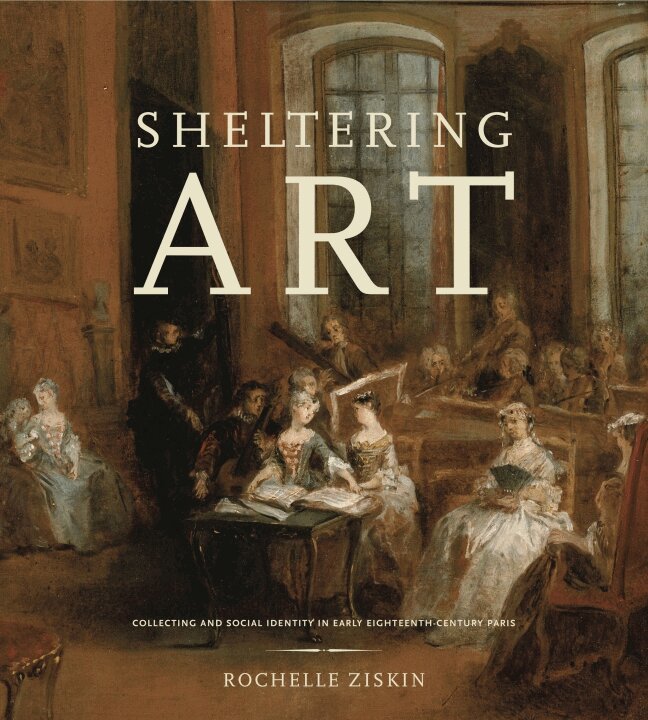
    Sheltering Art

    Collecting and Social Identity in Early Eighteenth-Century Paris

    AvRochelle Ziskin

    Inbunden, Engelska, 2012

    1 172 kr

    Beställningsvara. Skickas inom 5-8 vardagar. Fri frakt över 249 kr.

    Beskrivning

    The turn of the eighteenth century was a period of transition in France, a time when new but contested concepts of modernity emerged in virtually every cultural realm. The rigidity of the state’s consolidation of the arts in the late seventeenth century yielded to a more vibrant and diverse cultural life, and Paris became, once again, the social and artistic capital of the wealthiest nation in Europe. In Sheltering Art, Rochelle Ziskin explores private art collecting, a primary facet of that newly decentralized artistic realm and one increasingly embraced by an expanding social elite as the century wore on. During the key period when Paris reclaimed its role as the nexus of cultural and social life, two rival circles of art collectors—with dissonant goals and disparate conceptions of modernity—competed for preeminence. Sheltering Art focuses on these collectors, their motivations for collecting art, and the natures of their collections. An ambitious study, it employs extensive archival research in its examination of the ideologies associated with different strategies of collecting in eighteenth-century Paris and how art collecting was inextricably linked to the shaping of social identities.

    Produktinformation

    • Utgivningsdatum:2012-08-16
    • Mått:229 x 254 x 34 mm
    • Vikt:1 656 g
    • Format:Inbunden
    • Språk:Engelska
    • Antal sidor:392
    • Förlag:Pennsylvania State University Press
    • ISBN:9780271037851

    Utforska kategorier

    • Konsthistoria inom Kultur

    Mer om författaren

    Rochelle Ziskin is Professor of Art History at the University of Missouri–Kansas City.

    Recensioner i media

    “Rochelle Ziskin’s learned study brings to vibrant life the extensive social and political networks out of which two major early eighteenth-century Parisian art collections grew, and it reveals how the practices that built each collection were decisively shaped by the ideals of these overlapping networks—as well as by the conflicts that sometimes divided them. In this way, Ziskin elegantly enriches our understanding of what was at stake in the subtle distinctions that characterized the varieties of contemporary elite taste, and she significantly enlarges our knowledge of the intricate cultural politics of Louis XV’s Regency.”—Richard Wittman, University of California, Santa Barbara

    Innehållsförteckning

    • ContentsList of IllustrationsAcknowledgmentsAbbreviationsIntroduction1Cultural Geography of the French Capital Circa 17002Cloistered in the Faubourg Saint-Germain3The Maison Crozat Transformed4A Circle of “Moderns” 5The Regent and Collecting on the Right Bank6Les Anciens and an Expanding Public Realm in the Arts7The Circles Converge: Carignan and JullienneConclusionNote on the AppendixesAppendixes1Maison Crozat, rue de Richelieu, in 17402Hôtel de Verrue, rue du Cherche-Midi, end of 17363Collections of Lériget de La Faye, Glucq de Saint-Port, and Lassay4Collections of Nocé and Fonspertuis5Hôtel de Morville, rue Plâtrière, in 17326Selections from the Collection of CarignanNotesSelected BibliographyIndex