• Fri frakt över 249 kr
  • •
  • Snabba leveranser
  • •
  • Billiga böcker
Kundservice

Du är på sajten för privatpersoner.

Företag, bibliotek eller offentlig verksamhet?

Du handlar på classic.bokus.com, där alla dina funktioner finns intakta.
Till classic.bokus.com
Bokus logotyp. Gå till startsidan.
  • Erbjudanden
  • Nyheter
  • Student
  • Topplistor
  • Barn & ungdom
  • Bokus Play
  • E-böcker
  • Pocketböcker
  • Spel & pussel

10% rabatt på allt med kod NYSTART10 →

Sidfot

Mina sidor

    Hjälp

    • Kundservice
    • Vanliga frågor och svar
    • Frakt och leverans
    • Retur vid ångerrätt
    • Reklamera vara
    • Betalning
    • Köpvillkor
    • Allmänna villkor
    • Information om webbplatsens tillgänglighet

    Om Bokus

    • Om oss
    • Pressrum
    • För studenter
    • För företag
    • För bibliotek och offentlig verksamhet
    • För leverantörer
    • Hållbarhet

    Populärt

    • Aktuella erbjudanden
    • Presentkort
    • Studentlitteratur
    • Nya böcker
    • Topplistor
    • Signerade böcker
    • Engelska böcker

    Inspiration

    • Boktips
    • BookTok
    • Populära bokserier
    • Barnbokskaraktärer
    • Populära författare
    Logotyp för Bokus
    Följ oss på Facebook (extern länk)Följ oss på Instagram (extern länk)Följ oss på YouTube (extern länk)Följ oss på TikTok (extern länk)
    bokus @ CookiesAnpassa cookiesIntegritetspolicyKöpvillkor
    Till Citymail hemsida (extern länk)Till Budbee hemsida (extern länk)Till Postnord hemsida (extern länk)Till Schenker hemsida (extern länk)Till Early Bird hemsida (extern länk)Till Walleys hemsida (extern länk)
    1. Filosofi och religion
    2. Filosofi
    3. Filosofiska discipliner

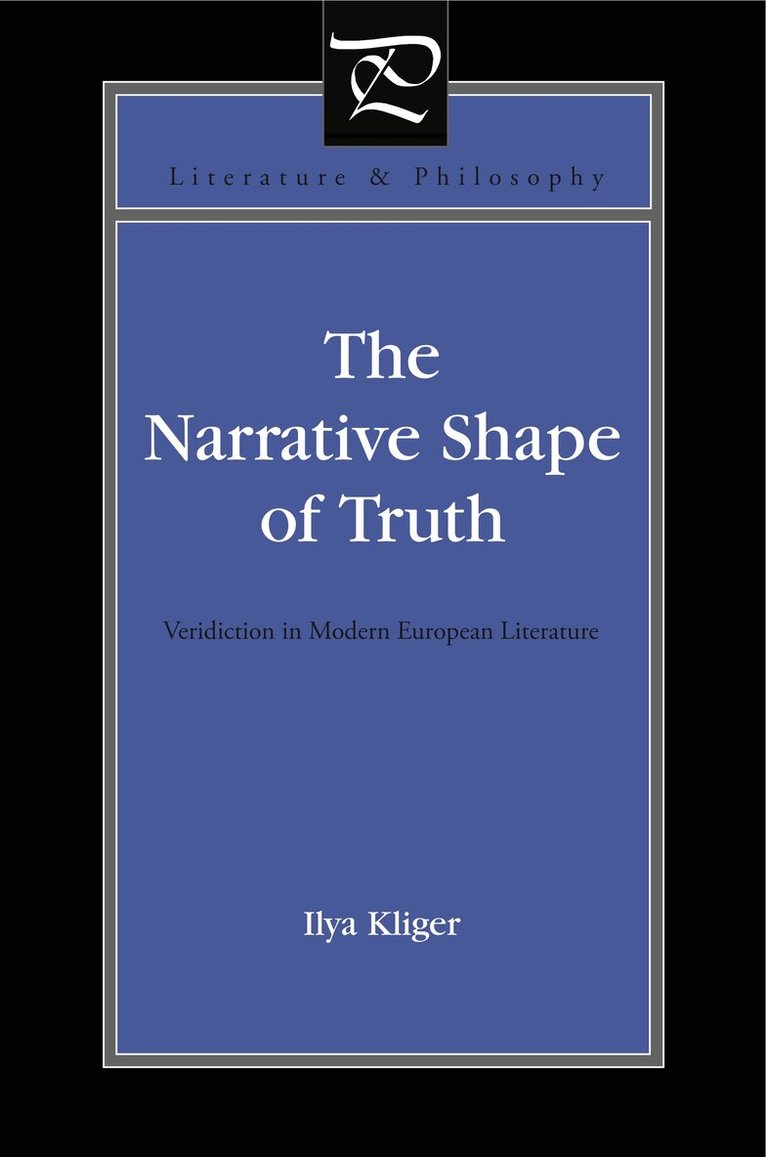
    Narrative Shape of Truth

    Veridiction in Modern European Literature

    AvIlya Kliger

    Häftad, Engelska, 2016

    Del i serien Literature and Philosophy

    564 kr

    Beställningsvara. Skickas inom 5-8 vardagar. Fri frakt över 249 kr.

    Beskrivning

    Its champions—and its detractors—have often understood the novel as the genre par excellence of truthlessness. The Narrative Shape of Truth counters this widely accepted view. It argues instead that the novel has found new, historically specific configurations of truth and narrative. The nineteenth-century novel, in particular, can be understood as responding to the emerging tendency to view truth as inseparable from, rather than opposed to, time. Ilya Kliger offers a nonreductive way of reading the histories of philosophy and the novel side by side. He identifies the crucial moment in the epistemological history of narrative when, at the end of the eighteenth century, a new structural affiliation between truth and time emerged. This book examines novels by four authors—Balzac, Stendhal, Dostoevsky, and Tolstoy—as well as the writings of leading European intellectuals and philosophers. Kliger argues that the “realist” novel can be conceived as prompting us (and giving us the means) to think of truth differently, as immanent in a temporal shape rather than transcendent in a principle, a fact, or a higher order.

    Produktinformation

    • Utgivningsdatum:2016-04-15
    • Mått:152 x 229 x 18 mm
    • Vikt:544 g
    • Format:Häftad
    • Språk:Engelska
    • Serie:Literature and Philosophy
    • Antal sidor:256
    • Förlag:Pennsylvania State University Press
    • ISBN:9780271050775

    Utforska kategorier

    • Filosofiska discipliner inom Filosofi och religion

    Mer om författaren

    Ilya Kliger is Assistant Professor of Russian and Slavic Studies at New York University.

    Recensioner i media

    “In this investigation of the ‘veridictory mutation’ in the modern European novel Ilya Kliger positions the genre’s rise amidst a broader shift in European thought (moving from Kant to Hegel) towards a conception of truth as embodied in a mediating and productive temporality. . . . Kliger’s compelling account of truth and narrative in the realist novel offers rich insights into the relationship between modernity’s shifting perceptions of time and truth, and the depictive power of the novel.”—Mark Pettus Modern Language Review

    Innehållsförteckning

    • ContentsAcknowledgmentsNote on TransliterationIntroduction: The Veridictory Mutation of the Novel1.Precipitant Knowledge in Balzac2.The Whole and the Untrue: Stendhal’s Fragile Veridiction3.Enigma and Emplotment in Dostoevsky4.Tolstoy’s Plotlines and Truth ShapesConclusion: Enduring the Schema in Modernist TimeNotesBibliographyIndex