• Fri frakt över 249 kr
  • •
  • Snabba leveranser
  • •
  • Billiga böcker
Kundservice

Du är på sajten för privatpersoner.

Företag, bibliotek eller offentlig verksamhet?

Du handlar på classic.bokus.com, där alla dina funktioner finns intakta.
Till classic.bokus.com
Bokus logotyp. Gå till startsidan.
  • Erbjudanden
  • Nyheter
  • Student
  • Topplistor
  • Barn & ungdom
  • Bokus Play
  • E-böcker
  • Pocketböcker
  • Spel & pussel

10% rabatt på allt med kod: NYSTART10 →

Sidfot

Mina sidor

    Hjälp

    • Kundservice
    • Vanliga frågor och svar
    • Frakt och leverans
    • Retur vid ångerrätt
    • Reklamera vara
    • Betalning
    • Köpvillkor
    • Allmänna villkor
    • Information om webbplatsens tillgänglighet

    Om Bokus

    • Om oss
    • Pressrum
    • För studenter
    • För företag
    • För bibliotek och offentlig verksamhet
    • För leverantörer
    • Hållbarhet

    Populärt

    • Aktuella erbjudanden
    • Presentkort
    • Studentlitteratur
    • Nya böcker
    • Topplistor
    • Signerade böcker
    • Engelska böcker

    Inspiration

    • Boktips
    • BookTok
    • Populära bokserier
    • Barnbokskaraktärer
    • Populära författare
    Logotyp för Bokus
    Följ oss på Facebook (extern länk)Följ oss på Instagram (extern länk)Följ oss på YouTube (extern länk)Följ oss på TikTok (extern länk)
    bokus @ CookiesAnpassa cookiesIntegritetspolicyKöpvillkor
    Till Citymail hemsida (extern länk)Till Budbee hemsida (extern länk)Till Postnord hemsida (extern länk)Till Schenker hemsida (extern länk)Till Early Bird hemsida (extern länk)Till Walleys hemsida (extern länk)
    1. Kultur
    2. Arkitektur
    3. Arkitekturhistoria

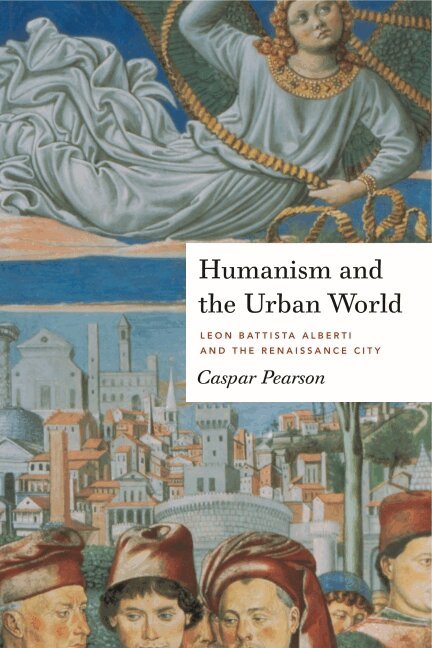
    Humanism and the Urban World

    Leon Battista Alberti and the Renaissance City

    AvCaspar Pearson

    Häftad, Engelska, 2013

    272 kr

    Skickas . Fri frakt över 249 kr.

    Beskrivning

    In Humanism and the Urban World, Caspar Pearson offers a profoundly revisionist account of Leon Battista Alberti’s approach to the urban environment as exemplified in the extensive theoretical treatise De re aedificatoria (On the Art of Building in Ten Books), brought mostly to completion in the 1450s, as well as in his larger body of written work. Past scholars have generally characterized the Italian Renaissance architect and theorist as an enthusiast of the city who envisioned it as a rational, Renaissance ideal. Pearson argues, however, that Alberti’s approach to urbanism was far more complex—that he was even “essentially hostile” to the city at times. Rather than proposing the “ideal” city, Pearson maintains, Alberti presented a variety of possible cities, each one different from another. This book explores the ways in which Alberti sought to remedy urban problems, tracing key themes that manifest in De re aedificatoria. Chapters address Alberti’s consideration of the city’s possible destruction and the city’s capacity to provide order despite its intrinsic instability; his assessment of a variety of political solutions to that instability; his affinity for the countryside and discussions of the virtues of the active versus the contemplative life; and his theories of aesthetics and beauty, in particular the belief that beauty may affect the soul of an enemy and thus preserve buildings from attack.

    Produktinformation

    • Utgivningsdatum:2013-11-15
    • Mått:152 x 229 x 16 mm
    • Vikt:413 g
    • Format:Häftad
    • Språk:Engelska
    • Antal sidor:280
    • Förlag:Pennsylvania State University Press
    • ISBN:9780271063690

    Utforska kategorier

    • Arkitekturhistoria inom Kultur

    Mer om författaren

    Caspar Pearson is Lecturer at the University of Essex.

    Recensioner i media

    “Pearson’s use of Alberti’s writings is imaginative and exhaustive, yet tactful. This is a rich and accessible account of a thinker whose concern with both rational reform and social stability could not be more timely.”—Charles Burroughs Renaissance Quarterly

    Innehållsförteckning

    • ContentsAcknowledgmentsIntroduction1Destruction2The Divided City3The Limits of Power4Beyond the City5The Suburbs and Other Places6The Beautiful CityConclusionNotesBibliographyIndex