• Fri frakt över 249 kr
  • •
  • Snabba leveranser
  • •
  • Billiga böcker
Kundservice

Du är på sajten för privatpersoner.

Företag, bibliotek eller offentlig verksamhet?

Du handlar på classic.bokus.com, där alla dina funktioner finns intakta.
Till classic.bokus.com
Bokus logotyp. Gå till startsidan.
  • Erbjudanden
  • Nyheter
  • Student
  • Topplistor
  • Barn & ungdom
  • Bokus Play
  • E-böcker
  • Pocketböcker
  • Spel & pussel

10% rabatt på allt med kod: NYSTART10 →

Sidfot

Mina sidor

    Hjälp

    • Kundservice
    • Vanliga frågor och svar
    • Frakt och leverans
    • Retur vid ångerrätt
    • Reklamera vara
    • Betalning
    • Köpvillkor
    • Allmänna villkor
    • Information om webbplatsens tillgänglighet

    Om Bokus

    • Om oss
    • Pressrum
    • För studenter
    • För företag
    • För bibliotek och offentlig verksamhet
    • För leverantörer
    • Hållbarhet

    Populärt

    • Aktuella erbjudanden
    • Presentkort
    • Studentlitteratur
    • Nya böcker
    • Topplistor
    • Signerade böcker
    • Engelska böcker

    Inspiration

    • Boktips
    • BookTok
    • Populära bokserier
    • Barnbokskaraktärer
    • Populära författare
    Logotyp för Bokus
    Följ oss på Facebook (extern länk)Följ oss på Instagram (extern länk)Följ oss på YouTube (extern länk)Följ oss på TikTok (extern länk)
    bokus @ CookiesAnpassa cookiesIntegritetspolicyKöpvillkor
    Till Citymail hemsida (extern länk)Till Budbee hemsida (extern länk)Till Postnord hemsida (extern länk)Till Schenker hemsida (extern länk)Till Early Bird hemsida (extern länk)Till Walleys hemsida (extern länk)
    1. Kultur
    2. Arkitektur
    3. Arkitekturhistoria

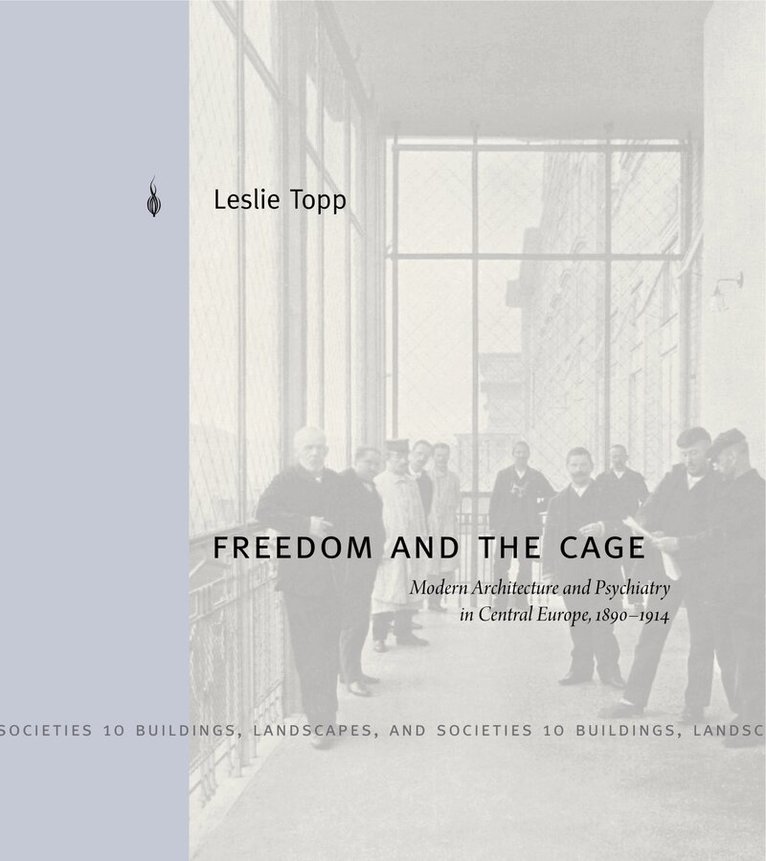
    Freedom and the Cage

    Modern Architecture and Psychiatry in Central Europe, 1890–1914

    AvLeslie Topp

    Inbunden, Engelska, 2017

    Del 10 i serien Buildings, Landscapes, and Societies

    1 408 kr

    Beställningsvara. Skickas inom 5-8 vardagar. Fri frakt över 249 kr.

    Beskrivning

    Spurred by ideals of individual liberty that took hold in the Western world in the late nineteenth century, psychiatrists and public officials sought to reinvent asylums as large-scale, totally designed institutions that offered a level of freedom and normality impossible in the outside world. This volume explores the “caged freedom” that this new psychiatric ethos represented by analyzing seven such buildings established in the Austro-Hungarian monarchy between the late 1890s and World War I.In the last two decades of the Habsburg Empire, architects of asylums began to abandon traditional corridor-based plans in favor of looser formations of connected villas, echoing through design the urban- and freedom-oriented impulse of the progressive architecture of the time. Leslie Topp considers the paradoxical position of designs that promoted an illusion of freedom even as they exercised careful social and spatial control over patients. In addition to discussing the physical and social aspects of these institutions, Topp shows how the commissioned buildings were symptomatic of larger cultural changes and of the modern asylum’s straining against its ideological anchorage in a premodern past of “unenlightened” restraint on human liberty.Working at the intersection of the history of architecture and the history of psychiatry, Freedom and the Cage broadens our understanding of the complexity and fluidity of modern architecture’s engagement with the state, with social and medical projects, and with mental health, psychiatry, and psychology.

    Produktinformation

    • Utgivningsdatum:2017-03-28
    • Mått:229 x 254 x 24 mm
    • Vikt:1 315 g
    • Format:Inbunden
    • Språk:Engelska
    • Serie:Buildings, Landscapes, and Societies
    • Antal sidor:256
    • Förlag:Pennsylvania State University Press
    • ISBN:9780271077109

    Utforska kategorier

    • Arkitekturhistoria inom Kultur

    Mer om författaren

    Leslie Topp is Senior Lecturer in the History of Architecture at Birkbeck, University of London, and the author of Architecture and Truth in Fin-de-Siècle Vienna.

    Recensioner i media

    “Topp shows how the interactions between architects and psychiatrists were materialized and expressed the formal and ideological developments of a contemporary architectural milieu that included Austrian architect Otto Wagner. Rounding out the book are careful analyses of the architectural forms and layouts of the complexes.”—L. E. Carranza Choice

    Innehållsförteckning

    • ContentsList of IllustrationsAcknowledgmentsIntroduction1The Free Institution2Regions, Nationalism, and the Asylum as a Political Project3“A White City Shimmering”: The Rhetorical Heightening of Control4Utopia in Process in Vienna’s Hinterland5Spaces6BoundariesConclusions and ProposalsAppendix: New Psychiatric Hospitals Built in the Habsburg Empire After 1898NotesBibliographyIndex