• Fri frakt över 249 kr
  • •
  • Snabba leveranser
  • •
  • Billiga böcker
Kundservice

Du är på sajten för privatpersoner.

Företag, bibliotek eller offentlig verksamhet?

Du handlar på classic.bokus.com, där alla dina funktioner finns intakta.
Till classic.bokus.com
Bokus logotyp. Gå till startsidan.
  • Erbjudanden
  • Student
  • Topplistor
  • Barn & ungdom
  • Bokus Play
  • E-böcker
  • Ljudböcker
  • Pocketböcker
  • Spel & pussel

Upp till 25% på utvalda nyheter →

Sidfot

Mina sidor

    Hjälp

    • Kundservice
    • Vanliga frågor och svar
    • Frakt och leverans
    • Retur vid ångerrätt
    • Reklamera vara
    • Betalning
    • Köpvillkor
    • Allmänna villkor
    • Information om webbplatsens tillgänglighet

    Om Bokus

    • Om oss
    • Pressrum
    • För studenter
    • För företag
    • För bibliotek och offentlig verksamhet
    • För leverantörer
    • Hållbarhet

    Populärt

    • Aktuella erbjudanden
    • Presentkort
    • Studentlitteratur
    • Nya böcker
    • Topplistor
    • Signerade böcker
    • Engelska böcker

    Inspiration

    • Boktips
    • BookTok
    • Populära bokserier
    • Barnbokskaraktärer
    • Populära författare
    Logotyp för Bokus
    Följ oss på Facebook (extern länk)Följ oss på Instagram (extern länk)Följ oss på YouTube (extern länk)Följ oss på TikTok (extern länk)
    bokus @ CookiesAnpassa cookiesIntegritetspolicyKöpvillkor
    Till Citymail hemsida (extern länk)Till Budbee hemsida (extern länk)Till Postnord hemsida (extern länk)Till Schenker hemsida (extern länk)Till Early Bird hemsida (extern länk)Till Walleys hemsida (extern länk)
    1. Samhälle och politik
    2. Krig och försvar
    3. Vapen och utrustning
    4. Kärnvapen

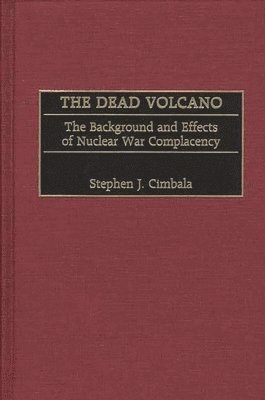
    Dead Volcano

    The Background and Effects of Nuclear War Complacency

    AvStephen J. Cimbala

    Inbunden, Engelska, 2002

    1 080 kr

    Beställningsvara. Skickas inom 10-15 vardagar. Fri frakt över 249 kr.

    Beskrivning

    Cimbala argues that nuclear complacency is based on a misreading of history and on unsound political and military analysis. The stability factors built into the Cold War international system are now missing. The spread of nuclear weapons after the Cold War moved toward regional actors outside of Europe, some with religious or national scores to settle. Technology transfer of ballistic missiles and other delivery systems for weapons of mass destruction, including biological and chemical as well as nuclear weapons, brings the danger of nuclear eruption closer to reality. Finally, the mechanism of deterrence that seemed so dependable as a means of war prevention from 1947 to 1991 only seems so by virtue of nostalgia.The early decades of the Cold War were made somewhat unpredictable by uncertain U.S.-Soviet political relations, by nuclear force building based on worst-case estimates, and by rickety command and control systems that could have failed both sides in a crisis. The Soviets and Americans gradually improved their relationship and stabilized Cold War competition, including nuclear rivalry, but they had more than 40 years to practice and no immediate territorial disputes. As Cimbala makes clear, it cannot be assumed that the Soviet-American nonbelligerence of the Cold War is transferable into a multipolar, post-Cold War international system marked by spreading weapons and trigger-sensitive control systems. This provocative analysis will be of interest to all scholars, students, and policy makers involved with defense, security, and foreign policy studies.

    Produktinformation

    • Utgivningsdatum:2002-06-30
    • Mått:161 x 240 x 21 mm
    • Vikt:611 g
    • Format:Inbunden
    • Språk:Engelska
    • Antal sidor:296
    • Förlag:Bloomsbury Publishing Plc
    • ISBN:9780275973872

    Utforska kategorier

    • Kärnvapen inom Samhälle och politik
    • Allmän historia och världshistoria inom Historia och arkeologi
    • Militära operationer inom Samhälle och politik

    Mer om författaren

    STEPHEN J. CIMBALA is Distinguished Professor of Political Science at Penn State University (Delaware County). He has contributed to the literature of international security, defense studies, and nuclear arms control for more than 20 years. Cimbala recently published Nuclear Strategy in the Next Century (Praeger, 2000). He serves on the editorial boards of various professional journals and has served as a consultant to various agencies of the U.S. government and policy think tanks.

    Innehållsförteckning

    • Introduction Nuclear Revolution and American Military Strategy Nuclear Weapons and Soviet Cold War Strategy: Adapting to MADness Friction and Nuclear Deterrence A Near Escape? The 1983 War Scare and Nuclear Danger Nuclear Weapons and U.S.-Russian Arms Control Russian Nuclear Command and Control: Policy and Strategy Perspectives Cyberwar and Nuclear Deterrence The Danger of Nuclear Weapons Spread Conclusion Index