• Fri frakt över 249 kr
  • •
  • Snabba leveranser
  • •
  • Billiga böcker
Kundservice

Du är på sajten för privatpersoner.

Företag, bibliotek eller offentlig verksamhet?

Du handlar på classic.bokus.com, där alla dina funktioner finns intakta.
Till classic.bokus.com
Bokus logotyp. Gå till startsidan.
  • Erbjudanden
  • Nyheter
  • Student
  • Topplistor
  • Barn & ungdom
  • Bokus Play
  • E-böcker
  • Pocketböcker
  • Spel & pussel

10% rabatt på allt med kod NYSTART10 →

Sidfot

Mina sidor

    Hjälp

    • Kundservice
    • Vanliga frågor och svar
    • Frakt och leverans
    • Retur vid ångerrätt
    • Reklamera vara
    • Betalning
    • Köpvillkor
    • Allmänna villkor
    • Information om webbplatsens tillgänglighet

    Om Bokus

    • Om oss
    • Pressrum
    • För studenter
    • För företag
    • För bibliotek och offentlig verksamhet
    • För leverantörer
    • Hållbarhet

    Populärt

    • Aktuella erbjudanden
    • Presentkort
    • Studentlitteratur
    • Nya böcker
    • Topplistor
    • Signerade böcker
    • Engelska böcker

    Inspiration

    • Boktips
    • BookTok
    • Populära bokserier
    • Barnbokskaraktärer
    • Populära författare
    Logotyp för Bokus
    Följ oss på Facebook (extern länk)Följ oss på Instagram (extern länk)Följ oss på YouTube (extern länk)Följ oss på TikTok (extern länk)
    bokus @ CookiesAnpassa cookiesIntegritetspolicyKöpvillkor
    Till Citymail hemsida (extern länk)Till Budbee hemsida (extern länk)Till Postnord hemsida (extern länk)Till Schenker hemsida (extern länk)Till Early Bird hemsida (extern länk)Till Walleys hemsida (extern länk)
    1. Filosofi och religion
    2. Religion och tro
    3. Religion: allmänt

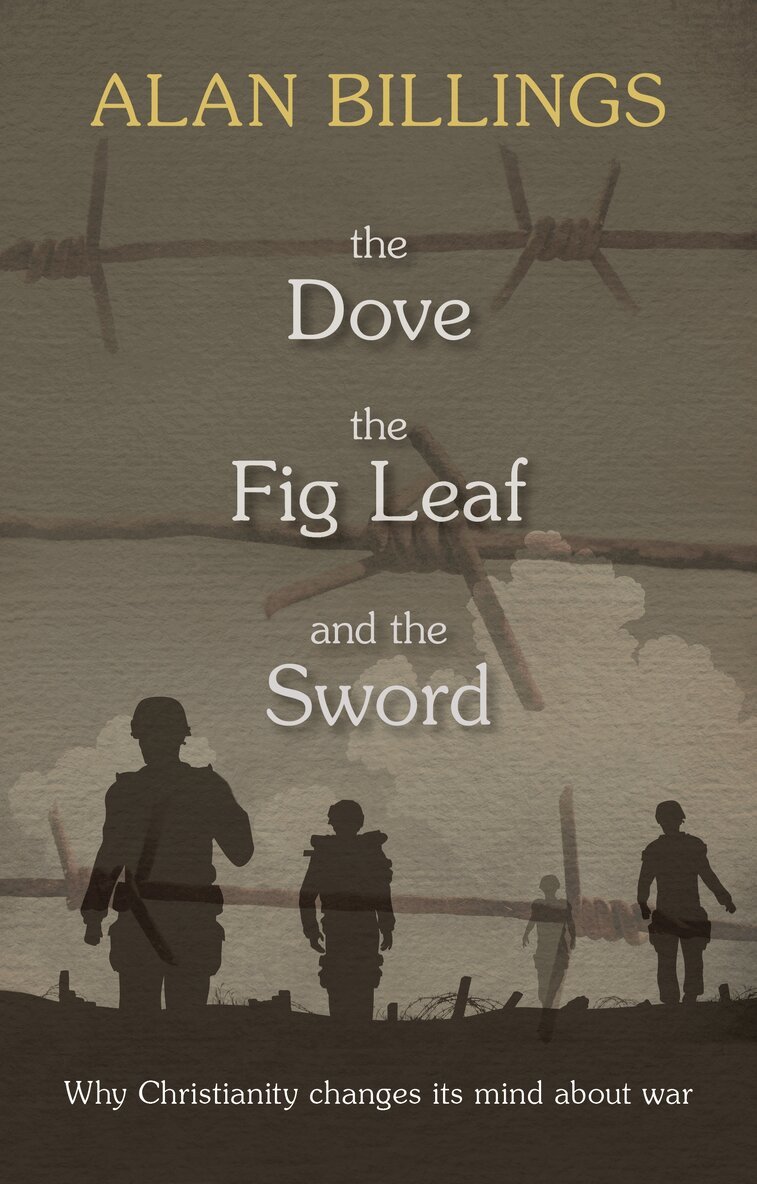
    Dove, the Fig Leaf and the Sword

    Why Christianity Changes Its Mind About War

    AvAlan Billings

    Häftad, Engelska, 2014

    76 kr

    Skickas . Fri frakt över 249 kr.

    Beskrivning

    For Theology Students, Scholars and Professors.Are you looking to understand the complexity of peace keeping, and the vital role of praying for those in authority?After reading you'll have a greater understanding of the complexity of peace keeping.The Dove, the Fig Leaf and the Sword' is a fascinating critique of the Church's varying response to the use of force over the centuries that gives Christians a greater understanding of the complexity of peace keeping, and stresses the vital role of praying for those in authority. Alan Billings is an Anglican priest and a former Director of the Centre for Ethics and Religion at Lancaster University. In recent years he has taught the ethics of war to chaplains to the forces at the UK Defence Academy, Amport, and on military bases in England and Germany. ' The Dove, the Fig Leaf and the Sword' is a highly informative, well-researched and systematic approach to historically changing Christian views around war and peace is an excellent overview that does not flinch from also facing the contentious contemporary context. Billings believes Christianity must engage both ethically and realistically if its message is going to have any relevance in the arena of war and the spectrum of other military operational options withthose who bear the weight of making those life-changing and responsible choices.

    Produktinformation

    • Utgivningsdatum:2014-05-15
    • Mått:138 x 216 x 15 mm
    • Vikt:252 g
    • Format:Häftad
    • Språk:Engelska
    • Antal sidor:192
    • Förlag:SPCK Publishing
    • ISBN:9780281072248

    Utforska kategorier

    • Religion: allmänt inom Filosofi och religion
    • Krig och försvar inom Samhälle och politik
    • Kristendom inom Filosofi och religion

    Mer om författaren

    The Revd Canon Alan Billings is an Anglican priest and a former Director of the Centre for Ethics and Religion at Lancaster University. In recent years he has taught the ethics of war to chaplains to the forces at the UK Defence Academy, Amport, and on military bases in England and Germany.

    Recensioner i media

    This highly informative, well-researched and systematic approach to historically changingChristian views around war and peace is an excellent overview that does not flinch from alsofacing the contentious contemporary context. Alan Billings is well placed to tackle this theme,being an Anglican priest, theologian, ethicist and occasional lecturer to military chaplains.Highlighting historical tensions and change-points within Christianity over the ethics ofwar, heacknowledges his own position by contending that Christianity was never a "pacifist"movement in an absolute sense, even though it commits its followers to seek for peace, andtherefore military action may be contemplated in certain circumstances as a "cruel necessity".He then skilfully navigates us through four phases of Christian thought beginning withChristianity’s earliest approach which renounced violence and largely took a pacifist approachup to Constantine (The Dove). He moves to Christianity’s second thoughts which largelyaccepted the necessity of violence and developed the JustWar tradition fromConstantine to theReformation (The Fig Leaf). He asserts the third change-point as the embracing of violence in arighteous cause, covering the post Reformation and the rise of the nation-state to the tragedy ofthe FirstWorldWarwhere this approach stumbles and then stops at the end of the SecondWorldWar (The Sword). The great names, and the greatest name, are all here—Thucydides, Plato,Cicero, Aristotle, Jesus, Augustine, Aquinas, Luther, Grotius and even the Anabaptists getmorethan a mention! It is a succinct, sharp and erudite survey.The contentious debate is reserved for the contemporary context. In the fourth section—Return of the Dove?—the recovery of Just War and the more recent questioning of itsusefulness are debated with vigour in which Billings argues that Christianity will and shouldcontinue to change its mind over military operations and war. Following and adaptingNiebuhr, Billings argues for a Christian realist position, acknowledging that any discussion ofethics must work with the realities of power or the ethic will either fail or remain irrelevant todecision-makers.Indeed, with moral ambiguity more present than ever in the complexities surroundingmilitary operations and war in the twenty-first-century context, a Christian realist positionthat accepts a measure of pragmatism to bring the best or least worst out of situations, is anecessary reality according to Billings. He argues that the Just War tradition in itself is justnot enough in today’s context; especially with a state deciding to take preventive action tofrustrate what it thinks may be a future possibility. He highlights the Middle East in thisregard. Indeed, this position will hold that Christianity will mostly change its mind aboutoperations and war, depending on the choices available to a nation-state at any given time.This applies to the combination of motives and reasons behind the more recent emphasisupon pre-emption and prevention; humanitarian interventions; regime change and theprevention of terrorism. The choices of when to intervene militarily in humanitariancircumstances or respond to a violent movement rather than a nation-state are cases in point.If adult theological education is about serious thinking, this highly readable, informative andcontentious book will deliver on whichever side of the debate you find yourself. With a lighttouch, Billings brings additional thinking, especially in the twenty-first-century context, to thetensions that Christianity has with military operations and war. One thing is clear. Billingsbelieves Christianity must engage both ethically and realistically if its message is going to haveany relevance in the arena of war and the spectrum of other military operational options withthose who bear the weight of making those life-changing and responsible choices.