• Fri frakt över 249 kr
  • •
  • Snabba leveranser
  • •
  • Billiga böcker
Kundservice

Du är på sajten för privatpersoner.

Företag, bibliotek eller offentlig verksamhet?

Du handlar på classic.bokus.com, där alla dina funktioner finns intakta.
Till classic.bokus.com
Bokus logotyp. Gå till startsidan.
  • Erbjudanden
  • Nyheter
  • Student
  • Topplistor
  • Barn & ungdom
  • Bokus Play
  • E-böcker
  • Pocketböcker
  • Spel & pussel

Må bättre, för mindre! Upp till 50% rabatt på hälsoböcker

Sidfot

Mina sidor

    Hjälp

    • Kundservice
    • Vanliga frågor och svar
    • Frakt och leverans
    • Retur vid ångerrätt
    • Reklamera vara
    • Betalning
    • Köpvillkor
    • Allmänna villkor
    • Information om webbplatsens tillgänglighet

    Om Bokus

    • Om oss
    • Pressrum
    • För studenter
    • För företag
    • För bibliotek och offentlig verksamhet
    • För leverantörer
    • Hållbarhet

    Populärt

    • Aktuella erbjudanden
    • Presentkort
    • Studentlitteratur
    • Nya böcker
    • Topplistor
    • Signerade böcker
    • Engelska böcker

    Inspiration

    • Boktips
    • BookTok
    • Populära bokserier
    • Barnbokskaraktärer
    • Populära författare
    Logotyp för Bokus
    Följ oss på Facebook (extern länk)Följ oss på Instagram (extern länk)Följ oss på YouTube (extern länk)Följ oss på TikTok (extern länk)
    bokus @ CookiesAnpassa cookiesIntegritetspolicyKöpvillkor
    Till Citymail hemsida (extern länk)Till Budbee hemsida (extern länk)Till Postnord hemsida (extern länk)Till Schenker hemsida (extern länk)Till Early Bird hemsida (extern länk)Till Walleys hemsida (extern länk)
    1. Kultur
    2. Scenkonst och film
    3. Film

    Cinema and Painting

    How Art Is Used in Film

    AvAngela Dalle Vacche

    Häftad, Engelska, 1996

    346 kr

    Beställningsvara. Skickas inom 10-15 vardagar. Fri frakt över 249 kr.

    Beskrivning

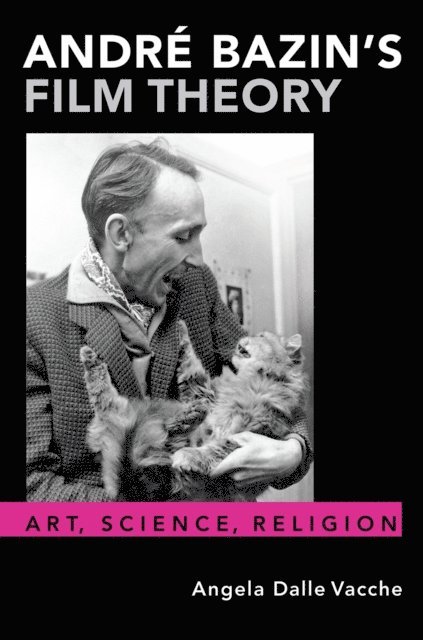
    The visual image is the common denominator of cinema and painting, and indeed many filmmakers have used the imagery of paintings to shape or enrich the meaning of their films. In this discerning new approach to cinema studies, Angela Dalle Vacche discusses how the use of pictorial sources in film enables eight filmmakers to comment on the interplay between the arts, on the dialectic of word and image, on the relationship between artistic creativity and sexual difference, and on the tension between tradition and modernity.Specifically, Dalle Vacche explores Jean-Luc Godard's iconophobia (Pierrot Le Fou) and Andrei Tarkovsky's iconophilia (Andrei Rubleov), Kenji Mizoguchi's split allegiances between East and West (Five Women around Utamaro), Michelangelo Antonioni's melodramatic sensibility (Red Desert), Eric Rohmer's project to convey interiority through images (The Marquise of O), F. W. Murnau's debt to Romantic landscape painting (Nosferatu), Vincente Minnelli's affinities with American Abstract Expressionism (An American in Paris), and Alain Cavalier's use of still life and the close-up to explore the realms of mysticism and femininity (ThÉrÈse).While addressing issues of influence and intentionality, Dalle Vacche concludes that intertextuality is central to an appreciation of the dialogical nature of the filmic medium, which, in appropriating or rejecting art history, defines itself in relation to national traditions and broadly shared visual cultures.

    Produktinformation

    • Utgivningsdatum:1996-03-01
    • Mått:152 x 229 x 20 mm
    • Vikt:367 g
    • Format:Häftad
    • Språk:Engelska
    • Antal sidor:320
    • Förlag:University of Texas Press
    • ISBN:9780292715837

    Utforska kategorier

    • Film inom Kultur

    Mer om författaren

    Angela Dalle Vacche is Associate Professor of Art History and teaches in the film studies program at Yale University. She is the author of The Body in the Mirror: Shapes of History in Italian Cinema.

    Recensioner i media

    In this ground-breaking study, the author shows how eight films variously define painting as an art. . . . For all the wide range of art references, the readings of the films are rigorous and sensitive as film criticism. This art historian knows film. (Choice)

    Innehållsförteckning

    • List of IllustrationsAcknowledgmentsIntroduction. A Thematic and Intertextual ApproachChapter 1. Vincente Minnelli's An American in Paris: Painting as Psychic UpheavalChapter 2. Michelangelo Antomom's Red Desert: Painting as Ventriloquism and Color as MovementChapter 3. Eric Rohmer's The Marquise of O: Painting Thoughts, Listening to ImagesChapter 4. Jean-Luc Godard's Pierrot le Fou: Cinema as Collage against PaintingChapter 5. Andrei Tarkovsky's Andrei Rublev: Cinema as the Restoration of Icon PaintingChapter 6. F. W Murnau's Nosferatu: Romantic Painting as Horror and Desire in Expressionist CinemaChapter 7. Kenji Mizoguchi's Five Women around Utamaro: Film between Woodblock Printing and TattooingChapter 8. Alain Cavalier's ThÉrÈse: Still Life and the Close-Up as Feminine SpaceNotesBibliographyIndex