• Fri frakt över 249 kr
  • •
  • Snabba leveranser
  • •
  • Billiga böcker
Kundservice

Du är på sajten för privatpersoner.

Företag, bibliotek eller offentlig verksamhet?

Du handlar på classic.bokus.com, där alla dina funktioner finns intakta.
Till classic.bokus.com
Bokus logotyp. Gå till startsidan.
  • Erbjudanden
  • Nyheter
  • Student
  • Topplistor
  • Barn & ungdom
  • Bokus Play
  • E-böcker
  • Pocketböcker
  • Spel & pussel

10% rabatt på allt med kod NYSTART10 →

Sidfot

Mina sidor

    Hjälp

    • Kundservice
    • Vanliga frågor och svar
    • Frakt och leverans
    • Retur vid ångerrätt
    • Reklamera vara
    • Betalning
    • Köpvillkor
    • Allmänna villkor
    • Information om webbplatsens tillgänglighet

    Om Bokus

    • Om oss
    • Pressrum
    • För studenter
    • För företag
    • För bibliotek och offentlig verksamhet
    • För leverantörer
    • Hållbarhet

    Populärt

    • Aktuella erbjudanden
    • Presentkort
    • Studentlitteratur
    • Nya böcker
    • Topplistor
    • Signerade böcker
    • Engelska böcker

    Inspiration

    • Boktips
    • BookTok
    • Populära bokserier
    • Barnbokskaraktärer
    • Populära författare
    Logotyp för Bokus
    Följ oss på Facebook (extern länk)Följ oss på Instagram (extern länk)Följ oss på YouTube (extern länk)Följ oss på TikTok (extern länk)
    bokus @ CookiesAnpassa cookiesIntegritetspolicyKöpvillkor
    Till Citymail hemsida (extern länk)Till Budbee hemsida (extern länk)Till Postnord hemsida (extern länk)Till Schenker hemsida (extern länk)Till Early Bird hemsida (extern länk)Till Walleys hemsida (extern länk)
    1. Skönlitteratur
    2. Litteraturvetenskap
    3. Litteraturvetenskap

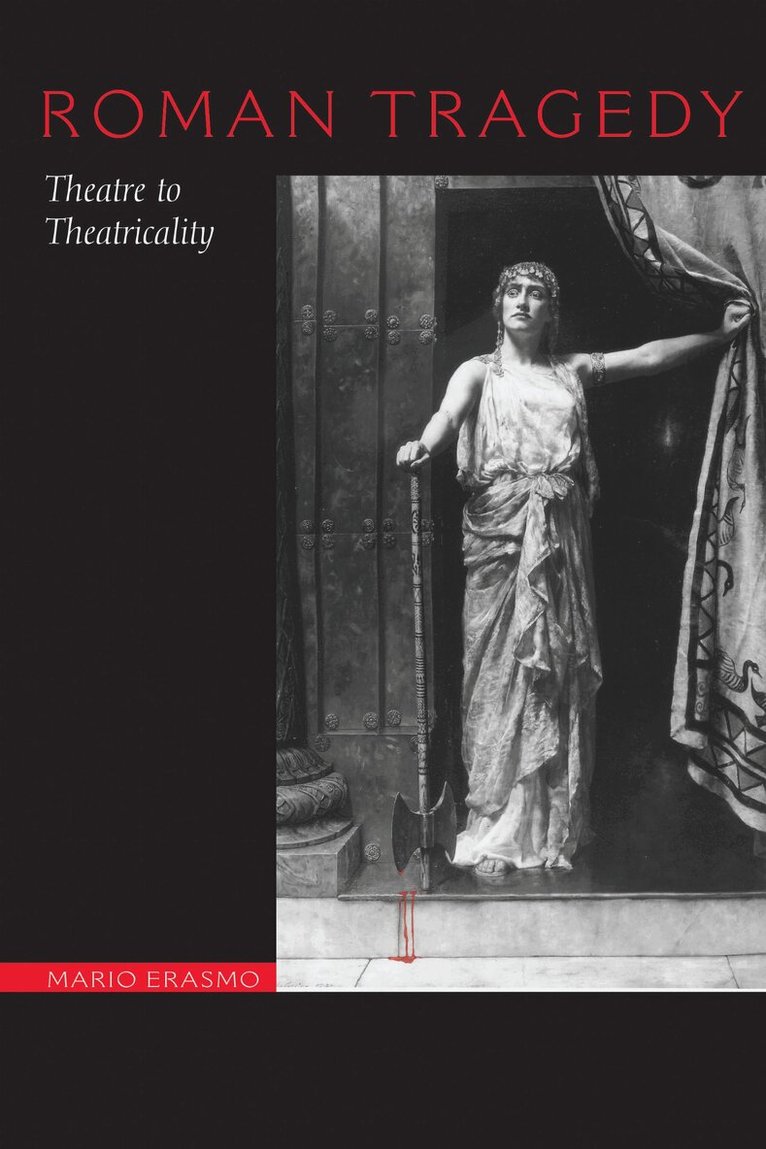
    Roman Tragedy

    Theatre to Theatricality

    AvMario Erasmo

    Häftad, Engelska, 2004

    311 kr

    Beställningsvara. Skickas inom 10-15 vardagar. Fri frakt över 249 kr.

    Beskrivning

    Roman tragedies were written for over three hundred years, but only fragments remain of plays that predate the works of Seneca in the mid-first century C.E., making it difficult to define the role of tragedy in ancient Roman culture. Nevertheless, in this pioneering book, Mario Erasmo draws on all the available evidence to trace the evolution of Roman tragedy from the earliest tragedians to the dramatist Seneca and to explore the role played by Roman culture in shaping the perception of theatricality on and off the stage. Performing a philological analysis of texts informed by semiotic theory and audience reception, Erasmo pursues two main questions in this study: how does Roman tragedy become metatragedy, and how did off-stage theatricality come to compete with the theatre? Working chronologically, he looks at how plays began to incorporate a rhetoricized reality on stage, thus pointing to their own theatricality. And he shows how this theatricality, in turn, came to permeate society, so that real events such as the assassination of Julius Caesar took on theatrical overtones, while Pompey's theatre opening and the lavish spectacles of the emperor Nero deliberately blurred the lines between reality and theatre. Tragedy eventually declined as a force in Roman culture, Erasmo suggests, because off-stage reality became so theatrical that on-stage tragedy could no longer compete.

    Produktinformation

    • Utgivningsdatum:2004-07-01
    • Mått:152 x 229 x 14 mm
    • Vikt:454 g
    • Format:Häftad
    • Språk:Engelska
    • Antal sidor:223
    • Förlag:University of Texas Press
    • ISBN:9780292722200

    Utforska kategorier

    • Litteraturvetenskap inom Skönlitteratur

    Mer om författaren

    Mario Erasmo is Associate Professor of Classics at the University of Georgia at Athens.

    Recensioner i media

    "This book is bold and original. I know of no other work in which the evolution of the tragic form is treated as a form, within its context, over time." oGuy MacLean Rogers, Professor of Classics and History, Wellesley College

    Innehållsförteckning

    • Preface Introduction: Theatre to Theatricality Chapter 1: Creating Tragedy Livius Andronicus Naevius Ennius The Audience Chapter 2: Theatricalizing Tragedy Pacuvius Accius Chapter 3: Dramatizing History Theatricality of History Staging History Chapter 4: Creating Metatragedy Pompey's Theatre Opening Staging BrutusThyestes on the Roman Stage Nero: Imperator ScaenicusChapter 5: Metatragedy Seneca's Actor-Audience From Tragedy to Metatragedy Appendix Bibliography Index