• Fri frakt över 249 kr
  • •
  • Snabba leveranser
  • •
  • Billiga böcker
Kundservice

Du är på sajten för privatpersoner.

Företag, bibliotek eller offentlig verksamhet?

Du handlar på classic.bokus.com, där alla dina funktioner finns intakta.
Till classic.bokus.com
Bokus logotyp. Gå till startsidan.
  • Erbjudanden
  • Nyheter
  • Student
  • Topplistor
  • Barn & ungdom
  • Bokus Play
  • E-böcker
  • Pocketböcker
  • Spel & pussel

10% rabatt på allt med kod NYSTART10 →

Sidfot

Mina sidor

    Hjälp

    • Kundservice
    • Vanliga frågor och svar
    • Frakt och leverans
    • Retur vid ångerrätt
    • Reklamera vara
    • Betalning
    • Köpvillkor
    • Allmänna villkor
    • Information om webbplatsens tillgänglighet

    Om Bokus

    • Om oss
    • Pressrum
    • För studenter
    • För företag
    • För bibliotek och offentlig verksamhet
    • För leverantörer
    • Hållbarhet

    Populärt

    • Aktuella erbjudanden
    • Presentkort
    • Studentlitteratur
    • Nya böcker
    • Topplistor
    • Signerade böcker
    • Engelska böcker

    Inspiration

    • Boktips
    • BookTok
    • Populära bokserier
    • Barnbokskaraktärer
    • Populära författare
    Logotyp för Bokus
    Följ oss på Facebook (extern länk)Följ oss på Instagram (extern länk)Följ oss på YouTube (extern länk)Följ oss på TikTok (extern länk)
    bokus @ CookiesAnpassa cookiesIntegritetspolicyKöpvillkor
    Till Citymail hemsida (extern länk)Till Budbee hemsida (extern länk)Till Postnord hemsida (extern länk)Till Schenker hemsida (extern länk)Till Early Bird hemsida (extern länk)Till Walleys hemsida (extern länk)
    1. Samhälle och politik
    2. Samhälle och kultur
    3. Kultur och medier
    4. Kulturvetenskap

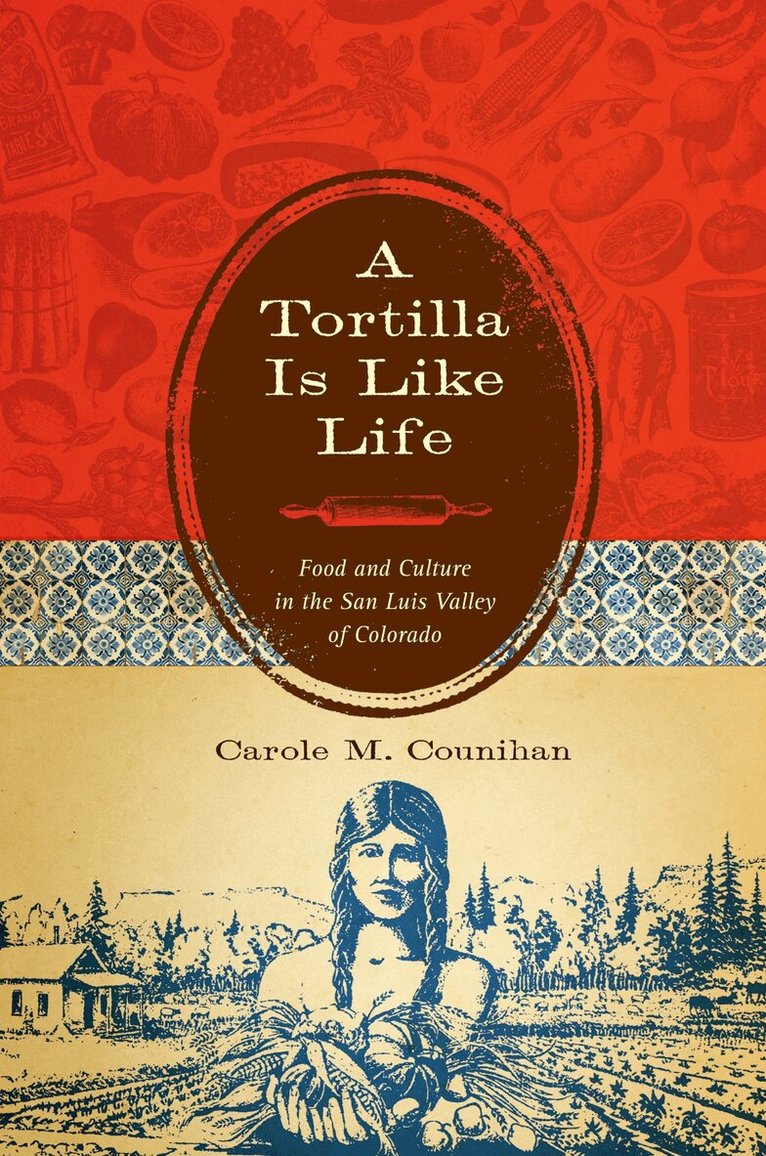
    Tortilla Is Like Life

    Food and Culture in the San Luis Valley of Colorado

    AvCarole M. Counihan

    Häftad, Engelska, 2009

    271 kr

    Beställningsvara. Skickas inom 10-15 vardagar. Fri frakt över 249 kr.

    Beskrivning

    Located in the southern San Luis Valley of Colorado, the remote and relatively unknown town of Antonito is home to an overwhelmingly Hispanic population struggling not only to exist in an economically depressed and politically marginalized area, but also to preserve their culture and their lifeways. Between 1996 and 2006, anthropologist Carole Counihan collected food-centered life histories from nineteen Mexicanas-Hispanic American women-who had long-standing roots in the Upper Rio Grande region. The interviews in this groundbreaking study focused on southern Colorado Hispanic foodways-beliefs and behaviors surrounding food production, distribution, preparation, and consumption.In this book, Counihan features extensive excerpts from these interviews to give voice to the women of Antonito and highlight their perspectives. Three lines of inquiry are framed: feminist ethnography, Latino cultural citizenship, and Chicano environmentalism. Counihan documents how Antonito's Mexicanas establish a sense of place and belonging through their knowledge of land and water and use this knowledge to sustain their families and communities. Women play an important role by gardening, canning, and drying vegetables; earning money to buy food; cooking; and feeding family, friends, and neighbors on ordinary and festive occasions. They use food to solder or break relationships and to express contrasting feelings of harmony and generosity, or enmity and envy. The interviews in this book reveal that these Mexicanas are resourceful providers whose food work contributes to cultural survival.

    Produktinformation

    • Utgivningsdatum:2009-11-01
    • Mått:152 x 229 x 30 mm
    • Vikt:399 g
    • Format:Häftad
    • Språk:Engelska
    • Antal sidor:272
    • Förlag:University of Texas Press
    • ISBN:9780292723108

    Utforska kategorier

    • Kulturvetenskap inom Samhälle och politik

    Mer om författaren

    Carole M. Counihan is Professor of Anthropology at Millersville University in Pennsylvania. She is the author of Around the Tuscan Table: Food, Family, and Gender in Twentieth Century Florence and the co-editor of the scholarly journal Food and Foodways.

    Recensioner i media

    Counihan's work represents an important contribution to Mexican American culture.- María Beltrán-Vocal, DePaul University, Chicago (Oral History Review) Counihan's book is well written and will appeal to a wide spectrum of readers...I would recommend this book to those whose interests lie in foodways, gender studies, ethnography and folklore. A Tortilla is Like Life would be a good addition to any reading list, and a beneficial resource for those who desire to understand the complex associations of gender, food, culture and ethnicity.- Cynthia Egan-Kiigemagi, Memorial University of Newfoundland (Digest: A Journal of Foodways and Culture)

    Innehållsförteckning

    • PrefaceAcknowledgmentsChapter 1. "I Did Do Something": Food-Centered Life Histories in Antonito, Colorado Why AntonitoMethodology: Food-Centered Life Histories and TestimoniosHistory of AntonitoAntonito TodayStudy ParticipantsThe Ethnographic ProcessHelen Ruybal and Carole Counihan on EthnographyConclusionChapter 2. "The Stereotypes Have to Be Broken": Identity and Ethnicity in Antonito Antonito: An Insider/Outsider PerspectiveJanice DeHerrera on AntonitoLanguage and Education, Spanish and EnglishTeddy Madrid on Freedom of SpeechRamona Valdez on English and SpanishHelen Ruybal on Learning English and Being SmartTeddy Madrid on Learning English from the PresbyteriansEthnic, Gender, and Religious IdentityRamona Valdez on Ethnic TerminologyTeddy Madrid on the Connection with SpainDiscrimination and PrejudiceHelen Ruybal on DiscriminationTeddy Madrid on Multiple Identities and Axes of PrejudiceRamona Valdez on Religious and Anti-Hispanic PrejudiceBernadette Vigil on Chicano ConsciousnessTeddy Madrid on Identity, Terminology, and PrejudiceConclusionChapter 3. "Part of This World": Meanings of Land and Water IntroductionHistory of Land: Acquisition and LossHelen Ruybal's Land Acquisition and SaleLand and Its MeaningsMonica Taylor's Dream of Land, Family, and PlaceMonica Taylor's Perceptions of the LandRamona Valdez on the Meanings of LandTeddy Madrid on Land, Home, and FamilyWater in the SouthwestThe Multiple Meanings and Uses of WaterTeddy Madrid on the Traditional Uses of WaterTeddy Madrid on Water as a CommodityJanice DeHerrera on Water as a CommodityMonica Taylor on Water as LifeConclusion: Land, Water, Place, and Chicano Cultural EcologyChapter 4. "Anything You Want Is Going to Come from the Earth": The Traditional Diet The Locally Produced Subsistence DietRamona Valdez's Food NarrativeMeat: Domesticated and Wild Animal FoodsHelen Ruybal on Raising Cattle and BeefTeddy Madrid on Fishing, Hunting, and Making JerkyCultivated Foods: Grains, Beans, Vegetables, and FruitsAsuncionita Mondragon on Her Grandparents' Garden in La IslaTeddy Madrid on Food Production in Las MesitasBernadette Vigil on Red and Green ChiliGathered Plant Foods and MedicinesHelen Ruybal on the Importance of PiÑon in Her FamilyTeddy Madrid on Gathering Wild Foods in Las MesitasRamona Valdez on Healing HerbsConclusion: Food, Place, and CultureChapter 5. "We've Got to Provide for the Family": Women, Food, and Work Production, Reproduction, and GenderHelen Ruybal's Story of Courtship and MarriageGender Expectations and PracticesTeddy Madrid on Her Family's Flexible Gender Division of LaborMonica Taylor on the Strong Women in Her FamilyHelen Ruybal on Gender Relations and IdealsWomen and Food WorkTeddy Madrid on Food PreservationMonica Taylor on Gardening and Preserving FoodJanice DeHerrera on Food PreparationEarning Money with FoodHelen Ruybal on Making and Selling CheeseRamona Valdez on Working in the FieldsCelina Romero on Working as a Cook and Field HandAsuncionita Mondragon on Raising Poultry and Selling EggsBalancing Work and HomeTeddy Madrid's First PaycheckTeddy Madrid on Being a Working WomanJanice DeHerrera on Balancing Job and HomeConclusionChapter 6. "It's a Feeling Thing": Cooking and Women's Agency Cooking and AgencyTeddy Madrid's Cooking AdventuresTo Cook or Not to CookHelen Ruybal's and Her Sister's Different Approaches to CookingJanice DeHerrera's Cooking ExpectationsCooking, Self-Expression, and Emotional ConnectionJanice DeHerrera on Creativity and CookingJanice DeHerrera on Cooking as Emotional CommunicationCordi Ornelas's PaellaLearning and Teaching CookingJanice DeHerrera on Learning How to CookMonica Taylor on Learning to Cook and the Family Biscochito RecipeCooking and GenderTeddy Madrid on Cooking after MarriageHelen Ruybal on Her Husband CookingMonica Taylor on the Chili WarsConclusionChapter 7. "Meals Are Important, Maybe It's Love": Mexicano Meals and Family Family in AntonitoJanice DeHerrera on Family Ties versus Individual AmbitionTeddy Madrid on Her Father's Family ChargeMexicano Family MealsMartha Mondragon on Family Meals and TelevisionJanice DeHerrera on the Importance of the Family MealMeals and Gender RolesJanice DeHerrera on Restaurants, Her First Communion, and Family Gender PowerMeals, Socialization, and RespectJanice DeHerrera on Meals in Her Family of OriginMartha Mondragon on Grace before MealsTeddy Madrid on Family Meals, Respect, and SocializationAsuncionita Mondragon on Teaching Spanish at Family MealsConclusionChapter 8. "It Was a Give-and-Take": Sharing and Generosity versus Greed and Envy Cooperative Labor ExchangesCordi Ornelas on Work PartiesYolanda Salazar on Making and Selling TamalesSharing and GenerosityAsuncionita Mondragon on Sharing Food with NeighborsHelen Ruybal on Sharing Honey and MeatGreed and EnvyCarmen Lopez and Helen Ruybal on Sharing, Cuzco, and EnvidiaHelen Ruybal on EnvyEnvy and WitchcraftHelen Ruybal on Witchcraft, Curanderas, and EnvyConclusionChapter 9. "Come out of Your Grief": Death and Commensality The WakeCordi Ornelas on Foods at the WakeHelen Ruybal on Death, Velorios, and FuneralsFood Gifts for the BereavedJanice DeHerrera on Food and DeathMartha Mondragon on Death and Food SharingFarewell DinnersYolanda Salazar on Death, Community, and CommensalityHelen Ruybal on Farewell DinnersRending and Mending CommunityHelen Ruybal on Different Funeral TraditionsTeddy Madrid on Presbyterian Funeral FeastsJanice DeHerrera on the Meaning of Food at FuneralsConclusionChapter 10. "Give Because It Multiplies": Hunger and Response Poverty and Food InsecurityBernadette Vigil on Caring and HungerJanice DeHerrera on Traditions of Sharing FoodTraditional Foodways, Sharing, and Making DoTeddy Madrid on Hunger, Scarcity, and SharingJanice DeHerrera on Making Do with Beans, Tortillas, and PotatoesHunger in SchoolJanice DeHerrera on Hunger in the Elementary SchoolThe Antonito Food BankTeddy Madrid on Presbyterian Support of the Food BankJanice DeHerrera on Hunger, Conscience, and the Food BankConclusionChapter 11. Conclusion: "Our People Will Survive" The Fourth of July MealUnpacking the Fourth of July MealExplanations for the Antonito DietToward the FutureAppendix 1. Topics in Food-Centered Life HistoriesAppendix 2. Categories of AnalysisAppendix 3. Population of Antonito, Conejos County, and Colorado, 1880-2000Appendix 4. Wild Plants Used for Food or Healing in the Antonito AreaNotesGlossary of Spanish TermsBibliographyIndex