• Fri frakt över 249 kr
  • •
  • Snabba leveranser
  • •
  • Billiga böcker
Kundservice

Du är på sajten för privatpersoner.

Företag, bibliotek eller offentlig verksamhet?

Du handlar på classic.bokus.com, där alla dina funktioner finns intakta.
Till classic.bokus.com
Bokus logotyp. Gå till startsidan.
  • Erbjudanden
  • Student
  • Topplistor
  • Barn & ungdom
  • Bokus Play
  • E-böcker
  • Ljudböcker
  • Pocketböcker
  • Spel och pussel

Skapa nya rutiner – hälsoböcker upp till 50% →

Sidfot

Mina sidor

    Hjälp

    • Kundservice
    • Vanliga frågor och svar
    • Frakt och leverans
    • Retur vid ångerrätt
    • Reklamera vara
    • Betalning
    • Köpvillkor
    • Allmänna villkor
    • Information om webbplatsens tillgänglighet

    Om Bokus

    • Om oss
    • Pressrum
    • För studenter
    • För företag
    • För bibliotek och offentlig verksamhet
    • För leverantörer
    • Hållbarhet

    Populärt

    • Aktuella erbjudanden
    • Presentkort
    • Studentlitteratur
    • Nya böcker
    • Topplistor
    • Signerade böcker
    • Engelska böcker

    Inspiration

    • Boktips
    • BookTok
    • Barnbokskaraktärer
    • Populära författare
    Logotyp för Bokus
    Följ oss på Facebook (extern länk)Följ oss på Instagram (extern länk)Följ oss på YouTube (extern länk)Följ oss på TikTok (extern länk)
    bokus @ CookiesAnpassa cookiesIntegritetspolicyKöpvillkor
    Till Citymail hemsida (extern länk)Till Budbee hemsida (extern länk)Till Postnord hemsida (extern länk)Till Schenker hemsida (extern länk)Till Early Bird hemsida (extern länk)Till Walleys hemsida (extern länk)
    1. Kultur
    2. Arkitektur

    Modern Architecture in Latin America

    Art, Technology, and Utopia

    AvLuis E. Carranza,Fernando Luiz Lara

    Häftad, Engelska, 2015

    542 kr

    Beställningsvara. Skickas inom 5-8 vardagar. Fri frakt över 249 kr.

    Beskrivning

    Designed as a survey and focused on key examples and movements arranged chronologically from 1903 to 2003, this is the first comprehensive history of modern architecture in Latin America in any language.Runner-up, University Co-op Robert W. Hamilton Book Award, 2015Modern Architecture in Latin America: Art, Technology, and Utopia is an introductory text on the issues, polemics, and works that represent the complex processes of political, economic, and cultural modernization in the twentieth century. The number and types of projects varied greatly from country to country, but, as a whole, the region produced a significant body of architecture that has never before been presented in a single volume in any language. Modern Architecture in Latin America is the first comprehensive history of this important production.Designed as a survey and focused on key examples/paradigms arranged chronologically from 1903 to 2003, this volume covers a myriad of countries; historical, social, and political conditions; and projects/developments that range from small houses to urban plans to architectural movements. The book is structured so that it can be read in a variety of ways-as a historically developed narrative of modern architecture in Latin America, as a country-specific chronology, or as a treatment of traditions centered on issues of art, technology, or utopia. This structure allows readers to see the development of multiple and parallel branches/historical strands of architecture and, at times, their interconnections across countries. The authors provide a critical evaluation of the movements presented in relationship to their overall goals and architectural transformations.

    Produktinformation

    • Utgivningsdatum:2015-01-05
    • Mått:216 x 279 x 25 mm
    • Vikt:1 560 g
    • Format:Häftad
    • Språk:Engelska
    • Antal sidor:424
    • Förlag:University of Texas Press
    • ISBN:9780292762978
    • Utmärkelser:Runner-up for University Co-op Robert W. Hamilton Book Award 2015

    Utforska kategorier

    • Arkitektur inom Kultur

    Mer om författaren

    LUIS E. CARRANZA is Professor of Architecture at Roger Williams University in Bristol, Rhode Island. He is the author of Architecture as Revolution: Episodes in the History of Modern Mexico, and he has published and lectured nationally and internationally on Latin American modern architecture, focusing primarily on Mexico.FERNANDO LUIZ LARA is Associate Professor of Architecture at the University of Texas at Austin, where he serves as Chair of the Brazil Center at the Teresa Lozano Long Institute of Latin American Studies. He is the author of The Rise of Popular Modernist Architecture in Brazil.

    Recensioner i media

    "[A] major achievement, both in its scope and in its depth. It is sure to entice newcomers and keep the experts inspired." (Hispanic American Historical Review)

    Innehållsförteckning

    • Foreword by Jorge Francisco LiernurAcknowledgments(Notes toward an) Introduction1903. Francisco Pereira Passos begins a project to “civilize” Rio de Janeiro by applying Baron Haussmann’s ideas as an answer to the tropical (lack of) urbanism.1904. VÍctor Meano, Francisco de Oliveira Passos, and Emile JÉquier build a Latin American character with a classical vocabulary.1906. JuliÁn GarcÍa NÚÑez’s Hospital EspaÑol defines a characteristic search for a new language: Secession/Art Nouveau.1914. JesÚs T. Acevedo and Federico Mariscal lecture in Mexico on the character, importance, and role of the Spanish colonial legacy.1915. Antonin Nechodoma introduces the Prairie style to Puerto Rico.1922. In an attempt to create a building expressive of the “cosmic race,” JosÉ Vasconcelos inaugurates in Mexico City the headquarters of the SecretarÍa de EducaciÓn PÚblica and formalizes the muralist project.1923. Mario Palanti: Palacio Barolo and Palacio Salvo1924. MartÍn Fierro presents Alberto Prebisch and Ernesto Vautier’s Ciudad Azucarera en TucumÁn and formalizes the connections and interests in architecture among the literary and artistic avant-gardes.1925. Modern architecture begins with Gregori Warchavchik and Rino Levi publishing manifestos on the new architecture; catching up to the 1922 Semana de Arte Moderna.1925-A. EstridentÓpolis en 1975: Literary Architecture and the Avant-Garde1925-B. JosÉ VillagrÁn GarcÍa, Instituto de Higiene y Granja Sanitaria1928. The Columbus Memorial Lighthouse Competition sparks an investigation into what architecture for Latin America should be like.1929-A. The Ibero-American Exhibition opens in Seville, revealing the complex and contradictory relations between Spain and its former American colonies.1929-B. Le Corbusier’s first encounters with South America: lectures and early projects for Argentina, Brazil, and Uruguay1929-C. With the History of the Skyscraper, Francisco Mujica articulates the skyscraper’s Latin American dimension.1929. Sergio LarraÍn and Jorge Arteaga’s Oberpauer Building initiates a new direction in Chilean architecture.1930-A. GetÚlio Vargas takes power in Brazil and appoints twenty-eight-year-old LÚcio Costa as director of the Escola Nacional de Belas Artes (ENBA).1930-B. Commemorating the centenary of its independence, Uruguay takes the first Soccer World Cup at home, and Montevideo is at the center of its modern ambitions.1930. FlÁvio de Carvalho, “City of the Naked Man”1931. Juan O’Gorman, Diego Rivera and Frida Kahlo Houses and Studios1933. In his PlÁticas sobre arquitectura lecture, Juan O’Gorman highlights the existing polemics between functionalism and academic architecture.1936. Le Corbusier is back in Rio de Janeiro.1936-A. The Kavanagh Building is finished, becoming the tallest skyscraper in Latin America.1936-B. Francisco Salamone: Fascism and Monumental Architecture in the Pampa1936-C. Julio VilamajÓ, School of Engineering1937. Wladimiro Acosta’s Vivienda y ciudad highlights the relationship between ecology, new forms of leisure, the house, and the city.1937. Cine Gran Rex and Argentine Classicist Modernism1938. Characteristic of the growing reach of surrealism into architecture and Latin America, the Chilean architect-trained artist Matta publishes “Sensitive Mathematics-Architecture of Time” in Minotaure.1938. JoaquÍn Torres-GarcÍa, Monumento cÓsmico, Montevideo, Uruguay1939. The European diaspora brings architectural talents to Latin America on an unprecedented scale.1939. The Brazilian pavilion at New York World’s Fair1941. Pampulha represents an encounter that would change the future of Brazil.1942. Amancio Williams, Casa sobre el Arroyo1943-A. The Brazil Builds exhibition at the Museum of Modern Art in New York highlights the architectural and political interests of U.S. relations with Brazil.1943-B. Town Planning Associates (TPA) is commissioned to design a new Brazilian town around an airplane factory, Cidade dos Motores. This will be the beginning of TPA’s involvement with Latin America that will include not only plans for Chimbote, Peru, but also master plans for MedellÍn and BogotÁ, Colombia, and Havana, Cuba.1944. Henry Klumb moves to Puerto Rico and formalizes investigations of modern architecture in the tropics.1945. Antoni Bonet, Punta Ballena, Uruguay1946. Affonso Reidy’s Popular Housing Blocks1947-A. Luis BarragÁn and Max Cetto, the ÉmigrÉ German architect, begin working on the design of the first houses in Mexico City’s Jardines del Pedregal subdivision.1947-B. Seeking to symbolize postwar efficiency and organization, Latin American cities embrace the North American “architecture of bureaucracy.”1947-A. Oscar Niemeyer sketches the UN building in New York but takes no credit.1947-B. Mario Pani-Multifamiliares1947-C. AgrupaciÓn Espacio1949. La ciudad frente al rÍo is released, showing the transformations of Le Corbusier’s plan for Buenos Aires.1950. Public housing reaches a monumental scale: Mario Pani, Carlos RaÚl Villanueva, Affonso Reidy, Oscar Niemeyer.1951-A. Carlos RaÚl Villanueva, Villanueva Residence1951-B. PROA magazine publishes Arquitectura en Colombia, articulating an identity that survived the second half of the century.1951-C. Lina Bo Bardi inaugurates her Casa de Vidro.1952. The debates of plastic integration, modern architecture, and the development of new city forms come to the forefront in two major universities: the UNAM in Mexico City and the Universidad Central in Caracas, Venezuela. The first exemplifies figurative, legible, and socially conscious art; the second, abstraction.1952. Eladio Dieste, Iglesia de Cristo Obrero, AtlÁntida, Uruguay1953-A. Affonso Reidy: halfway between the Carioca school and the Paulista school1953-B. El Eco Experimental Museum in Mexico City opens its doors, advocating for an “emotional architecture.”1953-C. Max Bill’s critique of the SÃo Paulo Biennial has a significant impact in Brazil: Oscar Niemeyer writes a “mea culpa,” SÉrgio Bernardes invests in designing a technological utopia, and JoÃo Filgueiras Lima devotes his life to prefabrication.1953-A. FÉlix Candela, Church of Our Lady of the Miraculous Medal, Mexico City1953-B. Mario Roberto Álvarez, Teatro General San MartÍn, Buenos Aires1954. Le Corbusier, Curutchet House, La Plata, Argentina1955. Eladio Dieste-Tectonics driving the accidental architect1955-A. Fruto Vivas, Club TÁchira1955-B. The Helicoide in Caracas: The Ultimate Parking and Shopping Center1955-C. Gio Ponti, Villa Planchart1956. BrasÍlia: A modernist utopia?1957-A. Mies van der Rohe, BacardÍ Buildings for Havana, Cuba, and Mexico City1957-B. Lina Bo Bardi, SÃo Paulo Museum of Art1959. The appeal of Corbusian monumentality and bÉton brut: Clorindo Testa’s Government Building in La Pampa and, with SEPRA, the Bank of London and South America in Buenos Aires1961-A. Fidel Castro, in conversation with Ernesto “Che” Guevara, decides to convert a golf course into art schools in Cuba.1961-B. JoÃo Batista Vilanova Artigas and Paulo Mendes da Rocha articulate the Paulista school: free ground plan, generous social spaces, and opaque envelopes.1961. JoÃo Batista Vilanova Artigas, School of Architecture and Planning, University of SÃo Paulo1962. Nelson Bayardo, Columbarium, Montevideo1963. In BogotÁ, Rogelio Salmona takes old bricks to a new dimension in Torres del Parque.1964-A. The military dictatorship ends Delfim Amorim and AcÁcio Gil Borsoi’s investigations into an architecture for the Brazilian northeast.1964-B. Pedro RamÍrez VÁzquez, Museo Nacional de AntropologÍa, Mexico City1964-C. MartÍn Correa and Gabriel Guarda, Las Condes Benedictine Monastery Chapel1965-A. Parque do Flamengo: Roberto Burle Marx redefines the Brazilian landscape by rediscovering the country’s own local species.1965-B. The (re)invention of Curitiba: from the plan of Jorge Wilheim to the implementation by Jaime Lerner1965. Juan Borchers, Cooperativa ElÉctrica de ChillÁn, Chile1966. United Nations as client and advocate: Emilio Duhart’s CEPAL Building in Santiago1967. HÉlio Oiticica builds TropicÁlia, challenging the traditional boundaries between art, popular culture, construction, and architecture.1967. JesÚs Tenreiro-Degwitz-Venezuelan Postmodernism1968. The Olympic Games provide Mexico City with opportunities for new forms of national representation through architecture; deadly student protests highlight the contested use of public space.1969-A. Inventing new educational paradigms, Alberto Cruz Covarrubias and Godofredo Iommi (poetically) found the Ciudad Abierta in Chile.1969-B. PREVI: Two opposing governments in Peru bring in the best architects in the world to address squatter settlements.1969. Francisco Bullrich publishes on Latin American architecture.1971. Formalizing the legacy of the MadÍ (Movimiento de Arte de InvenciÓn) and utopian urban projects, Gyula Kosice proposes a hydrospatial city.1971. National Theater, Guatemala1974. Teaching under duress: La Escuelita, dictatorship, and postmodernism in Argentina1975. Filgueiras Lima, Capela do Centro Administrativo da Bahia1976. Mexican postmodernism: Teodoro GonzÁlez de LeÓn’s Colegio de MÉxico expresses modern architecture’s new historicizing sensibilities.1977-A. Éolo Maia, Capela de Santana ao PÉ do Morro1977-B. Bruno Stagno House, Costa Rica1979. Pampulha magazine is launched in Minas Gerais, marking the beginning of Brazilian postmodernism.1980. The Pritzker Architecture Prize is awarded to Luis BarragÁn, and photography is at the center of the myth.1983. Niemeyer returns to Rio de Janeiro to design the SambÓdromo and the CIEPs: architecture gets closer to popular needs.1983-A. RamÓn GutiÉrrez publishes Arquitectura y urbanismo en IberoamÉrica.1983-B. Severiano Porto, Balbina Environmental Protection Center, Brazil1985-A. In the midst of a “not-so-lost” decade ...1985-B. Lina Bo Bardi and the SESC PompÉia inaugurate an interest in adapting existing structures.1988. Brazilian Museum of Sculpture1990. Chilean postmodernism is challenged by JosÉ Cruz and GermÁn del Sol.1991. Angelo Bucci and Alvaro Puntoni win the competition for the Brazilian pavilion at Seville Expo 1992, marking the end of the postmodern reign and the beginning of neomodernism.1993. Pablo Beitia, Xul Solar Museum (Pan Klub Foundation)1994-A. Quae sera tamen: Architecture for the Favelas1994-B. As a model for internationalization, NAFTA becomes emblematic of the new character of late-twentieth-century Mexican architecture.1997. Smiljan Radic, Charcoal Burner’s Hut2000. Colombian Renaissance: In BogotÁ and MedellÍn, mayors and architects work together to create better cities.2000. Alberto Kalach, GGG House, Mexico City2001. Solano BenÍtez’s Tomb for His Father, Paraguay2002. Rafael Iglesia, Pavilions at Parque IndependenciaProvocations for a Conclusion: Islands No MoreNotesBibliographyIllustration CreditsIndex
    Hoppa över listan

    Mer från samma författare

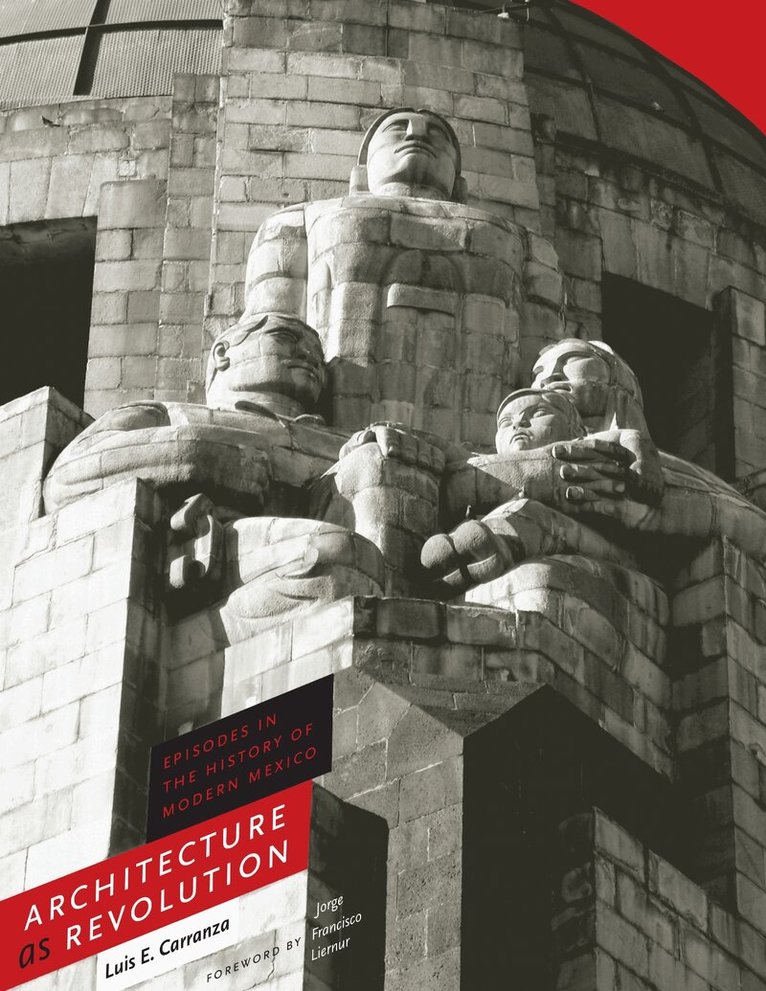
    Luis E. Carranza - Architecture As Revolution, Inbunden

    Architecture As Revolution

    Luis E. Carranza

    Inbunden, 2010

    682 kr

    Luis E. Carranza - Radical Functionalism, E-bok

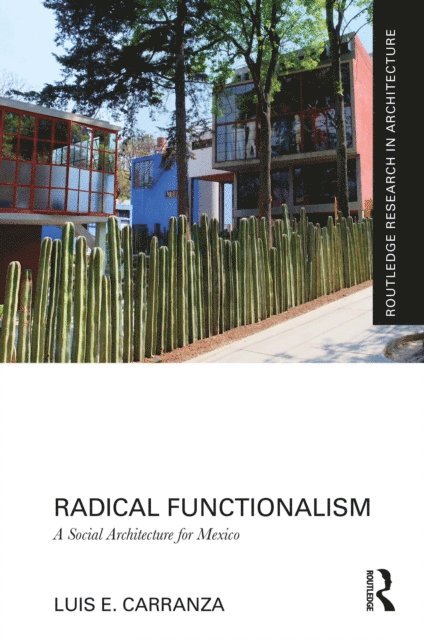
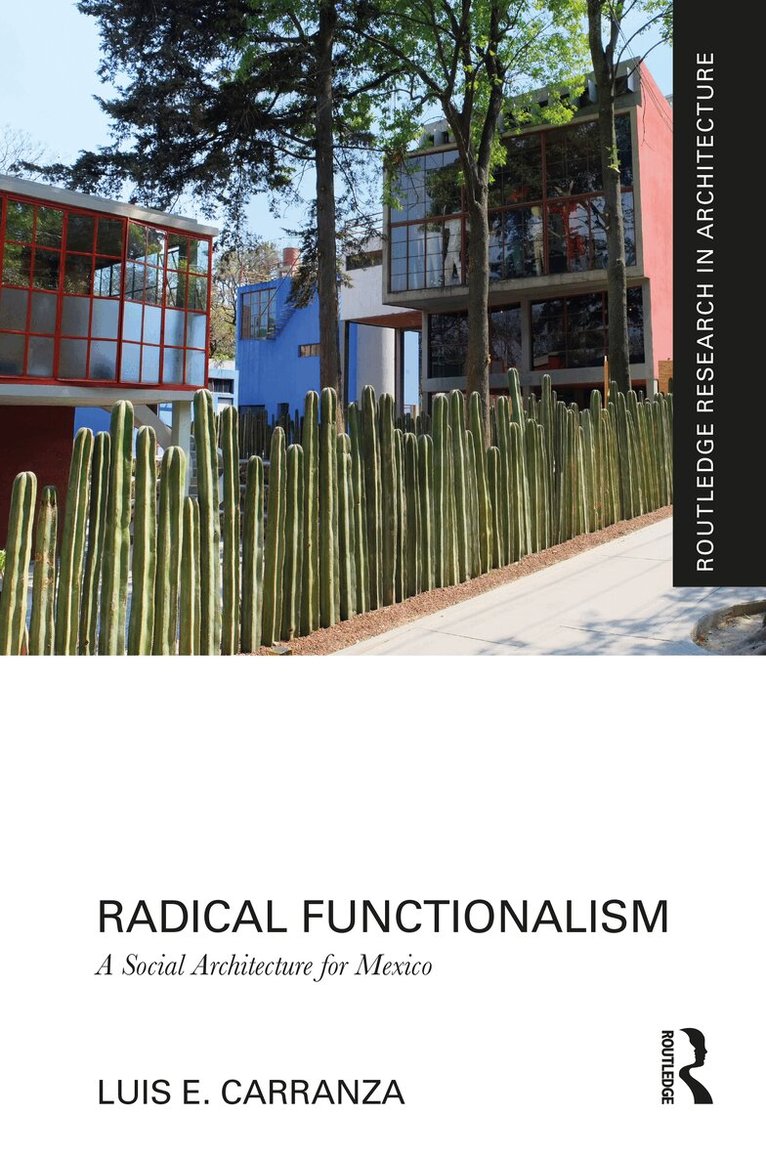
    Radical Functionalism

    Luis E. Carranza

    E-bok
    2021

    812 kr

    Luis E. Carranza - Radical Functionalism, E-bok

    Radical Functionalism

    Luis E. Carranza

    E-bok
    2021

    812 kr

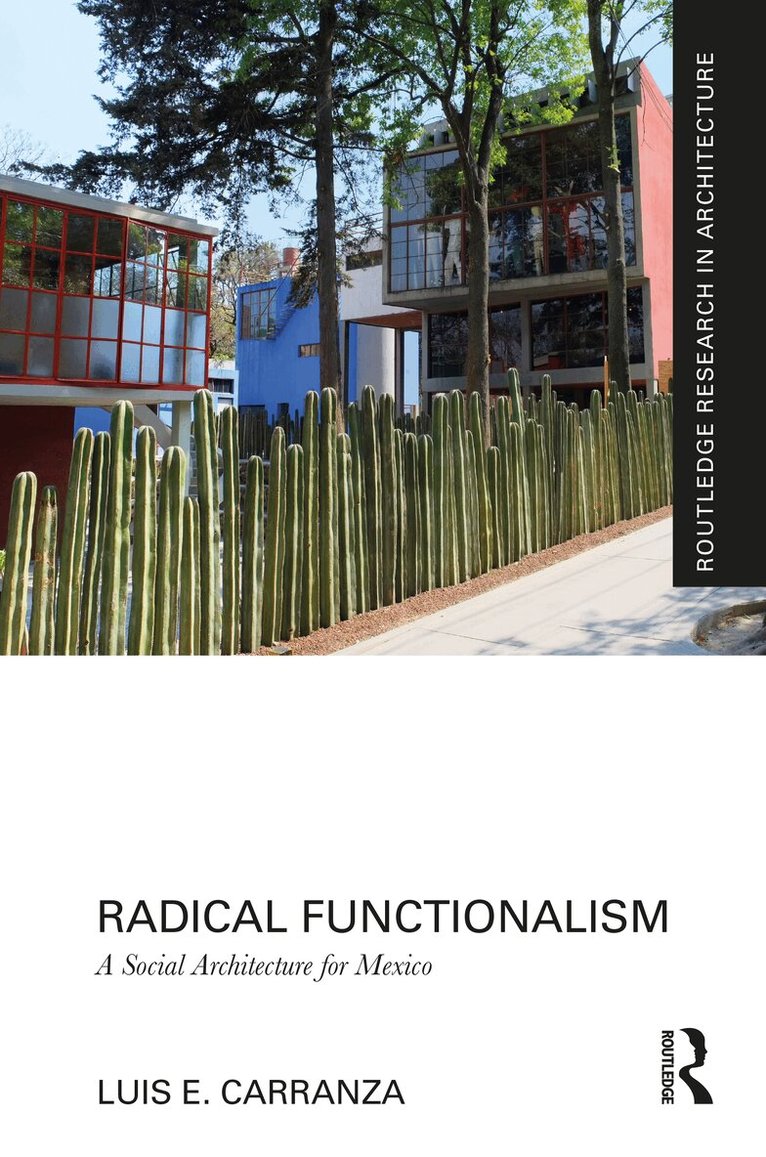
    Luis E. Carranza - Radical Functionalism, Inbunden

    Radical Functionalism

    Luis E. Carranza

    Inbunden, 2021

    2 488 kr

    Luis E. Carranza - Radical Functionalism, Häftad

    Radical Functionalism

    Luis E. Carranza

    Häftad, 2023

    685 kr

    Luis E. Carranza - (Radical) Functionalism in Latin America, Häftad

    (Radical) Functionalism in Latin America

    Luis E. Carranza

    Häftad, 2019

    277 kr

    Luis E. Carranza - On Time and Experience: Luis Barragán and Modern Living, Häftad

    On Time and Experience: Luis Barragán and Modern Living

    Luis E. Carranza

    Häftad, 2026

    184 kr

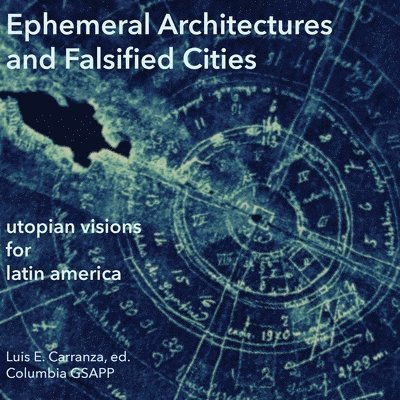
    Luis E Carranza - Ephemeral Architectures and Falsified Cities, Häftad

    Ephemeral Architectures and Falsified Cities

    Luis E Carranza

    Häftad, 2025

    993 kr

    Hoppa över listan

    Du kanske också är intresserad av

    Luis E. Carranza - Radical Functionalism, Inbunden

    Radical Functionalism

    Luis E. Carranza

    Inbunden, 2021

    2 488 kr

    Luis E. Carranza - Radical Functionalism, E-bok

    Radical Functionalism

    Luis E. Carranza

    E-bok
    2021

    812 kr

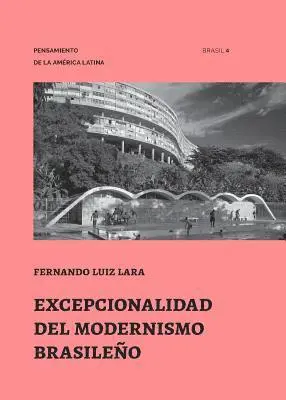
    Fernando Luiz Lara, Abilio Guerra - Excepcionalidad del Modernismo Brasileño, Häftad

    Excepcionalidad del Modernismo Brasileño

    Fernando Luiz Lara, Abilio Guerra

    Häftad, 2019

    258 kr

    Magali Sarfatti-Larson, Fernando Luiz Lara, Sonia Marques - Quid Novi: Architectural Education Dilemmas in the 21st Century, Häftad

    Quid Novi: Architectural Education Dilemmas in the 21st Century

    Magali Sarfatti-Larson, Fernando Luiz Lara, Sonia Marques

    Häftad, 2015

    434 kr

    Luis E. Carranza - Radical Functionalism, E-bok

    Radical Functionalism

    Luis E. Carranza

    E-bok
    2021

    812 kr

    Luis E. Carranza - Architecture As Revolution, Inbunden

    Architecture As Revolution

    Luis E. Carranza

    Inbunden, 2010

    682 kr

    Luis E. Carranza - On Time and Experience: Luis Barragán and Modern Living, Häftad

    On Time and Experience: Luis Barragán and Modern Living

    Luis E. Carranza

    Häftad, 2026

    184 kr

    Luis E. Carranza - Radical Functionalism, Häftad

    Radical Functionalism

    Luis E. Carranza

    Häftad, 2023

    685 kr

    Luis E. Carranza - (Radical) Functionalism in Latin America, Häftad

    (Radical) Functionalism in Latin America

    Luis E. Carranza

    Häftad, 2019

    277 kr

    Fernando Luiz Lara, Ana Paula Koury - Street Matters, Inbunden

    Street Matters

    Fernando Luiz Lara, Ana Paula Koury

    Inbunden, 2022

    716 kr