• Fri frakt över 249 kr
  • •
  • Snabba leveranser
  • •
  • Billiga böcker
Kundservice

Du är på sajten för privatpersoner.

Företag, bibliotek eller offentlig verksamhet?

Du handlar på classic.bokus.com, där alla dina funktioner finns intakta.
Till classic.bokus.com
Bokus logotyp. Gå till startsidan.
  • Erbjudanden
  • Nyheter
  • Student
  • Topplistor
  • Barn & ungdom
  • Bokus Play
  • E-böcker
  • Pocketböcker
  • Spel & pussel

10% rabatt på allt med kod NYSTART10 →

Sidfot

Mina sidor

    Hjälp

    • Kundservice
    • Vanliga frågor och svar
    • Frakt och leverans
    • Retur vid ångerrätt
    • Reklamera vara
    • Betalning
    • Köpvillkor
    • Allmänna villkor
    • Information om webbplatsens tillgänglighet

    Om Bokus

    • Om oss
    • Pressrum
    • För studenter
    • För företag
    • För bibliotek och offentlig verksamhet
    • För leverantörer
    • Hållbarhet

    Populärt

    • Aktuella erbjudanden
    • Presentkort
    • Studentlitteratur
    • Nya böcker
    • Topplistor
    • Signerade böcker
    • Engelska böcker

    Inspiration

    • Boktips
    • BookTok
    • Populära bokserier
    • Barnbokskaraktärer
    • Populära författare
    Logotyp för Bokus
    Följ oss på Facebook (extern länk)Följ oss på Instagram (extern länk)Följ oss på YouTube (extern länk)Följ oss på TikTok (extern länk)
    bokus @ CookiesAnpassa cookiesIntegritetspolicyKöpvillkor
    Till Citymail hemsida (extern länk)Till Budbee hemsida (extern länk)Till Postnord hemsida (extern länk)Till Schenker hemsida (extern länk)Till Early Bird hemsida (extern länk)Till Walleys hemsida (extern länk)
    1. Historia och arkeologi
    2. Arkeologi
    3. Arkeologiska perioder och områden

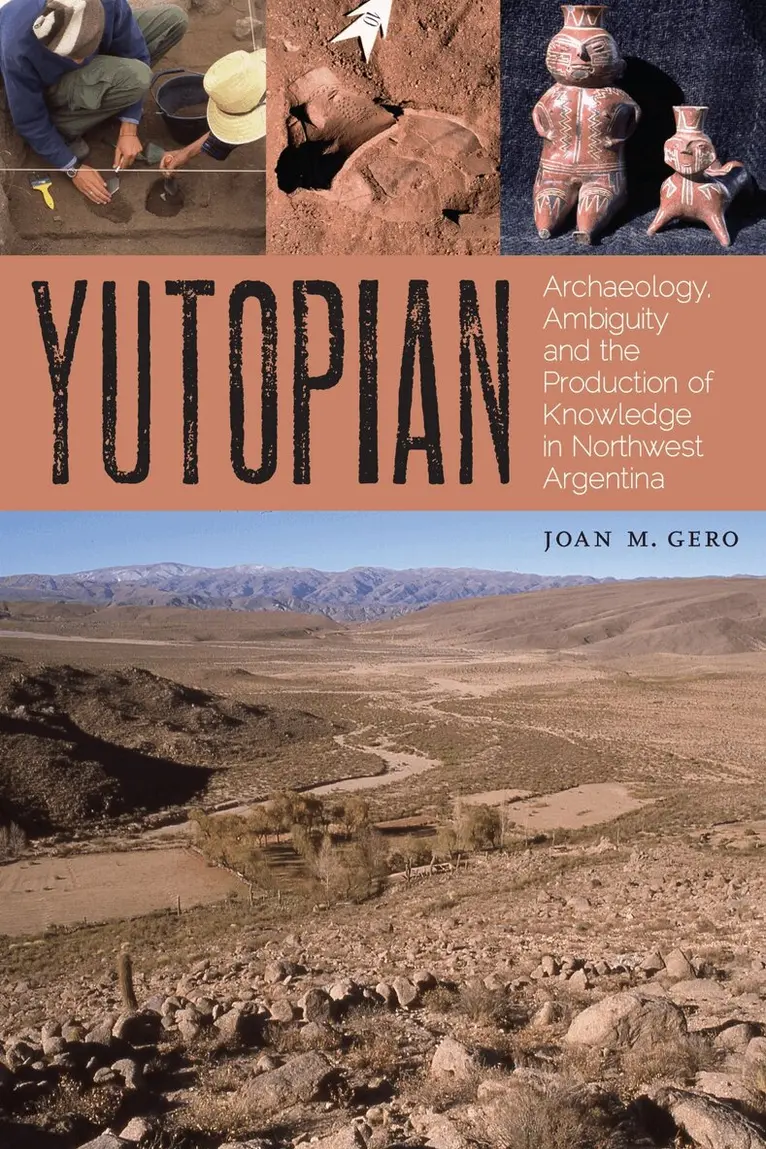
    Yutopian

    Archaeology, Ambiguity, and the Production of Knowledge in Northwest Argentina

    AvJoan M. Gero

    Häftad, Engelska, 2015

    303 kr

    Beställningsvara. Skickas inom 5-8 vardagar. Fri frakt över 249 kr.

    Beskrivning

    Around 400 BCE, inhabitants of the Southern Andes took up a sedentary lifestyle that included the practice of agriculture. Settlements were generally solitary or clustered structures with walled agricultural fields and animal corrals, and the first small villages appeared in some regions. Surprisingly, people were also producing and circulating exotic goods: polychrome ceramics, copper and gold ornaments, bronze bracelets and bells. To investigate the apparent contradiction between a lack of social complexity and the broad circulation of elaborated goods, archaeologist Joan Gero co-directed a binational project to excavate the site of Yutopian, an unusually well-preserved Early Formative village in the mountains of Northwest Argentina.In Yutopian, Gero describes how archaeologists from the United States and Argentina worked with local residents to uncover the lifeways of the earliest sedentary people of the region. Gero foregounds many experiential aspects of archaeological fieldwork that are usually omitted in the archaeological literature: the tedious labor and constraints of time and personnel, the emotional landscape, the intimate ethnographic settings and Andean people, the socio-politics, the difficult decisions and, especially, the role that ambiguity plays in determining archaeological meanings. Gero’s unique approach offers a new model for the site report as she masterfully demonstrates how the decisions made in conducting any scientific undertaking play a fundamental role in shaping the knowledge produced in that project.

    Produktinformation

    • Utgivningsdatum:2015-11-18
    • Mått:152 x 229 x 41 mm
    • Vikt:540 g
    • Format:Häftad
    • Språk:Engelska
    • Antal sidor:396
    • Förlag:University of Texas Press
    • ISBN:9780292772021

    Utforska kategorier

    • Arkeologiska perioder och områden inom Historia och arkeologi

    Mer om författaren

    A pioneer of archaeological theory, Joan M. Gero was Professor Emerita of Anthropology at American University in Washington, DC, and Research Associate at the Smithsonian Institution National Museum of Natural History. She coedited The Socio-politics of Archaeology and Engendering Archaeology: Women and Prehistory and was head series editor of One World Archaeology books.

    Recensioner i media

    "Unlike any monograph I have ever read, it is truly interesting beyond its summary of findings. Each time I pick it up, I find it hard to put down….It is entirely unique." (Vice-president of World Archaeological Congress (WAC))

    Innehållsförteckning

    • List of FiguresList of TablesAcknowledgmentsFrameworks1. Introduction2. Framework: Knowledge production at Yutopian3. Framework: Ambiguity and the lust for certitudeProject Context4. Narrative: Project origins in a British steak dinner5. Socio-politics: Finding Northwest Argentina6. Narrative: Archaeologists and lugareÑos meet at Yutopian7. Backstory: Chronology in Northwest Argentina8. Argument: Ceramic sequences and social processes9. Narrative: Why excavate at Yutopian?10. Socio-politics: Should North American archaeologists dig in Argentina?Starting to Dig11. Argument: The positionality of practice12. Episode: Digging test pits13. Raw data: What the test pits told us14. Narrative: The incredible Pozo de Prueba 1815. Episode: Extending test pit excavations16. Andean ways: Inadvertent human remains17. Episode: Opening Estructura Uno18. Raw data: Inventory of artifact counts and special finds from Units 300, 301 and 30219. Narrative: Emotional moments20. Andean ways: The rodeo21. Argument: Excavation formsEstructura Dos22. Narrative: Coming and going23. Episode: Expectations and excavations in Estructura Dos24. Narrative: Los Hermanos25. Raw data: Inventory of special finds from Estructura Dos26. Narrative: Why was Estructura Dos disappointing?27. Backstory: Why live in a semi-subterranean house?Estructura Uno28. Episode: Excavating Estructura Uno29. Descriptive data: A tour of the occupation floor of Estructura Uno30. Raw data: Inventory of special and general finds from Estructura Uno, Units 303–30631. Major ambiguity: Metallurgy in the house?32. Argument: How the gendered household works33. Andean ways: Buy the cage and get the chicken34. Episode: Analysis in the fieldEstructura Tres35. Narrative: Arrivals, decisions, decisions!36. Backstory: Andean ethnobotany and flotation at Yutopian37. Episode: Excavating Estructura Tres38. Raw data: Inventory of special finds from Estructura Tres39. Narrative: The peculiar pits of Estructura Tres40. Andean ways: Honoring PachamamaInterpreting NÚcleo Uno41. Episode: Exploring NÚcleo Uno's shared patio42. Descriptive data: The square feature in the round patio43. Descriptive data: The entranceways of NÚcleo Uno44. Narrative: The life history of NÚcleo Uno45. Cooking data: Changing patterns of lithic consumption in NÚcleo Uno: Chalcedony and obsidian46. Narrative: How unique is NÚcleo Uno at Yutopian?47. Backstory: How unique is NÚcleo Uno in the world?Estructura Once and the Issue of Remodeling Houses48. Episode: The call of Estructura Once49. Andean ways: Eating quirquincho (armadillo)50. Raw data: Diagnostic ceramics by level from Estructura Once51. Descriptive data: Remodeling and repositioning the doorways52. Narrative: What did we learn from Estructura Once?53. Backstory: What about the saucer-shaped house floors?54. Episode: Pozos de Prueba 12 and 12aEstructura Cuatro55. Episode: Opening up Estructura Cuatro (1996)56. Data in two modalities: The tri-lobate hearth57. Descriptive data: The hearth occupation level in Estructura Cuatro58. Narrative: Last day fervor in Estructura Cuatro59. Socio-politics: Good-byes60. Episode: Estructura Cuatro excavations in 1998: The lower occupation61. Raw data: Inventory of special finds from Estructura Cuatro62. Descriptive data: The cache pit63. Andean ways: ChaÑar drinksLooking for NÚcleo Dos64. Narrative: Where was Estructura Cuatro's entranceway?65. Episode: Searching for Cinco and NÚcleo Dos66. Raw Data: Inventory of special finds from Estructura Cinco67. Narrative: Radical remodeling in NÚcleo Dos68. Argument: Ritual and quotidian69. Narrative: A lab for all reasons70. Socio-politics: Yutopian in the communityUnderstanding Yutopian as an Early Formative Settlement71. Raw data: Comparative characteristics of Yutopian structures72. Raw data: Radiocarbon chronology73. Narrative: The Formative settlement at Yutopian74. Backstory: Plazas and a "public"75. Argument: Yutopian's boundaries and the site map76. Socio-politics: Why Yutopian has so little Formative context77. Narrative: Entranceway ideologies78. Andean ways: Water management at YutopianData from the Experts79. Data from the experts: Agricultural practices at Yutopian (with Jack Rossen)80. Data from the experts: Plants and diet, now and then (with Jack Rossen)81. Data from the experts: Phytolith facts82. Data from the experts: Faunal remains (with AndrÉs Izeta)83. Data from the experts: Ceramic forms and designs (with M. Fabiana Bugliani)84. Cooking data: Chalcedony and obsidian, part 285. Data: Stone tools from other angles86. Data: Cross-mends and what they tell us87. Data: Beads and spindle whorlsCardonal by Comparison88. Narrative: The "other" Early Formative site: Cardonal89. Argument: Testing archaeology and its methods90. Socio-politics: Traveling to Cardonal91. Episode: A short field season testing Cardonal house structures92. Raw data: Special finds from the 2004 Cardonal field season93. Socio-politics: North-South collaborations in archaeology94. Backstory: Grinding stones (conanas, cutanas, morteros) and the holes in them95. Episode: Later work at Cardonal96. Andean ways: Llama caravans and long-distance exchange97. Narrative: Cardonal and YutopianWrap-Ups and Postscripts98. Wrap-up: Putting the project to bed99. Postscript: Early Formative society: Where's the monumental?100. Follow-through: References cited