• Fri frakt över 249 kr
  • •
  • Snabba leveranser
  • •
  • Billiga böcker
Kundservice

Du är på sajten för privatpersoner.

Företag, bibliotek eller offentlig verksamhet?

Du handlar på classic.bokus.com, där alla dina funktioner finns intakta.
Till classic.bokus.com
Bokus logotyp. Gå till startsidan.
  • Erbjudanden
  • Student
  • Topplistor
  • Barn & ungdom
  • Bokus Play
  • E-böcker
  • Ljudböcker
  • Pocketböcker
  • Spel och pussel

5% studentrabatt – använd koden KURSBOK27 →

Sidfot

Mina sidor

    Hjälp

    • Kundservice
    • Vanliga frågor och svar
    • Frakt och leverans
    • Retur vid ångerrätt
    • Reklamera vara
    • Betalning
    • Köpvillkor
    • Allmänna villkor
    • Information om webbplatsens tillgänglighet

    Om Bokus

    • Om oss
    • Pressrum
    • För studenter
    • För företag
    • För bibliotek och offentlig verksamhet
    • För leverantörer
    • Hållbarhet

    Populärt

    • Aktuella erbjudanden
    • Presentkort
    • Studentlitteratur
    • Nya böcker
    • Topplistor
    • Signerade böcker
    • Engelska böcker

    Inspiration

    • Boktips
    • BookTok
    • Barnbokskaraktärer
    • Populära författare
    Logotyp för Bokus
    Följ oss på Facebook (extern länk)Följ oss på Instagram (extern länk)Följ oss på YouTube (extern länk)Följ oss på TikTok (extern länk)
    bokus @ CookiesAnpassa cookiesIntegritetspolicyKöpvillkor
    Till Citymail hemsida (extern länk)Till Budbee hemsida (extern länk)Till Postnord hemsida (extern länk)Till Schenker hemsida (extern länk)Till Early Bird hemsida (extern länk)Till Walleys hemsida (extern länk)
    1. Skönlitteratur
    2. Litteraturvetenskap
    3. Litteraturvetenskap

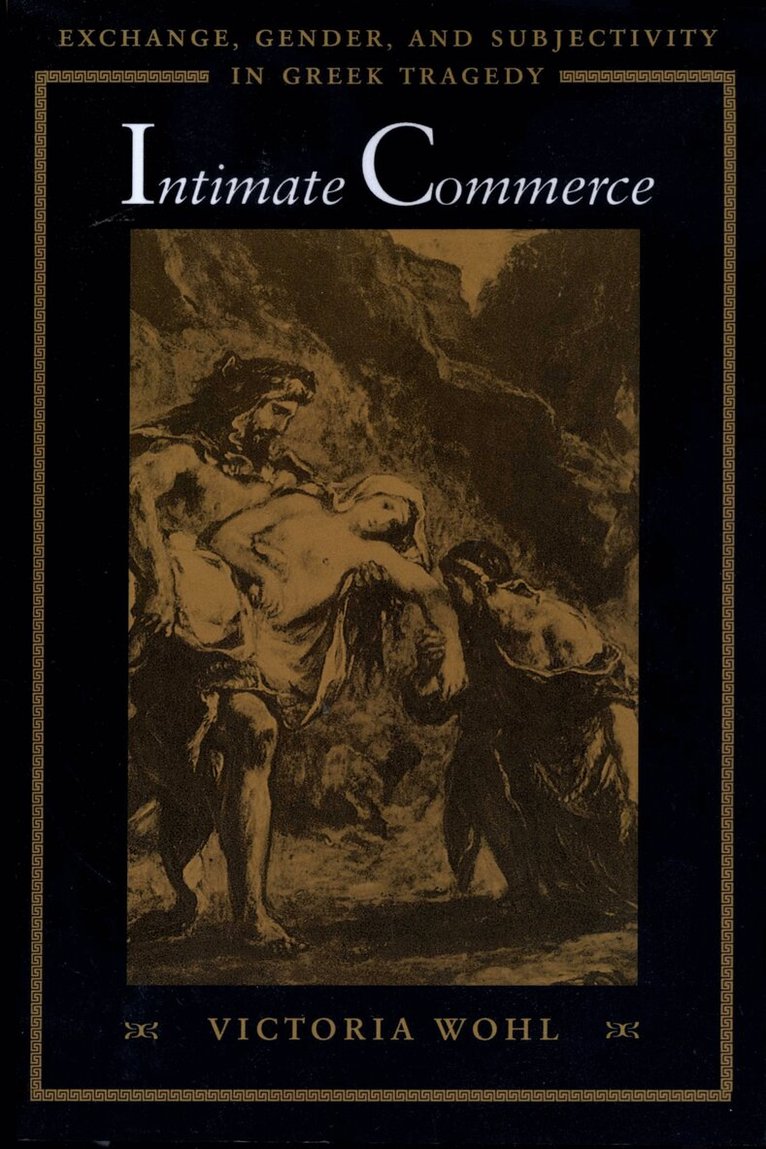
    Intimate Commerce

    Exchange, Gender, and Subjectivity in Greek Tragedy

    AvVictoria Wohl

    Häftad, Engelska, 1998

    399 kr

    Beställningsvara. Skickas inom 5-8 vardagar. Fri frakt över 249 kr.

    Beskrivning

    Exchanges of women between men occur regularly in Greek tragedy-and almost always with catastrophic results. Instead of cementing bonds between men, such exchanges rend them. They allow women, who should be silent objects, to become monstrous subjects, while men often end up as lifeless corpses. But why do the tragedies always represent the transferal of women as disastrous?Victoria Wohl offers an illuminating analysis of the exchange of women in Sophocles' Trachiniae, Aeschylus' Agamemnon, and Euripides' Alcestis. She shows how the attempts of women in these plays to become active subjects rather than passive objects of exchange inevitably fail. While these failures seem to validate male hegemony, the women's actions, however futile, blur the distinction between male subject and female object, calling into question the very nature of the tragic self. What the tragedies thus present, Wohl asserts, is not only an affirmation of Athens' reigning ideologies (including its gender hierarchy) but also the possibility of resistance to them and the imagination of alternatives.

    Produktinformation

    • Utgivningsdatum:1998-01-01
    • Mått:152 x 229 x 20 mm
    • Vikt:454 g
    • Format:Häftad
    • Språk:Engelska
    • Antal sidor:332
    • Förlag:University of Texas Press
    • ISBN:9780292791145

    Utforska kategorier

    • Litteraturvetenskap inom Skönlitteratur

    Mer om författaren

    Victoria Wohl is a professor of classics at the University of Toronto.

    Recensioner i media

    "An important new work from the perspective of gender (rather than exclusively feminist) theory, this volume should appeal to professors and graduate students in the classics."- Choice

    Innehållsförteckning

    • AcknowledgmentsIntroduction. Exchange, Gender, and SubjectivityThe Tragic ExchangeReaffirmation, Resistance, NegotiationThe Social Economy of ExchangeThe Subject of ExchangePart One. Sovereign Father and Female Subject in Sophocles’ TrachiniaeOne. "The Noblest Law": The Paternal Symbolic and Its Reluctant SubjectThe Final ExchangeHeracles: Subject under SiegeHyllus: The Reluctant EphebeTwo. The Foreclosed Female SubjectIole, Deianira, and the Triangle of ExchangeAnti dōrōn dōta: Deianira’s Gift-GivingStatus and GenderA Woman’s kleosThree. Alterity and IntersubjectivityInterpellation of the Other, Creation of the SelfSpatial Models of Self and Other: Pandora and kalokagathiaThe Virgin in the GardenPart Two. The Violence of kharis In Aeschylus’s AgamemnonFour. The Commodity Fetish and the Agalmatization of the Virgin DaughterMarx and the Fetishized EconomyThe Occluded ExchangeThe Agalmatization of the Virgin DaughterFive. Agalma ploutou: Accounting for HelenThe Disenchantment of the agalmaKhrusamoibos sōmatōn: The Commodification of the Male SubjectSix. Fear and Pity: Clytemnestra and CassandraAndroboulon kear: Clytemnestra’s Transgressive IdentityA Lament for the FatherPart Three. Mourning and Matricide in Euripides’ AlcestisSeven. The Shadow of the Object: Loss, Mourning, and ReparationEight. Agonistic Identity and the Superlative SubjectThe Matriarch of the oikos and Alcestis’s Domestic PoliticsThe Superlative Subject and Her HusbandFrom Tragedy to the SymposiumNine. The Mirror of xenia and the Paternal SymbolicFrom Impossible kharis to the agalma EconomyFrom physis to praxisHeracles and the Mirror of xeniaThe Final ExchangeConclusion. Too Intimate CommerceNotesBibliographyGeneral IndexIndex Locorum