• Fri frakt över 249 kr
  • •
  • Snabba leveranser
  • •
  • Billiga böcker
Kundservice

Du är på sajten för privatpersoner.

Företag, bibliotek eller offentlig verksamhet?

Du handlar på classic.bokus.com, där alla dina funktioner finns intakta.
Till classic.bokus.com
Bokus logotyp. Gå till startsidan.
  • Erbjudanden
  • Nyheter
  • Student
  • Topplistor
  • Barn & ungdom
  • Bokus Play
  • E-böcker
  • Pocketböcker
  • Spel & pussel

10% rabatt på allt med kod NYSTART10 →

Sidfot

Mina sidor

    Hjälp

    • Kundservice
    • Vanliga frågor och svar
    • Frakt och leverans
    • Retur vid ångerrätt
    • Reklamera vara
    • Betalning
    • Köpvillkor
    • Allmänna villkor
    • Information om webbplatsens tillgänglighet

    Om Bokus

    • Om oss
    • Pressrum
    • För studenter
    • För företag
    • För bibliotek och offentlig verksamhet
    • För leverantörer
    • Hållbarhet

    Populärt

    • Aktuella erbjudanden
    • Presentkort
    • Studentlitteratur
    • Nya böcker
    • Topplistor
    • Signerade böcker
    • Engelska böcker

    Inspiration

    • Boktips
    • BookTok
    • Populära bokserier
    • Barnbokskaraktärer
    • Populära författare
    Logotyp för Bokus
    Följ oss på Facebook (extern länk)Följ oss på Instagram (extern länk)Följ oss på YouTube (extern länk)Följ oss på TikTok (extern länk)
    bokus @ CookiesAnpassa cookiesIntegritetspolicyKöpvillkor
    Till Citymail hemsida (extern länk)Till Budbee hemsida (extern länk)Till Postnord hemsida (extern länk)Till Schenker hemsida (extern länk)Till Early Bird hemsida (extern länk)Till Walleys hemsida (extern länk)
    1. Historia och arkeologi
    2. Historia
    3. Asiens historia

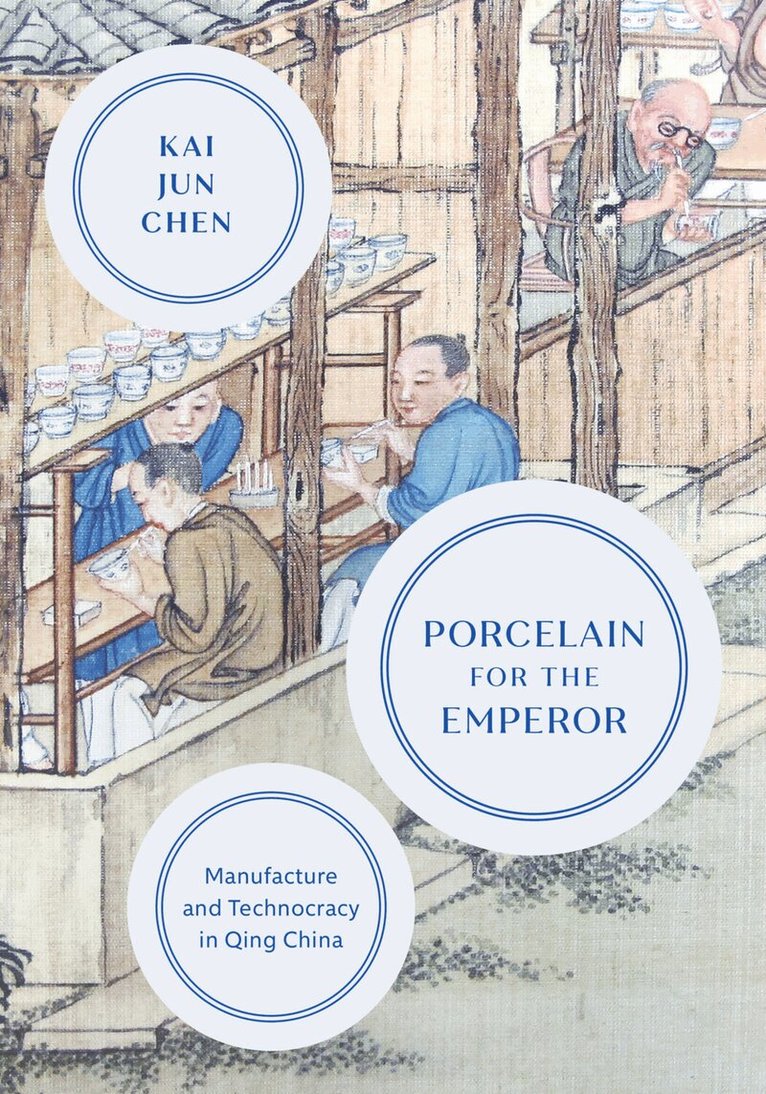
    Porcelain for the Emperor

    Manufacture and Technocracy in Qing China

    AvKai Jun Chen

    Inbunden, Engelska, 2023

    Del i serien Porcelain for the Emperor

    1 434 kr

    Skickas . Fri frakt över 249 kr.

    Beskrivning

    A new perspective for understanding the technology behind goods “made in China”The exquisite ceramic ware produced at the Imperial Porcelain Manufactory at Jingdezhen in southern China functioned as a kind of visual propaganda for the Qing dynasty (1644–1911) court. Porcelain for the Emperor charts the career of bannerman Tang Ying, a technocrat in the porcelain industry, through the first half of the eighteenth century to uncover the wider role of specialist officials in producing the technological knowledge and distinctive artistic forms that were essential to cultural policies of the Chinese state. Through fiscal management, technical experimentation, and design, these imperial technocrats facilitated rationalized manufacturing in precapitalist and preindustrial society.Drawing on museum collections and firsthand archaeological evidence, as well as the voluminous Archive of the Imperial Workshops, this book contributes new insights to scholarship on global empires and the history of science and technology in China. Readers will learn how the imperial state’s intervention in industry left a lingering imprint on modern China through its modes of labor-intensive production, the division of domestic and foreign markets, and, above all, a technocratic culture of centralization.

    Produktinformation

    • Utgivningsdatum:2023-03-28
    • Mått:178 x 254 x 25 mm
    • Vikt:680 g
    • Format:Inbunden
    • Språk:Engelska
    • Serie:Porcelain for the Emperor
    • Antal sidor:248
    • Förlag:University of Washington Press
    • ISBN:9780295750828

    Utforska kategorier

    • Asiens historia inom Historia och arkeologi

    Mer om författaren

    Kai Jun Chen is assistant professor of East Asian studies at Brown University.

    Recensioner i media

    "Porcelain for the Emperor is a truly admirable example of interdisciplinary scholarship. Drawing upon concepts and methods from the fields of science and technology studies, literary criticism, and art history, it illuminates the heretofore neglected contributions of bannermen technocrats to the Qing imperial project. This compact and handsomely produced monograph will interest not only art historians, porcelain connoisseurs, and museum curators, but also students of early modern material and political cultures, court history, and imperial state-formations."