• Fri frakt över 249 kr
  • •
  • Snabba leveranser
  • •
  • Billiga böcker
Kundservice

Du är på sajten för privatpersoner.

Företag, bibliotek eller offentlig verksamhet?

Du handlar på classic.bokus.com, där alla dina funktioner finns intakta.
Till classic.bokus.com
Bokus logotyp. Gå till startsidan.
  • Erbjudanden
  • Nyheter
  • Student
  • Topplistor
  • Barn & ungdom
  • Bokus Play
  • E-böcker
  • Pocketböcker
  • Spel & pussel

10% rabatt på allt med kod NYSTART10 →

Sidfot

Mina sidor

    Hjälp

    • Kundservice
    • Vanliga frågor och svar
    • Frakt och leverans
    • Retur vid ångerrätt
    • Reklamera vara
    • Betalning
    • Köpvillkor
    • Allmänna villkor
    • Information om webbplatsens tillgänglighet

    Om Bokus

    • Om oss
    • Pressrum
    • För studenter
    • För företag
    • För bibliotek och offentlig verksamhet
    • För leverantörer
    • Hållbarhet

    Populärt

    • Aktuella erbjudanden
    • Presentkort
    • Studentlitteratur
    • Nya böcker
    • Topplistor
    • Signerade böcker
    • Engelska böcker

    Inspiration

    • Boktips
    • BookTok
    • Populära bokserier
    • Barnbokskaraktärer
    • Populära författare
    Logotyp för Bokus
    Följ oss på Facebook (extern länk)Följ oss på Instagram (extern länk)Följ oss på YouTube (extern länk)Följ oss på TikTok (extern länk)
    bokus @ CookiesAnpassa cookiesIntegritetspolicyKöpvillkor
    Till Citymail hemsida (extern länk)Till Budbee hemsida (extern länk)Till Postnord hemsida (extern länk)Till Schenker hemsida (extern länk)Till Early Bird hemsida (extern länk)Till Walleys hemsida (extern länk)
    1. Samhälle och politik
    2. Samhälle och kultur
    3. Sociala grupper och identitet

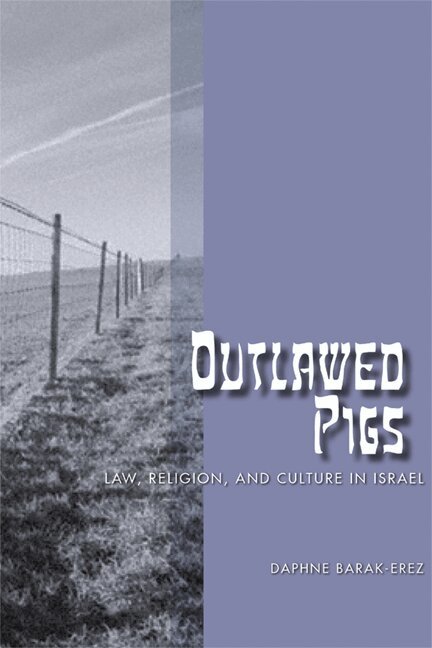
    Outlawed Pigs

    Law, Religion, and Culture in Israel

    AvDaphne Barak-Erez

    Inbunden, Engelska, 2007

    504 kr

    Beställningsvara. Skickas inom 3-6 vardagar. Fri frakt över 249 kr.

    Beskrivning

    The prohibition against pigs is one of the most powerful symbols of Jewish culture and collective memory. ""Outlawed Pigs"" explores how the historical sensitivity of Jews to the pig prohibition was incorporated into Israeli law and culture. Daphne Barak-Erez specifically traces the course of two laws, one that authorized municipalities to ban the possession and trading in pork within their jurisdiction and another law that forbids pig breeding throughout Israel, except for areas populated mainly by Christians. Her analysis offers a comprehensive, decade-by-decade discussion of the overall relationship between law and culture since the inception of the Israeli nation-state. By examining ever-fluctuating Israeli popular opinion on Israel's two laws outlawing the trade and possession of pigs, Barak-Erez finds an interesting and accessible way to explore the complex interplay of law, religion, and culture in modern Israel, and more specifically a microcosm for the larger question of which lies more at the foundation of Israeli state law: religion or cultural tradition.

    Produktinformation

    • Utgivningsdatum:2007-06-05
    • Mått:161 x 229 x 16 mm
    • Vikt:390 g
    • Format:Inbunden
    • Språk:Engelska
    • Antal sidor:160
    • Förlag:University of Wisconsin Press
    • ISBN:9780299221607

    Utforska kategorier

    • Sociala grupper och identitet inom Samhälle och politik

    Mer om författaren

    Daphne Barak-Erez is professor of law at Tel Aviv University in Tel Aviv, Israel. She is the author of numerous books and articles, including a coedited book in English titled Human Rights in Private Law.

    Recensioner i media

    It is hard to underestimate the significance of the pig for Jews, and Daphne Barak-Erez's book shows it to be a delightfully apt way to get at the fascinating maze that is Israeli politics. - William Ian Miller, University of Michigan Law School ""A meticulously researched narrative of the surprising consequences of efforts to abolish the business of selling pork over the course of the modern history of the state of Israel.... Anyone interested in the history of regulations, particularly anyone interested in the history of regulations in societies marked by religious pluralism and controversy, will learn much from this model case study. - Hendrik Hartog, Princeton University