• Fri frakt över 249 kr
  • •
  • Snabba leveranser
  • •
  • Billiga böcker
Kundservice

Du är på sajten för privatpersoner.

Företag, bibliotek eller offentlig verksamhet?

Du handlar på classic.bokus.com, där alla dina funktioner finns intakta.
Till classic.bokus.com
Bokus logotyp. Gå till startsidan.
  • Erbjudanden
  • Nyheter
  • Student
  • Topplistor
  • Barn & ungdom
  • Bokus Play
  • E-böcker
  • Pocketböcker
  • Spel & pussel

10% studentrabatt med kod TERM26

Sidfot

Mina sidor

    Hjälp

    • Kundservice
    • Vanliga frågor och svar
    • Frakt och leverans
    • Retur vid ångerrätt
    • Reklamera vara
    • Betalning
    • Köpvillkor
    • Allmänna villkor
    • Information om webbplatsens tillgänglighet

    Om Bokus

    • Om oss
    • Pressrum
    • För studenter
    • För företag
    • För bibliotek och offentlig verksamhet
    • För leverantörer
    • Hållbarhet

    Populärt

    • Aktuella erbjudanden
    • Presentkort
    • Studentlitteratur
    • Nya böcker
    • Topplistor
    • Signerade böcker
    • Engelska böcker

    Inspiration

    • Boktips
    • BookTok
    • Populära bokserier
    • Barnbokskaraktärer
    • Populära författare
    Logotyp för Bokus
    Följ oss på Facebook (extern länk)Följ oss på Instagram (extern länk)Följ oss på YouTube (extern länk)Följ oss på TikTok (extern länk)
    bokus @ CookiesAnpassa cookiesIntegritetspolicyKöpvillkor
    Till Citymail hemsida (extern länk)Till Budbee hemsida (extern länk)Till Postnord hemsida (extern länk)Till Schenker hemsida (extern länk)Till Early Bird hemsida (extern länk)Till Walleys hemsida (extern länk)
    1. Historia och arkeologi
    2. Historia
    3. Historia: särskilda händelser och ämnen
    4. Socialhistoria och kulturhistoria

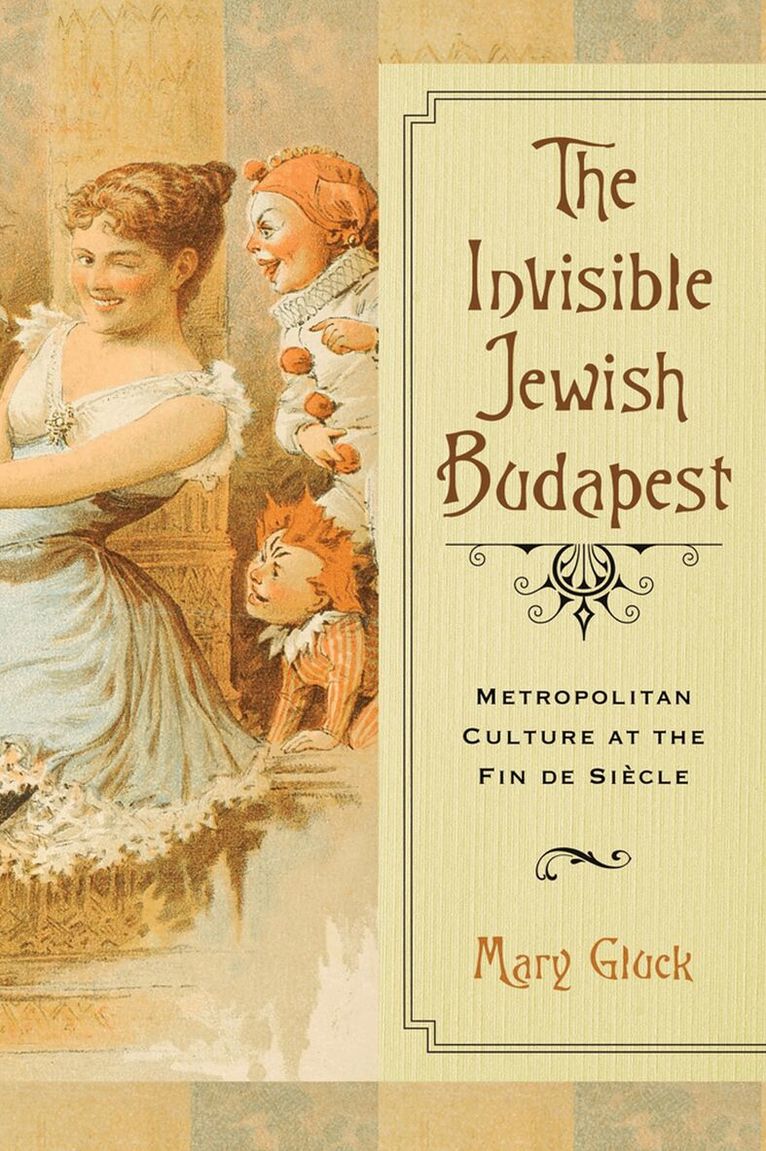
    Invisible Jewish Budapest

    Metropolitan Culture at the Fin De Siècle

    AvMary Gluck

    Inbunden, Engelska, 2016

    Del i serien George L. Mosse Series in the History of European Culture, Sexuality, and Ideas

    465 kr

    Beställningsvara. Skickas inom 10-15 vardagar. Fri frakt över 249 kr.

    Fler format och utgåvor

    Häftad

    250 kr

    Beskrivning

    Budapest at the fin de siècle was famed and emulated for its cosmopolitan urban culture and nightlife. It was also the second-largest Jewish city in Europe. Mary Gluck delves into the popular culture of Budapest’s coffee houses, music halls, and humor magazines to uncover the enormous influence of assimilated Jews in creating modernist Budapest between 1867 and 1914. She explores the paradox of Budapest in this era: because much of the Jewish population embraced and promoted a secular, metropolitan culture, their influence as Jews was both profound and invisible.

    Produktinformation

    • Utgivningsdatum:2016-04-30
    • Mått:154 x 231 x 25 mm
    • Vikt:520 g
    • Format:Inbunden
    • Språk:Engelska
    • Serie:George L. Mosse Series in the History of European Culture, Sexuality, and Ideas
    • Antal sidor:240
    • Förlag:University of Wisconsin Press
    • ISBN:9780299307707

    Utforska kategorier

    • Socialhistoria och kulturhistoria inom Historia och arkeologi
    • Sociala grupper och identitet inom Samhälle och politik

    Mer om författaren

    Mary Gluck is a professor of history and Judaic studies at Brown University, USA. She is the author of Georg Lukács and His Generation, 1900–1918 and Popular Bohemia: Modernism and Urban Culture in Nineteenth-Century Paris.

    Recensioner i media

    Gluck artfully deploys such materials - from jokes to cartoons - to analyse a community that faced simultaneous stresses from internal ambivalence and external anti-Semitism" - Larry Wolff, The Times Literary Supplement.“The Invisible Jewish Budapest has . . . been hailed as a significant addition to scholarly examinations of Jewish contributions to the emergence of modern urban centers. . . . [Its] enjoyable prose, fluid translations, relevant illustrations, and devotion to recreating the era via a dazzling spectrum of periodicals, newspapers, and travelogues has earned it a place among cultural histories of modern Hungary.”—Hungarian Cultural Studies