• Fri frakt över 249 kr
  • •
  • Snabba leveranser
  • •
  • Billiga böcker
Kundservice

Du är på sajten för privatpersoner.

Företag, bibliotek eller offentlig verksamhet?

Du handlar på classic.bokus.com, där alla dina funktioner finns intakta.
Till classic.bokus.com
Bokus logotyp. Gå till startsidan.
  • Erbjudanden
  • Student
  • Topplistor
  • Barn & ungdom
  • Bokus Play
  • E-böcker
  • Ljudböcker
  • Pocketböcker
  • Spel och pussel

5% studentrabatt – använd koden KURSBOK27 →

Sidfot

Mina sidor

    Hjälp

    • Kundservice
    • Vanliga frågor och svar
    • Frakt och leverans
    • Retur vid ångerrätt
    • Reklamera vara
    • Betalning
    • Köpvillkor
    • Allmänna villkor
    • Information om webbplatsens tillgänglighet

    Om Bokus

    • Om oss
    • Pressrum
    • För studenter
    • För företag
    • För bibliotek och offentlig verksamhet
    • För leverantörer
    • Hållbarhet

    Populärt

    • Aktuella erbjudanden
    • Presentkort
    • Studentlitteratur
    • Nya böcker
    • Topplistor
    • Signerade böcker
    • Engelska böcker

    Inspiration

    • Boktips
    • BookTok
    • Barnbokskaraktärer
    • Populära författare
    Logotyp för Bokus
    Följ oss på Facebook (extern länk)Följ oss på Instagram (extern länk)Följ oss på YouTube (extern länk)Följ oss på TikTok (extern länk)
    bokus @ CookiesAnpassa cookiesIntegritetspolicyKöpvillkor
    Till Citymail hemsida (extern länk)Till Budbee hemsida (extern länk)Till Postnord hemsida (extern länk)Till Schenker hemsida (extern länk)Till Early Bird hemsida (extern länk)Till Walleys hemsida (extern länk)
    1. Historia och arkeologi
    2. Historia
    3. Amerikas historia

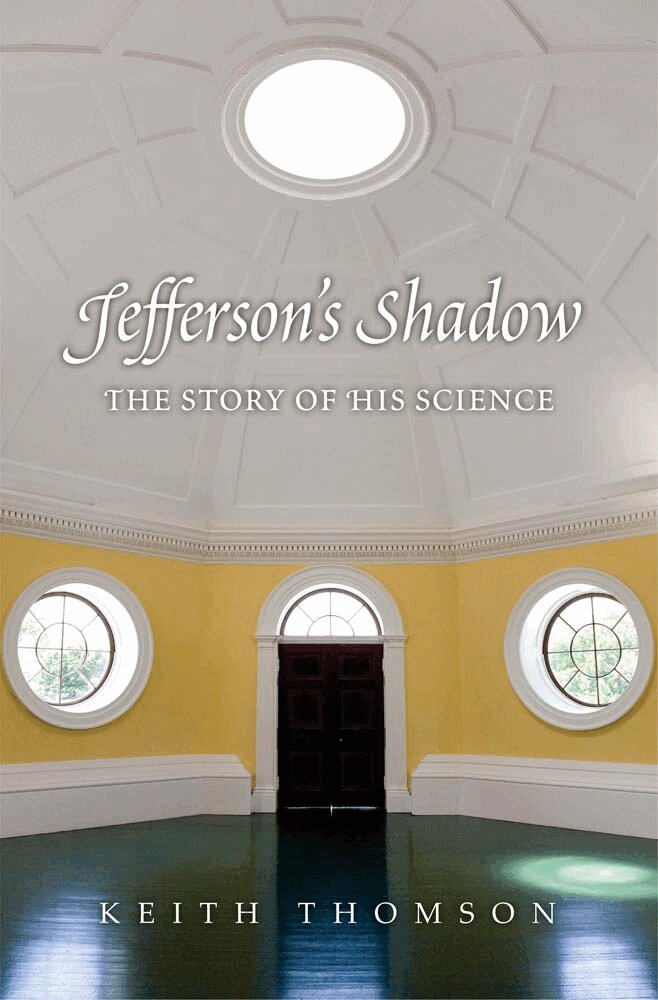
    Jefferson's Shadow

    The Story of His Science

    AvKeith Stewart Thomson

    Häftad, Engelska, 2015

    366 kr

    Tillfälligt slut

    Beskrivning

    A unique account of Thomas Jefferson’s passion for science, the influence of science on his vision for America, and the amazing extent of his scientific contributions  In the voluminous literature on Thomas Jefferson, little has been written about his passionate interest in science. This new and original study of Jefferson presents him as a consummate intellectual whose view of science was central to both his public and his private life. Keith Stewart Thomson reintroduces us in this remarkable book to Jefferson’s eighteenth-century world and reveals the extent to which Jefferson used science, thought about it, and contributed to it, becoming in his time a leading American scientific intellectual.  With a storyteller’s gift, Thomson shows us a new side of Jefferson. He answers an intriguing series of questions—How was Jefferson’s view of the sciences reflected in his political philosophy and his vision of America’s future? How did science intersect with his religion? Did he make any original contributions to scientific knowledge?—and illuminates the particulars of Jefferson’s scientific endeavors. Thomson discusses Jefferson’s theories that have withstood the test of time, his interest in the practical applications of science to societal problems, his leadership in the use of scientific methods in agriculture, and his contributions toward launching at least four sciences in America: geography, paleontology, climatology, and scientific archaeology. A set of delightful illustrations, including some of Jefferson’s own sketches and inventions, completes this impressively researched book.

    Produktinformation

    • Utgivningsdatum:2015-06-15
    • Mått:146 x 227 x 25 mm
    • Vikt:517 g
    • Format:Häftad
    • Språk:Engelska
    • Antal sidor:336
    • Förlag:Yale University Press
    • ISBN:9780300205930

    Utforska kategorier

    • Amerikas historia inom Historia och arkeologi
    • Naturvetenskapens historia inom Naturvetenskap och teknik

    Mer om författaren

    Keith Stewart Thomson (1938–2025) was a distinguished evolutionary biologist, historian, and writer. He was emeritus professor of natural history at the University of Oxford and had served as director of the Oxford Museum of Natural History, the Academy of Natural Sciences in Philadelphia, and the Peabody Museum at Yale University, where he was also a professor and dean. He wrote many books and essays on history, history of science, evolution, and paleontology, including The Common but Less Frequent Loon and Other Essays; Before Darwin: Reconciling God and Nature; The Young Charles Darwin; and The Legacy of the Mastodon: The Golden Age of Fossils in America.

    Recensioner i media

    “Architect, philosopher, critic of slavery, slave-owner; the contradictions of American ‘founding father’ Thomas Jefferson are well known. That he was a scientist is not. Natural historian Keith Thomson redresses the balance in this finely wrought biography.”—Nature“Thomson is most effective at explaining what is different or the same about eighteenth- or early nineteenth-century scientific knowledge and what we know now. He is able to make the present-day reader understand what was commonly known and what was novel about the conversations in which Jefferson took part.”—Susan Kern, author of The Jeffersons at Shadwell“An excellent book on a neglected topic, a fine addition to the existing literature, and a credit to Yale’s excellent eighteenth-century list.”—Frank Cogliano, University of Edinburgh“This is the most authoritative book published to date on the subject of Jefferson and science. It is comprehensive in its treatment of his wide range of scientific interests. It importantly demonstrates the depth of his knowledge and investigation, which were not amateurish or dilettantish.”—Andrew Jackson O’Shaughnessy, author of An Empire Divided: The American Revolutionand the British Caribbean and The Men Who Lost America“Keith Thomson’s engrossing, learned, and beautifully written new book offers a fresh portrait of the Sage of Monticello, showing how Jefferson found happiness in his scientific pursuits. Thomson illuminates the flaws and limits of Jefferson’s science, but the sympathetic image that emerges from Jefferson’s Shadow is one Jefferson himself would recognize.”—Peter S. Onuf, University of Virginia